August 15, 2026
Wheel Loader Blind Spots: Essential Safety Risks and Solutions
Learn where wheel loader blind spots occur and how cameras, mirrors, spotters, safe zones, and operator training help prevent jobsite accidents.
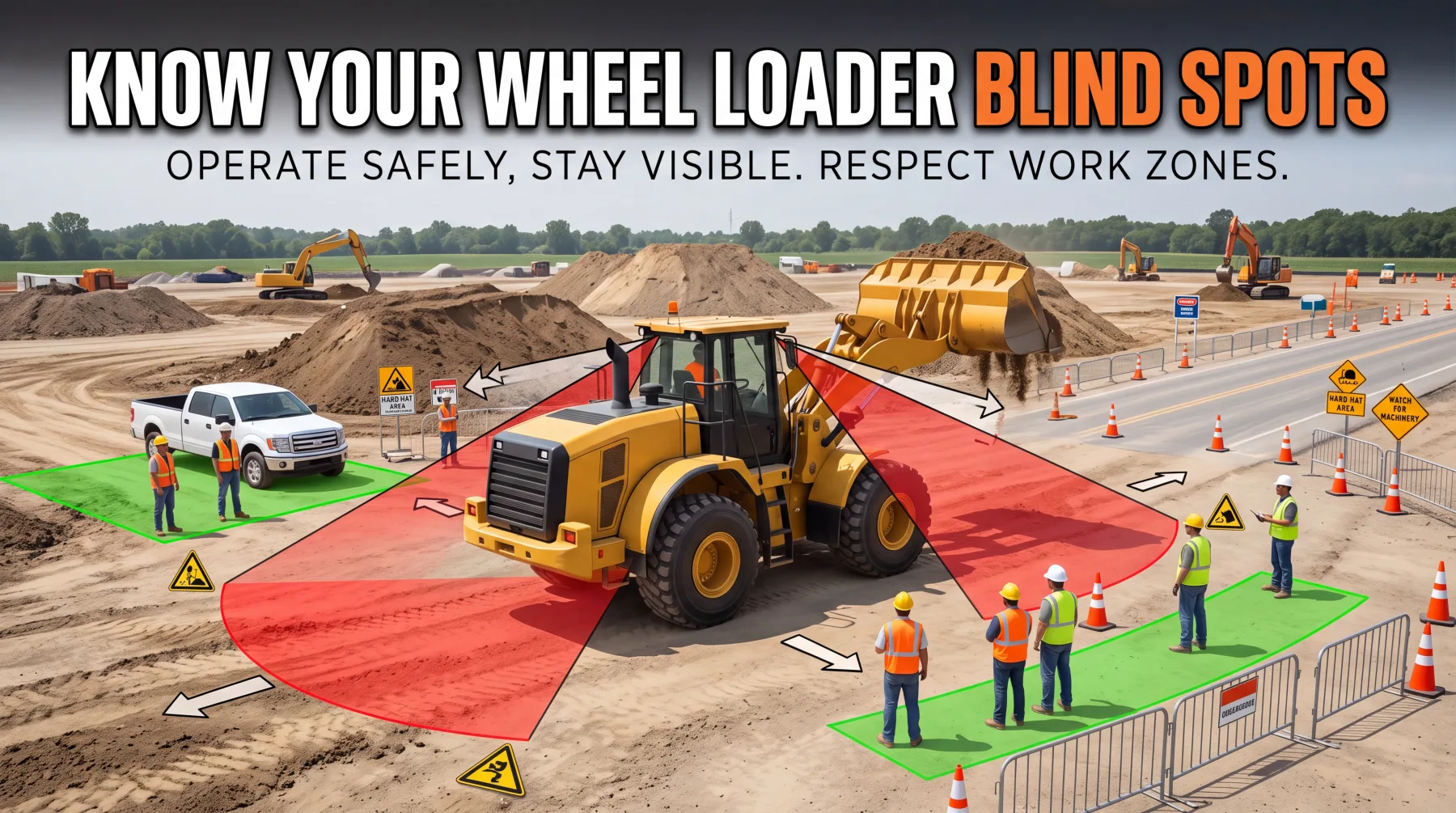
Wheel Loader Blind Spots: Risks and Safety Solutions
A wheel loader is built for power and productivity, but its size creates a serious challenge: the operator simply cannot see everything around the machine. Large sections of the surrounding area fall outside the operator's line of sight, and in those hidden zones, a worker, vehicle, or obstacle can go completely unnoticed. The consequences of a collision are severe, which is why understanding and managing blind spots is one of the most important safety responsibilities on any job site. This post walks through where wheel loader blind spots exist, why they're dangerous, and the proven solutions that keep people safe, from visibility technology and clear communication to defined operating zones and thorough operator training.
Understanding Wheel Loader Blind Spots and Their Danger Zones
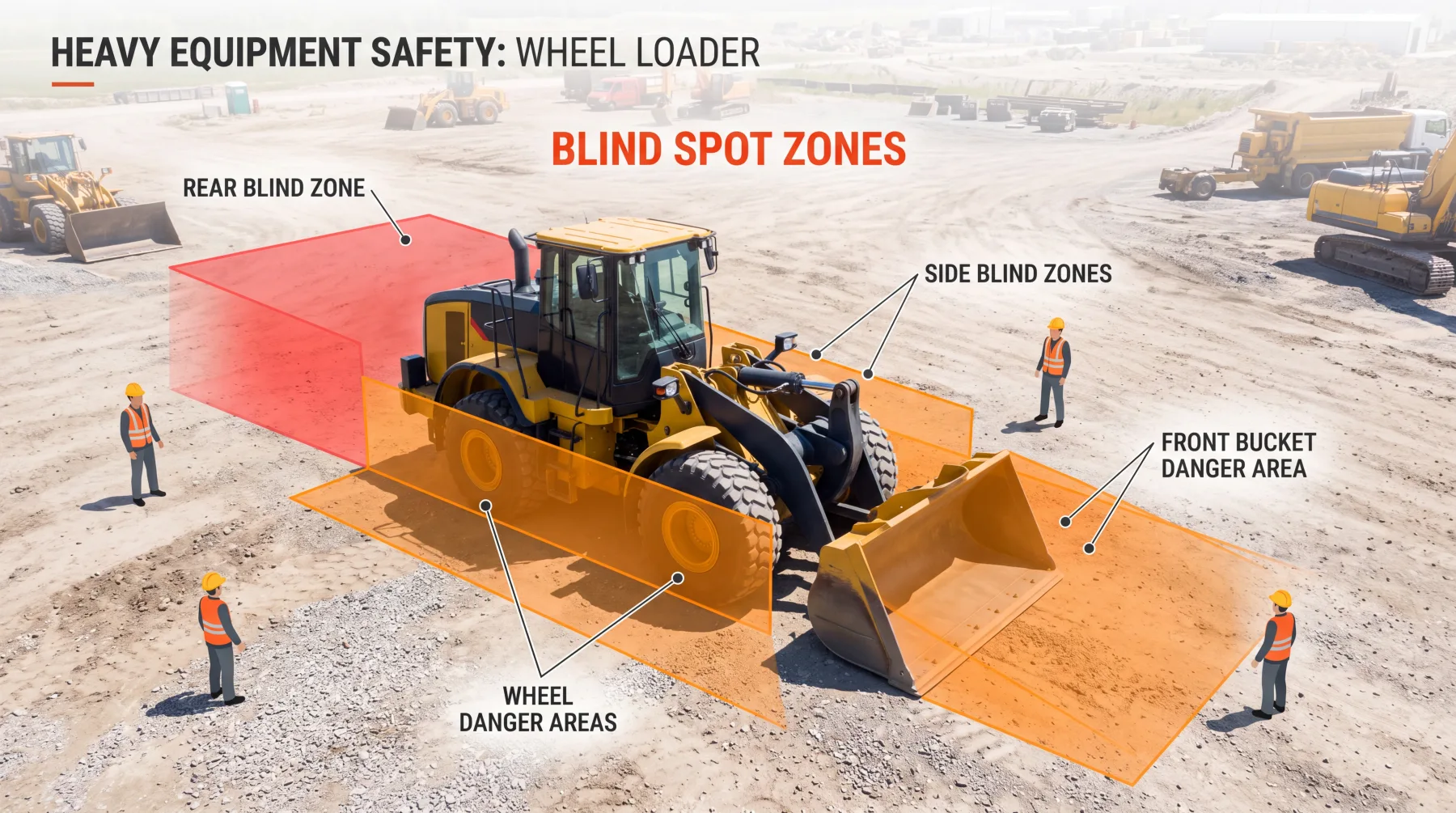
Before you can prevent an accident, you have to know where the danger lies, and with a wheel loader that means understanding exactly where the operator's vision fails. A wheel loader is a large machine, and its bucket, frame, engine compartment, and articulation all create areas the operator cannot see from the cab. These blind spots surround the machine on nearly every side, and they shift as the loader turns, raises its bucket, or reverses. Recognizing that these unseen areas exist is the essential first step toward keeping workers out of harm's way. The most dangerous blind spots tend to fall in predictable locations, and knowing them helps everyone on site stay alert: Directly behind the machine, where the engine compartment and frame block the operator's rearward view during reversing. Along the sides, particularly on the articulation side, where the machine's structure hides ground workers. In front, at ground level, where a raised or loaded bucket obscures the area immediately ahead of the machine. Close to the wheels, where anyone standing near the tires is almost invisible from the cab. Each of these zones represents a place where a person can stand unseen, only feet away from a machine weighing many tons. The danger comes from how quickly a routine movement can turn into a tragedy. A worker crossing behind a loader as it backs up, or a spotter stepping too close to the wheels, may be completely hidden from the operator until it's too late. Identifying these danger zones clearly, and making sure every person on the site understands them, transforms blind spots from an invisible hazard into a managed risk. Awareness is the foundation on which every other safety measure is built, because operators and ground crews who know where vision fails can plan their movements, positions, and procedures accordingly.
Using Proper Mirrors and Camera Systems for Better Visibility
Once you understand where blind spots exist, the next step is closing them, and visibility technology is one of the most effective tools available. Modern wheel loaders can be equipped with a range of systems designed to give operators eyes where the cab windows can't reach. These tools reduce the guesswork that makes blind spots so dangerous, allowing operators to see clearly into areas that were once completely hidden. Investing in and properly maintaining this equipment is a direct, dependable way to prevent collisions in busy work environments. Several proven visibility solutions work together to expand what an operator can see: Backup cameras, which display the area directly behind the machine on an in-cab monitor, addressing one of the most dangerous blind spots during reversing. Side mirrors, which give the operator a view along the flanks of the machine where ground workers often move. Advanced monitoring systems, such as multi-camera setups and proximity sensors that provide surround views or alert the operator to nearby objects and people. Together, these tools cover the zones that pose the greatest risk and give the operator a far more complete picture of the surroundings. The real value of this equipment lies in how it changes the operator's decision-making. Instead of relying on memory or assumption when reversing or turning, the operator can confirm the area is clear with a glance at a monitor or mirror. Advanced systems take this further by actively warning of a hazard the operator might otherwise miss entirely. For this technology to deliver its full benefit, it must be kept clean, correctly adjusted, and in good working order, since a dirty lens or a misaligned mirror offers little protection. When properly maintained and used consistently, mirrors, cameras, and monitoring systems make maneuvering safer and give operators the confidence that comes from truly seeing their work area.
Maintaining Clear Communication on the Jobsite
Technology alone cannot eliminate every blind spot, which is why communication remains one of the most powerful safety tools on any job site. When operators, ground workers, and supervisors stay coordinated, they close the gaps that visibility equipment can't fully cover. Clear, reliable communication ensures that everyone knows where the machine is moving, where workers are positioned, and when it's safe to proceed. Accidents caused by poor visibility often trace back to a breakdown in communication, so building strong habits here protects the entire crew. Effective job site communication relies on a combination of methods, each suited to different situations: Two-way radios, which allow operators, spotters, and supervisors to relay information instantly across distances and over the noise of active equipment. Hand signals, a standardized visual language that lets a spotter guide an operator precisely when radios aren't practical or when a direct line of sight is available. Designated communication procedures, established protocols that define who directs the operator, how movements are confirmed, and what signals mean stop, proceed, or hold. Using these methods together keeps everyone informed and coordinated, even in the busiest and loudest environments. The strength of a communication system depends on consistency and clarity. Every worker on site must understand the signals and procedures in use, and those signals must mean the same thing to everyone, every time. A spotter positioned safely and communicating clearly with the operator becomes a second set of eyes, watching the blind spots the operator cannot see and directing movement accordingly. Supervisors reinforce this by setting expectations, assigning clear roles, and ensuring communication tools are available and working. When communication is treated as a core part of the operation rather than an afterthought, it bridges the gap left by blind spots and keeps operators and ground crews working in safe, deliberate coordination throughout the shift.
Creating Safe Operating Zones Around Wheel Loaders
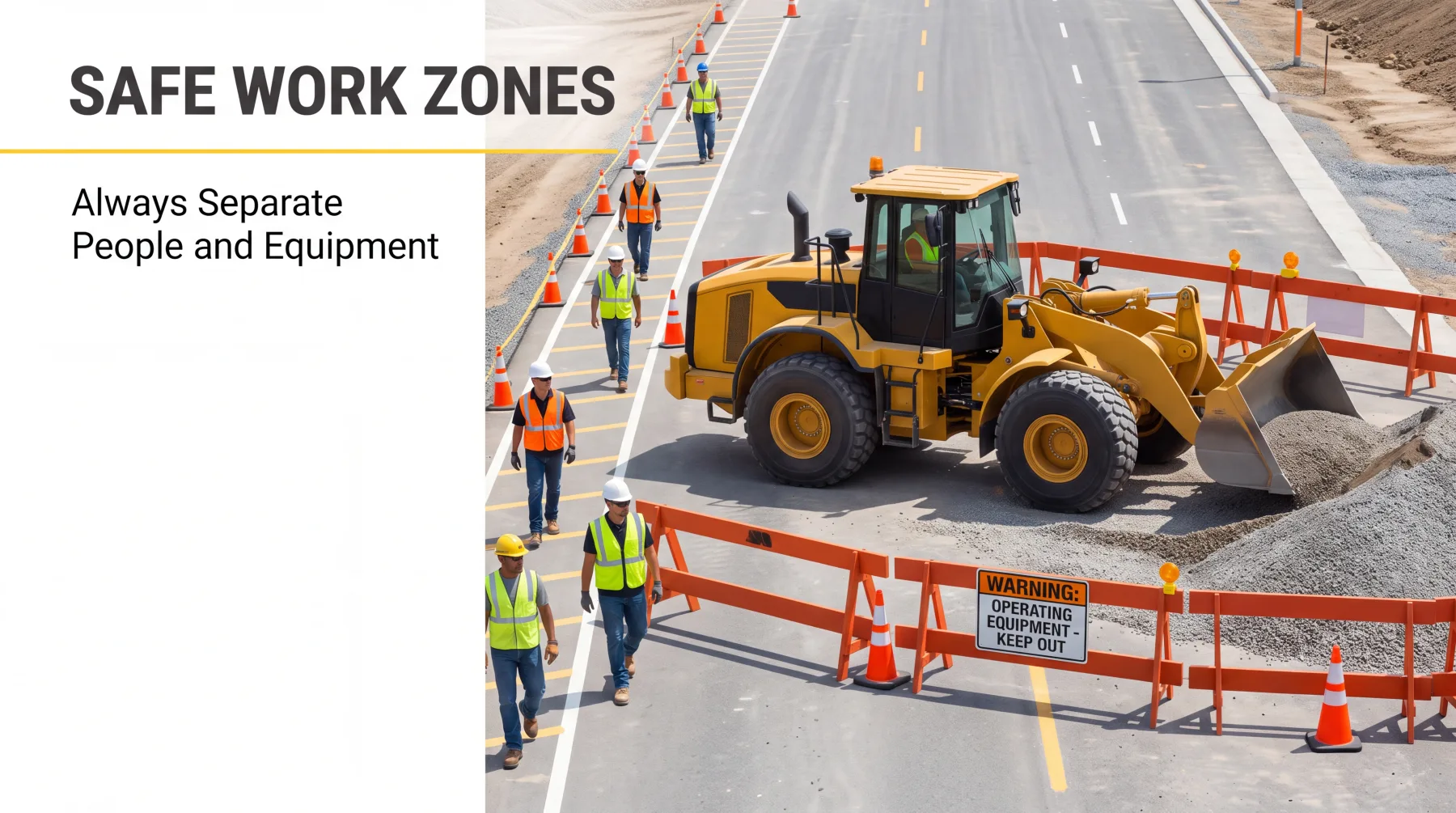
While visibility tools and communication reduce risk, the most reliable way to protect workers from blind spots is to keep them out of the danger zones entirely. Establishing safe operating zones around active wheel loaders creates physical and procedural separation between people and machines, removing the possibility of an unexpected encounter. When workers simply aren't present in the areas an operator can't see, the blind spot loses much of its power to cause harm. This approach forms a critical layer of protection that doesn't depend on anyone spotting a hazard in time. The foundation of safe operating zones is thoughtful planning of how the site is laid out and how people and machines move through it. A well-designed site keeps foot traffic and equipment traffic separated as much as possible, so the two rarely intersect in dangerous ways. Restricted areas around working loaders make it clear where workers must not go while the machine is active, giving the operator room to work without the constant risk of someone entering a blind spot. Several planning measures work together to keep people safe: Restricted areas, clearly marked zones around active machines where pedestrian access is prohibited during operation. Traffic management plans, which organize the flow of equipment and vehicles to minimize crossings and confusion. Designated pedestrian routes, safe walkways that keep workers on foot well clear of machine paths and blind spots. Enforcing these boundaries consistently is what turns a plan on paper into real protection on the ground. The effectiveness of safe operating zones depends on both clear marking and strict enforcement. Barriers, signage, and ground markings help everyone recognize where the boundaries lie, while supervisors and site rules ensure those boundaries are respected. When workers understand that active loaders have exclusion zones and that designated routes keep them safe, unexpected encounters become far less likely. By separating people from machines through deliberate site design, you address blind spots at their most fundamental level, protecting workers before a dangerous situation can ever develop.
Operator Training and Awareness for Blind Spot Management
All the technology, communication, and site planning in the world depend on one final, essential element: a skilled, aware operator. The person in the cab makes the moment-to-moment decisions that determine whether a machine moves safely, and their understanding of the loader's limitations is the last and most important line of defense against blind spot accidents. Well-trained operators know exactly where their vision fails, and they build that knowledge into every action they take. This awareness is what ties all the other safety measures together into a coherent, dependable practice. Effective operators understand their machine deeply, including where its blind spots lie and how they change as the loader turns, articulates, or raises its bucket. That understanding informs a habit of checking surroundings deliberately before any movement. Rather than assuming an area is clear, a trained operator confirms it, using mirrors, cameras, and a careful look before shifting into motion. These pre-movement checks are simple, but they prevent a large share of the accidents that blind spots cause, because they close the gap between assumption and reality. Building and maintaining these habits requires ongoing commitment rather than a single lesson at the start of a career. Regular safety training reinforces good practices and keeps operators sharp over time: Machine familiarization, ensuring operators understand the specific blind spots and limitations of the loaders they run. Pre-movement check routines, drilling the habit of scanning mirrors, cameras, and surroundings before every move. Refresher and safety training, keeping awareness high and updating operators on new equipment, procedures, and lessons learned. This kind of consistent training develops the instincts and discipline that keep operators safe day after day. An operator who combines a thorough understanding of the machine with strong, well-practiced habits becomes the most reliable safeguard against blind spot incidents. Training builds the awareness that makes visibility tools, communication, and safe zones truly effective, because it ensures the person controlling the machine uses them properly and consistently. Investing in operator training and awareness is an investment in the safety of the entire crew, and it elevates the standard of every operation the loader takes on. Conclusion Wheel loader blind spots are a serious hazard, but they are a manageable one. By identifying the danger zones around the machine, equipping it with proper mirrors and camera systems, maintaining clear communication, establishing safe operating zones, and investing in thorough operator training, you build layers of protection that keep everyone on the job site safe. Each measure strengthens the others, and together they turn an invisible risk into a controlled one. Commit to these solutions, and you protect your workers, your equipment, and your reputation for running a safe, dependable operation on every project.