September 29, 2026
Dozer lift height and ground clearance
Learn why dozer lift height and ground clearance are critical specifications for mini excavator versatility, backfilling, and navigating tough terrain.
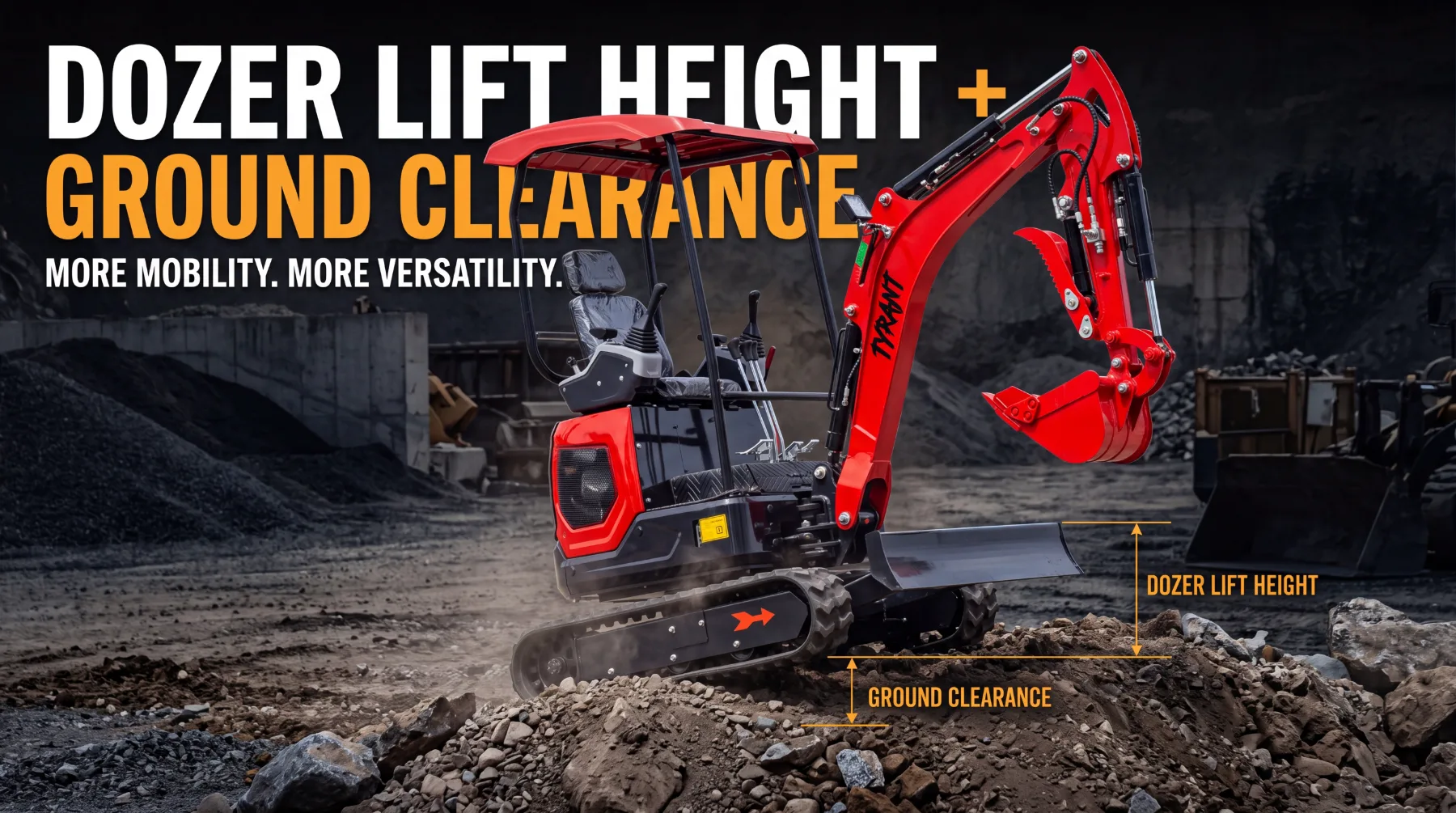
How Dozer Lift Height and Ground Clearance Affect Mini Excavator Versatility
A mini excavator earns its keep by doing more than one job well. Beyond digging, the dozer blade at the front of the machine turns it into a tool for pushing, backfilling, grading, and traveling confidently across difficult ground. How much that blade can do comes down to two specifications that rarely get the attention they deserve: dozer blade lift height and ground clearance. Together they shape how the machine moves, what it can accomplish, and how smoothly it shifts from one task to the next. This guide explains how dozer lift height and ground clearance affect mini excavatorversatility across five key areas. You will learn how blade lift height influences travel and obstacle clearance, how ground clearance affects movement over rough surfaces, how the blade supports backfilling and grading, how clearance aids mobility on uneven terrain, and how these factors combine to make the machine a true multi-task performer. By the end, you will know what to weigh when choosing a machine built to do more.
Dozer Blade Lift Height
The dozer blade'slift height determines how high it can be raised when the machine travels or works around piles of material, and this figure has a direct effect on how flexible the mini excavator feels in daily use. When the blade lifts well clear of the ground, the operator can move the machine across uneven surfaces without the blade dragging or catching on obstacles in its path. That extra clearance at the front translates into smoother travel and fewer interruptions as the machine repositions around a busy site. Lift height also matters when working near stockpiles and raised material. A blade that raises high enough can clear the top of a pile rather than plowing into it, giving the operator more room to maneuver and position the machine where the work requires. This flexibility keeps the machine productive in the kind of cluttered, material-heavy conditions that many jobsites present, where a blade with limited lift would force awkward repositioning or hold up the work. Consider the practical advantages greater lift height provides: Easier travel across uneven ground, since the raised blade clears bumps and rises rather than dragging Better obstacle clearance, allowing the machine to pass over debris and small obstructions without contact More working room around piles and raised material, giving the operator freedom to position the machine effectively When the blade lifts high, the operator gains confidence to move the machine wherever the job demands without worrying about the front of the machine catching on the ground or an obstacle. That confidence keeps cycles moving and the operation flowing. For contractors who value a machine that adapts easily to changing conditions, dozer blade lift height is a specification worth checking closely, because it shapes so much of how the machine travels and works throughout the day.
Ground Clearance Matters
Ground clearance affects how easily a mini excavator travels over rocks, debris, and uneven surfaces without the undercarriage or blade contacting the ground. On a real jobsite, the ground is rarely smooth. The machine has to cross rubble, ruts, loose stone, and raised obstacles as it moves between tasks, and adequate clearance is what allows it to do so without hanging up or scraping its underside. When the machine sits high enough over the surface, these obstructions pass beneath it rather than stopping it in its tracks. The consequences of insufficient clearance show up quickly in demanding conditions. A machine that sits low risks catching its undercarriage or blade on rocks and debris, which can slow travel, force careful detours, and add wear to components that were never meant to strike the ground. Adequate clearance removes much of that risk, letting the machine travel more freely across the rough, cluttered terrain that construction and demolition work so often present. This capability makes movement around difficult jobsites noticeably easier. Rather than picking a slow, cautious path around every obstacle, the operator can travel more directly, trusting the machine to clear what lies beneath it. That freedom keeps the machine productive and reduces the time lost to navigating awkward ground. Ground clearance works hand in hand with the machine's other travel capabilities. A mini excavator with sound clearance moves confidently across broken, uneven surfaces, reaching the work area without struggle and repositioning with ease. For jobs that regularly take the machine across rough or debris-strewn ground, adequate ground clearance is a practical advantage that keeps the operation moving and protects the machine from unnecessary contact and wear.
Backfilling and Grading Capability
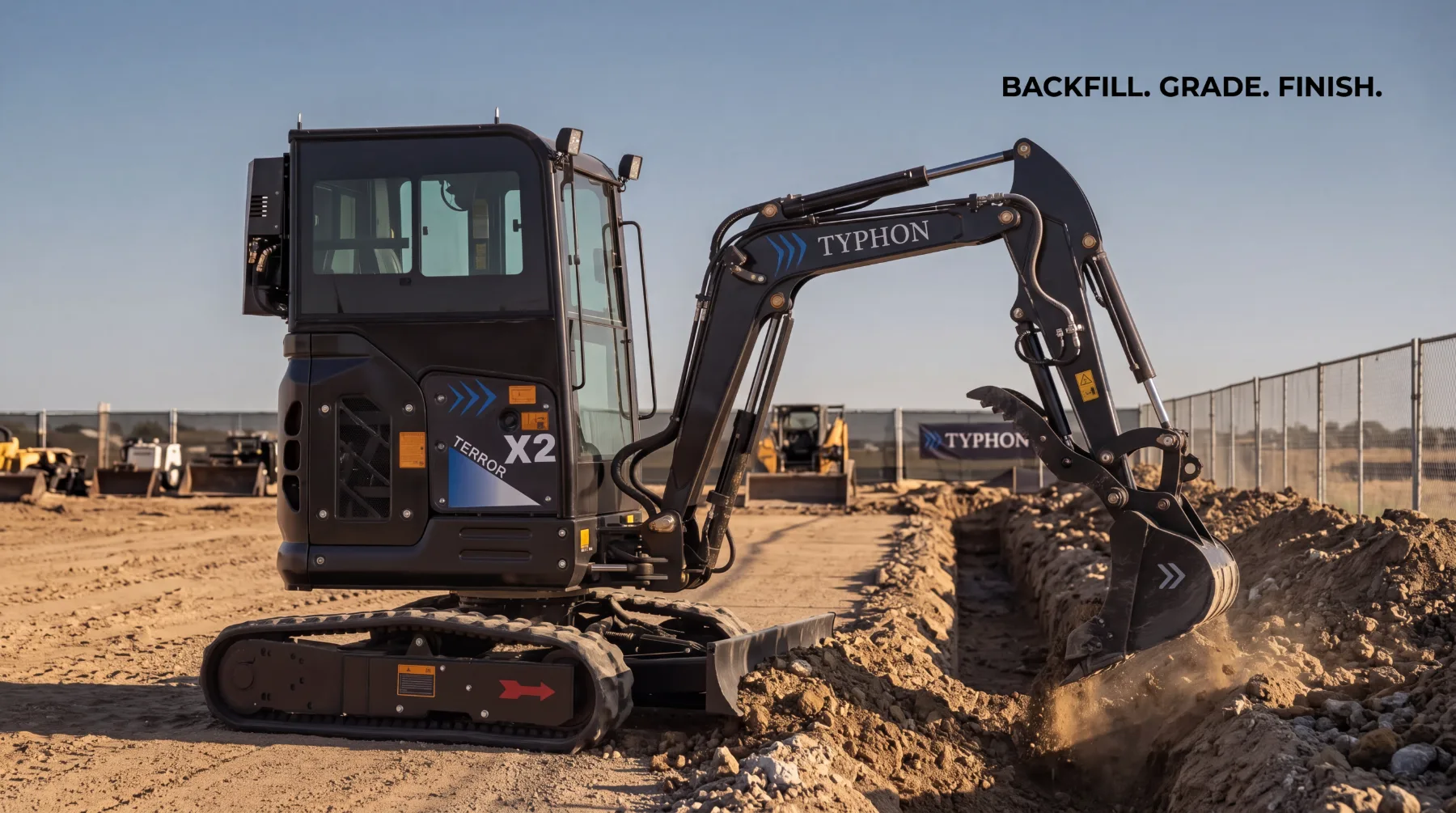
A dozer blade extends a mini excavator's usefulness well beyond digging, allowing it to push material, backfill trenches, and perform light grading work. After the machine digs a trench, the same blade can push the excavated soil back into place, closing the trench efficiently without the need for separate equipment or manual labor. This ability to backfill directly turns a two-step process into one smooth operation, keeping the crew and the machine working together productively. Grading is another task the blade handles well. For leveling ground, spreading material, and smoothing a surface, the blade gives the operator a practical tool for finishing work that would otherwise require additional passes or a second machine. Light grading around a foundation, along a path, or across a work area lets the mini excavator take a job from rough excavation through to a tidy, level finish, which adds real value on projects where versatility saves time and cost. The blade's lift and positioning range is what determines how effectively the machine transitions between these tasks. A blade with a good range of movement can shift from backfilling to grading to travel without limiting the operator, allowing the machine to move fluidly between digging and ground-finishing work. This smooth transition is a large part of what makes a mini excavator so valuable, since a single machine can complete several stages of a job rather than waiting on other equipment. When the blade offers dependable lift and positioning, the operator can dig, backfill, and grade in a continuous, efficient workflow. That capability keeps projects moving and makes the mini excavator a genuinely multi-purpose tool. For contractors who need one machine to handle more of the job, a capable dozer blade is a feature that pays off across a wide range of tasks.
Working Around Uneven Terrain
Mini excavators often operate on changing surfaces, including slopes, loose soil, and rough construction areas, and suitable blade clearance and positioning help maintain practical mobility across these conditions. The ground on an active jobsite shifts constantly, from firm level areas to soft patches, inclines, and stretches littered with debris. A machine that can travel confidently across this variety stays productive, while one that struggles the moment conditions change slows the whole operation. Blade clearance plays an important role here. When the blade sits at a height that suits the terrain, the machine crosses uneven ground without the front catching on rises, ruts, or obstacles. On slopes and rough surfaces in particular, keeping the blade positioned correctly helps the machine travel steadily rather than fighting the ground beneath it. This steady mobility gives the operator the control needed to work safely and efficiently wherever the terrain leads. The kinds of conditions where this matters are common on real projects: Slopes, where controlled travel and correct blade positioning help the machine stay steady and stable Loose soil, where the machine must move without losing its footing or hanging up at the front Rough construction areas, where debris and uneven ground demand clearance that lets the machine pass freely Across all of these, the combination of adequate clearance and a well-positioned blade keeps the machine mobile and dependable. The operator can move the excavator across the site, adjust the blade to suit the surface, and keep working without being held back by ground that would stop a less capable machine. For projects that involve varied and demanding terrain, this practical mobility is a genuine advantage, allowing the mini excavator to perform reliably across the full range of conditions a jobsite presents from one area to the next.
Supporting Multi-Task Operation
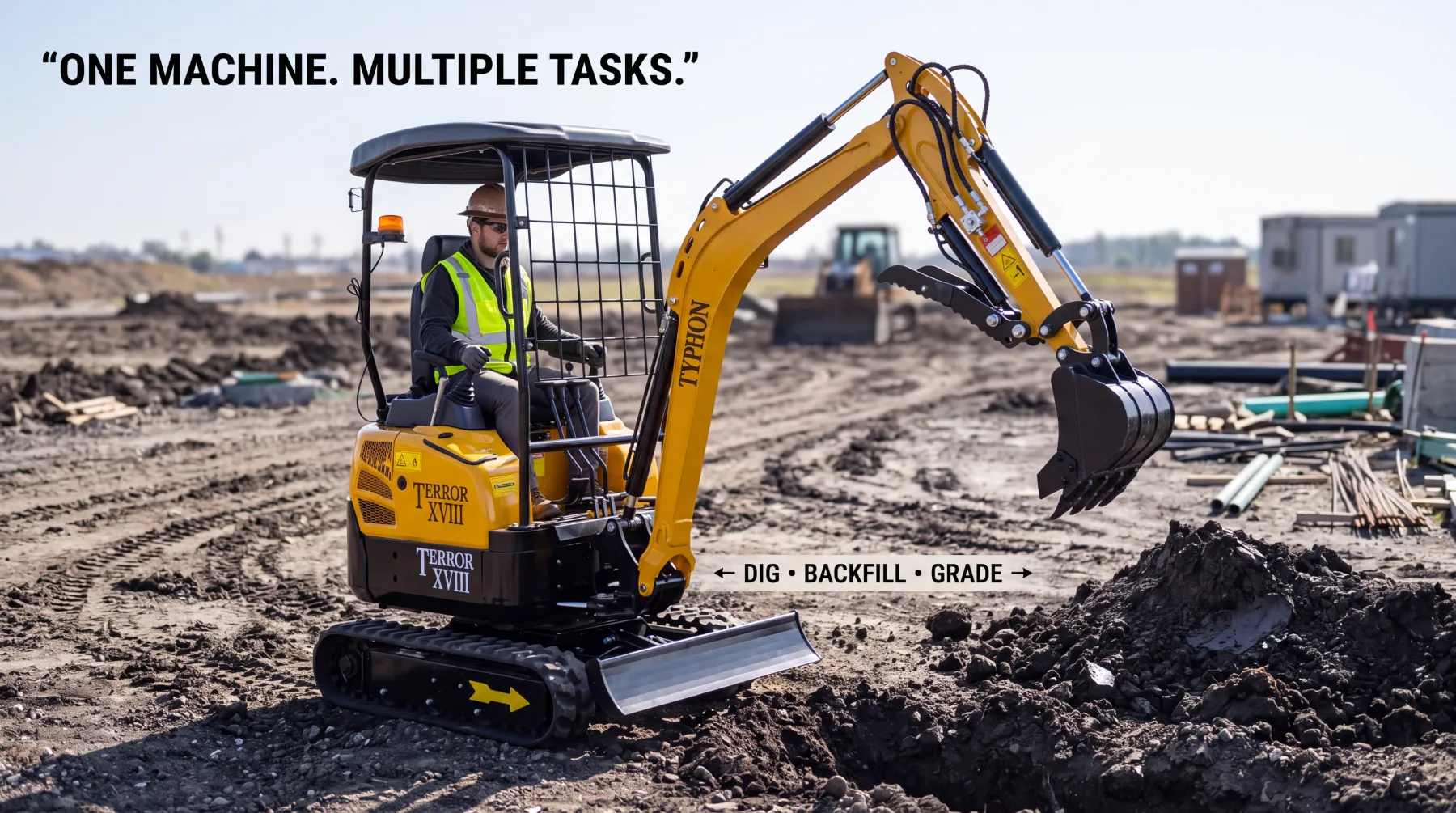
The combination of digging equipment and a versatile dozer blade allows a mini excavator to handle far more than excavation alone, and this is where the machine truly proves its worth. With the arm and bucket for digging and the blade for pushing, backfilling, grading, and clearing, a single machine takes on tasks that might otherwise require several pieces of equipment. This multi-task capability is a central reason mini excavators have become such a trusted choice for contractors who need to do more with less. Blade dimensions, lift height, and ground clearance all contribute to how effectively the machine adapts to different jobsite tasks. A well-sized blade moves material efficiently, generous lift height keeps the machine flexible in travel and around obstacles, and sound ground clearance lets it work across demanding surfaces. Together, these specifications determine how smoothly the machine shifts from one job to the next and how confidently it handles whatever the site requires. Think about how these factors work together in practice: Blade dimensions shape how much material the machine can push and grade in a single pass Lift height governs travel flexibility and how well the machine works around piles and obstacles Ground clearance determines how freely the machine moves across rough and uneven ground When these capabilities align, the mini excavator becomes a dependable all-rounder rather than a single-purpose tool. It can dig a trench, backfill it, grade the surrounding ground, and travel across difficult terrain to the next task, all without swapping machines or waiting on additional equipment. For contractors weighing which machine to invest in, understanding how blade lift height, ground clearance, and blade dimensions combine helps identify a mini excavator that delivers genuine versatility. That versatility is exactly what makes the machine so valuable across the many tasks a working jobsite demands. Conclusion Dozer blade lift height and ground clearance play a defining role in how versatile a mini excavator can be. Generous lift height keeps the machine flexible as it travels and works around piles and obstacles, while adequate ground clearance lets it move confidently over rocks, debris, and uneven surfaces. A capable blade extends the machine's usefulness into backfilling and grading, and the right clearance and positioning keep it mobile across slopes, loose soil, and rough terrain. Combined with the machine's digging equipment, these features turn a mini excavator into a dependable multi-task performer. Before selecting your next mini excavator, take a close look at the tasks and terrain your work involves. Consider how often you backfill and grade, how rough the ground you cross tends to be, and how much travel flexibility your jobs demand. Weigh blade dimensions, lift height, and ground clearance against those needs, and you will choose a machine that adapts smoothly across a wide range of tasks. With the right combination of these features, a mini excavator delivers the reliable, versatile performance that keeps projects moving from start to finish.
Frequently Asked Questions
1. Why does dozer blade lift height matter on a mini excavator? Dozer blade lift height matters because it determines how high the blade can be raised during travel and while working around material, which directly affects the machine's flexibility. When the blade lifts well clear of the ground, the operator can move the machine across uneven surfaces without the blade dragging or catching on obstacles in its path. This produces smoother travel and fewer interruptions as the machine repositions around the site. Lift height also helps when working near stockpiles and raised material, since a blade that raises high enough can clear the top of a pile rather than plowing into it. This gives the operator more room to maneuver and position the machine where the work requires. In cluttered, material-heavy conditions, a blade with limited lift would force awkward repositioning or hold up the work, while generous lift height keeps the machine productive. The practical benefits include easier travel over uneven ground, better clearance over debris and small obstructions, and more working room around piles, all of which keep the operation flowing throughout the day. 2. How does ground clearance affect a mini excavator's performance? Ground clearance affects how easily the machine travels over rocks, debris, and uneven surfaces without the undercarriage or blade contacting the ground. Jobsites rarely offer smooth ground, so the machine often has to cross rubble, ruts, loose stone, and raised obstacles as it moves between tasks. When the machine sits high enough over the surface, these obstructions pass beneath it rather than stopping it. Insufficient clearance causes problems quickly, since a machine that sits low risks catching its undercarriage or blade on rocks and debris. This can slow travel, force careful detours, and add wear to components never meant to strike the ground. Adequate clearance removes much of that risk, letting the machine travel more freely across rough, cluttered terrain. It also makes movement around difficult jobsites easier, since the operator can travel more directly rather than picking a slow, cautious path around every obstacle. For jobs that regularly cross rough or debris-strewn ground, sound ground clearance keeps the operation moving and protects the machine from unnecessary contact and wear over time. 3. Can a mini excavator really handle backfilling and grading with its dozer blade? Yes, the dozer blade extends a mini excavator's usefulness well beyond digging, allowing it to push material, backfill trenches, and perform light grading. After the machine digs a trench, the same blade can push excavated soil back into place, closing the trench efficiently without separate equipment or manual labor. This turns a two-step process into one smooth operation. The blade also handles grading well, giving the operator a practical tool for leveling ground, spreading material, and smoothing a surface. Light grading around a foundation, along a path, or across a work area lets the machine take a job from rough excavation through to a tidy, level finish. The blade's lift and positioning range determines how effectively the machine transitions between these tasks. A blade with a good range of movement shifts from backfilling to grading to travel without limiting the operator, allowing the machine to move fluidly between digging and ground-finishing work. When the blade offers dependable lift and positioning, the operator can dig, backfill, and grade in a continuous, efficient workflow, making the machine a genuinely multi-purpose tool. 4. How do blade clearance and positioning help on uneven terrain? Blade clearance and positioning help maintain practical mobility across the changing surfaces mini excavators often face, including slopes, loose soil, and rough construction areas. The ground on an active jobsite shifts constantly, from firm level areas to soft patches, inclines, and debris-strewn stretches, and a machine that travels confidently across this variety stays productive. When the blade sits at a height that suits the terrain, the machine crosses uneven ground without the front catching on rises, ruts, or obstacles. On slopes and rough surfaces in particular, keeping the blade positioned correctly helps the machine travel steadily rather than fighting the ground beneath it. This steady mobility gives the operator the control needed to work safely and efficiently. On slopes, controlled travel and correct blade positioning help the machine stay stable, on loose soil the machine must move without hanging up at the front, and in rough construction areas clearance lets the machine pass freely over debris. Across all of these, adequate clearance and a well-positioned blade keep the machine mobile and dependable wherever the terrain leads. 5. What specifications should I compare when choosing a mini excavator for versatile work? When choosing a mini excavator for versatile work, look closely at blade dimensions, lift height, and ground clearance, since these determine how effectively the machine adapts to different tasks. Blade dimensions shape how much material the machine can push and grade in a single pass, so a well-sized blade moves material efficiently. Lift height governs travel flexibility and how well the machine works around piles and obstacles, keeping the operator free to reposition without the blade catching. Ground clearance determines how freely the machine moves across rough and uneven ground, protecting the undercarriage and blade from contact. These specifications work together, so it helps to consider them as a connected whole rather than in isolation. A machine with a capable blade, generous lift height, and sound clearance can dig a trench, backfill it, grade the surrounding ground, and travel across difficult terrain to the next task without swapping machines. Match these features against the tasks and terrain your work involves, weighing how often you backfill and grade and how rough your ground tends to be, and you will choose a machine that delivers genuine versatility.