September 21, 2026
How do I decide between a scissor lift vs. forklift for an indoor project?
Deciding between a scissor lift vs. forklift? Compare mobility, working reach, stability, and jobsite applications to choose the right equipment for your needs.
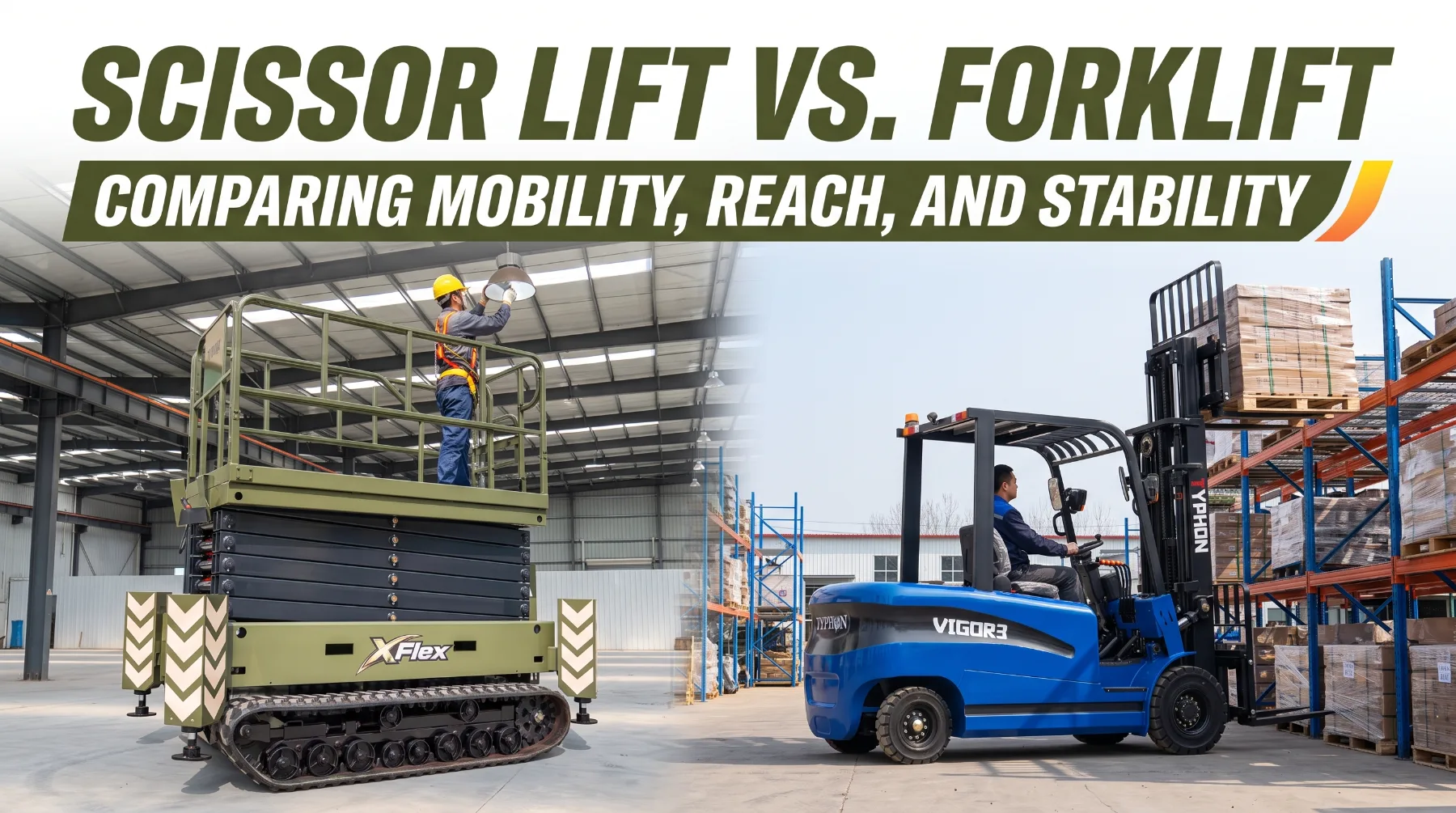
Scissor Lift vs. Forklift: Comparing Mobility, Reach, and Stability
Two machines often show up on the same jobsite, yet they solve very different problems. A scissor lift raises workers and their tools to a stable height, while a forklift moves and positions heavy loads across the ground. Confuse the two, and you risk slower work, safety hazards, and money spent on the wrong equipment. Choose wisely, and each machine pulls its weight exactly where it belongs. This guide compares scissor lifts and forklifts across the three factors that matter most on the ground: mobility, reach, and stability. By the end, you will know how to match the right machine to the task, the terrain, and the space you actually work in.
Mobility Across Different Jobsites
Mobility means something different for each of these machines, and understanding that difference is the first step toward a smart choice. A scissor lift is built primarily for controlled vertical movement. It positions itself beneath the work area, then raises a platform straight up so the crew can perform tasks at height. A forklift, by contrast, is designed to transport and position loads across the site, carrying material from one point to another with speed and control. One machine moves people up; the other moves cargo across. How well either machine gets around depends heavily on the conditions it faces. The layout of the site, the quality of the surface, and the nature of the task all shape how mobile each machine really is. A few factors deserve close attention: Surface conditions such as smooth concrete, rough terrain, or soft ground Site layout including travel lanes, obstacles, and the distance between work zones Task rhythm whether the crew stays in one elevated spot or moves loads constantly Indoor or outdoor use, which affects the model and tires you should choose A scissor lift works best when the crew progresses from one overhead point to another, repositioning between stations and lifting straight up at each. A forklift shines when material needs to travel steadily throughout the site. Matching the machine's natural movement pattern to your workflow keeps productivity high and downtime low, so think carefully about how work actually flows before you decide.
Working Height and Horizontal Reach
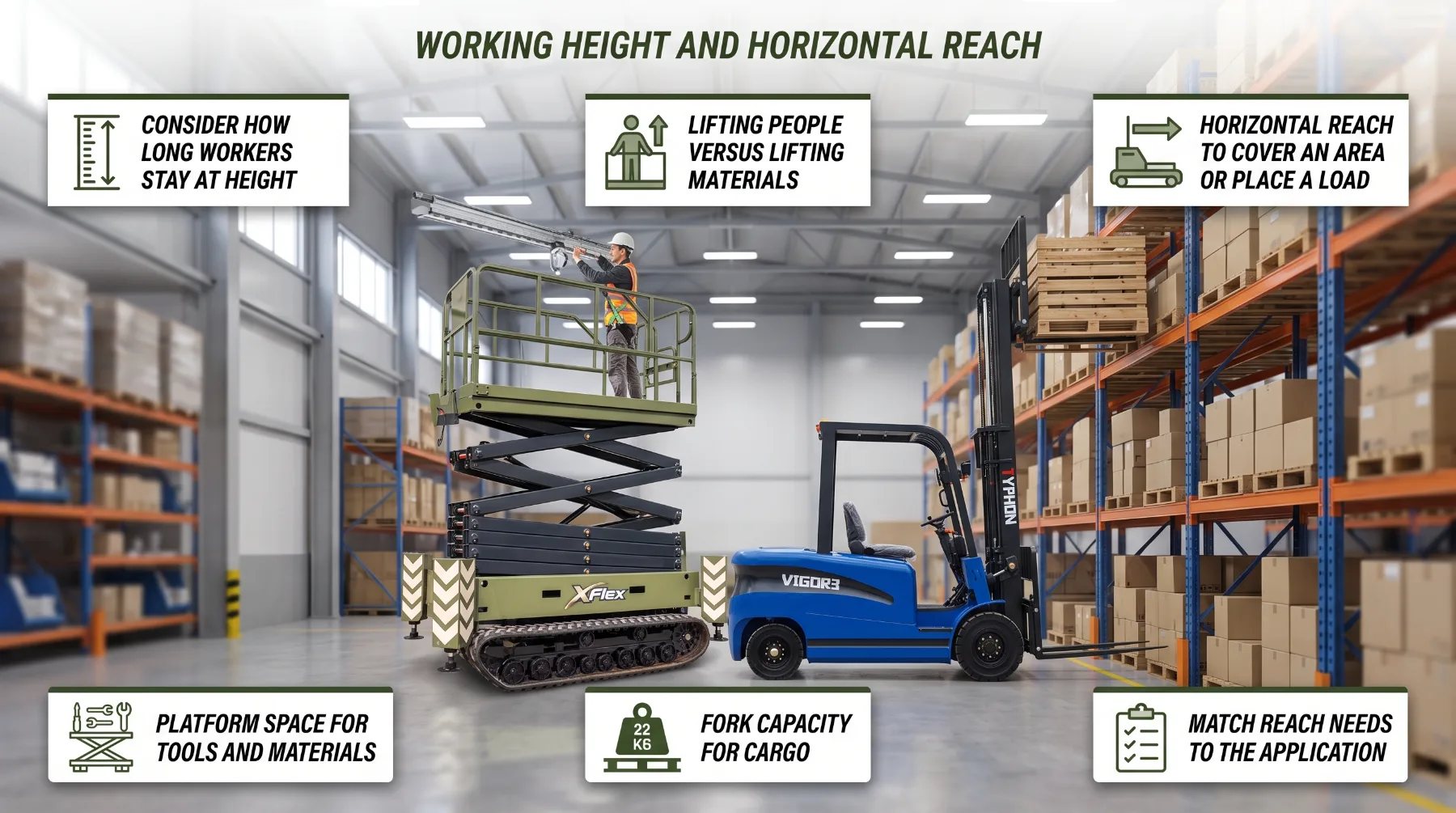
Reach is where these machines diverge most clearly, and getting it right protects both efficiency and safety. A scissor lift delivers a stable elevated platform designed to hold workers along with their tools and materials. Because the platform extends straight up and offers a wide, secure surface, a crew can work comfortably at height across a broad area from a single position. This makes the scissor lift ideal for tasks like installing lighting, running conduit, servicing HVAC units, or finishing ceilings, where people need to stay elevated for long stretches. A forklift approaches height differently. It uses its mast and forks to lift materials to various levels, whether loading a truck, stacking pallets, or placing components at elevation. The forklift raises cargo, not people, and its reach is measured by how high and how far it can position a load rather than by providing a workspace. When comparing reach, weigh the following against your application: Required working height and how long workers must stay at that level Whether you are lifting people or lifting materials to the target height Horizontal reach needed to cover an area or place a load precisely Platform space for tools and materials versus fork capacity for cargo The right question is simple. If the job calls for people to work at height with room for their equipment, the scissor lift's platform is the answer. If the job calls for raising and placing materials, the forklift's mast and forks do it better. Match the machine's reach to the real demands of the task, and the work proceeds smoothly and safely.
Stability Under Load
Stability keeps everyone safe, and both machines depend on proper load handling and sound operating conditions to stay steady. The two achieve stability in different ways, though, because they carry different kinds of weight. A scissor lift supports personnel and equipment on its platform, so stability centers on keeping that platform level, respecting the rated platform capacity, and operating on suitable ground. A forklift is engineered around load capacity, center of gravity, and mast position, balancing cargo against its own weight and counterweight. For a scissor lift, stability holds well when the machine sits on firm, level ground and the platform load stays within limits. Raising a platform high shifts the center of gravity upward, which makes the machine more sensitive to uneven surfaces and sudden movements. Keeping the base level and avoiding overloading the platform preserves that steady footing. For a forklift, stability revolves around the load itself. The relationship between the load's weight, its distance from the mast, and the forklift's counterweight determines whether a lift stays safe. Consider these points for each machine: Ground conditions, since level, stable surfaces support both machines best Rated capacity, whether platform weight on a scissor lift or load weight on a forklift Load position, keeping forklift loads low and close and scissor lift loads balanced Height effects, as raising either load higher reduces the margin for error Respecting these limits and reading each machine's operating guidance keeps both stable under load. Push beyond rated capacity or work on poor ground, and stability erodes quickly, so treat these factors as firm rules rather than suggestions.
Maneuverability in Tight Spaces
Space often decides which machine belongs on a job, and each one handles confined areas differently. Compact scissor lifts prove genuinely useful where workers need access to elevated areas but floor space is limited. Narrow indoor corridors, retail interiors, and crowded work zones all reward a slim machine that positions itself precisely and lifts straight up without needing much room to operate. When the challenge is reaching height in a tight footprint, a compact scissor lift keeps the crew productive where bulkier equipment would struggle.
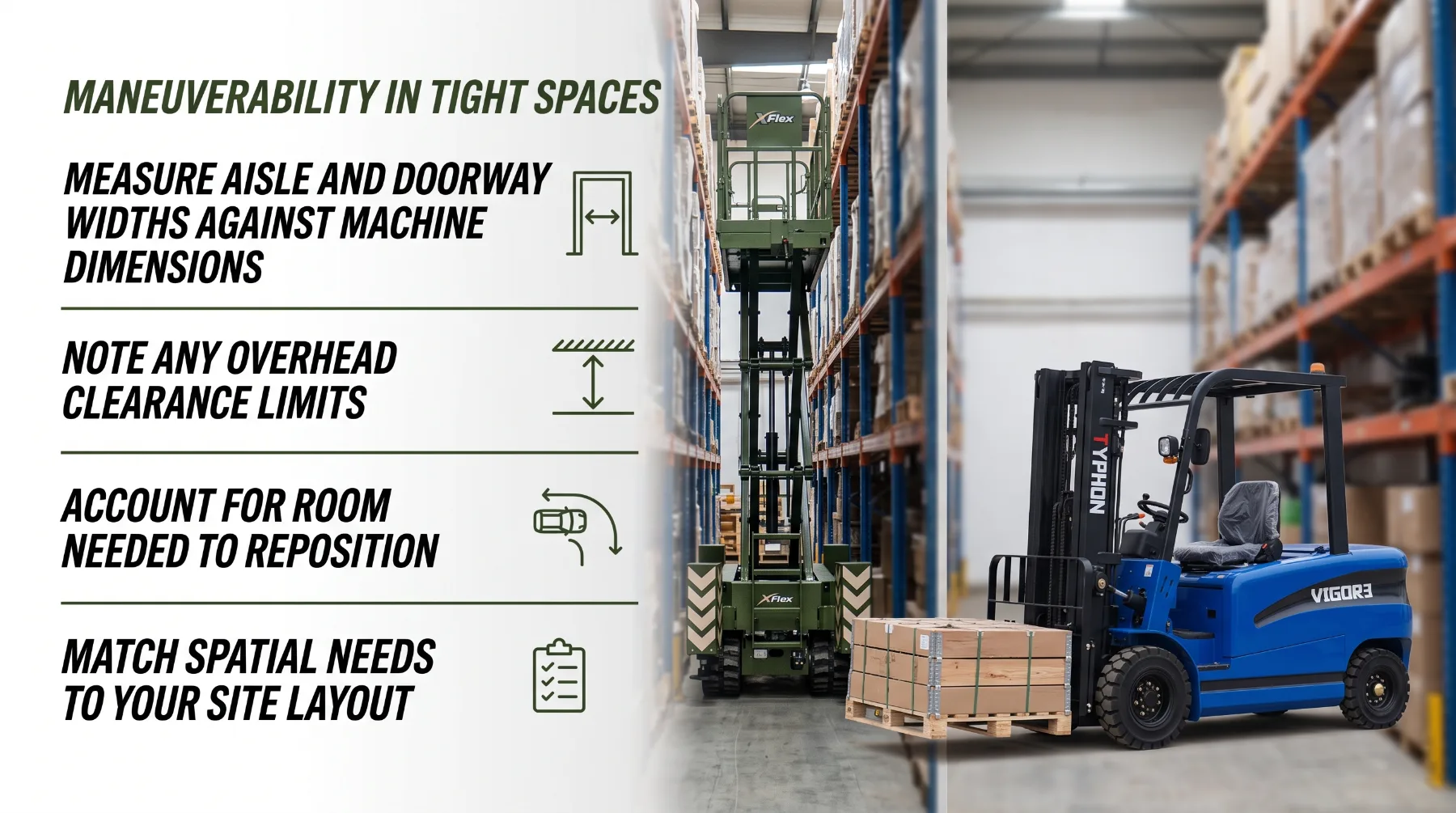
Forklifts are commonly suited to moving palletized materials through warehouses, yards, and other material-handling areas. They need adequate aisle width and clear travel lanes to operate safely, and their maneuverability depends on the space available to turn and position loads. In a well-organized warehouse with proper aisles, a forklift moves material efficiently. In genuinely cramped quarters, its size can become a limitation. Before choosing, walk the space the machine must work in and consider how it will actually move. Measure aisle and doorway widths against the machine's dimensions, note any overhead clearance limits, and account for the room needed to reposition. A scissor lift asks mainly for enough floor space to set up beneath the work and lift. A forklift asks for travel lanes and turning room to carry loads. Matching the machine's spatial needs to your site prevents the frustration of equipment that cannot get into position, and it keeps every phase of the job moving without needless delay or risk.
Choosing the Right Equipment
The decision ultimately comes down to one clear question: does the primary task involve elevating personnel or moving materials? That single distinction points you toward the right machine faster than any spec sheet. If the core of the work is putting people safely at height with their tools, the scissor lift is the answer. If the core of the work is lifting, stacking, and transporting materials, the forklift delivers far more value. Start there, and the rest of the decision falls into place. Once you know the primary task, weigh the practical conditions that shape performance. A thorough evaluation considers several factors together: Mobility and how the machine needs to move around your site Working height and whether you are raising people or cargo Load requirements including weight, size, and how often you lift Surface conditions, from smooth concrete to rough or soft ground Available operating space and the tightest points the machine must clear Look at each machine as a complete match to your conditions rather than fixating on any single feature. Many busy jobsites actually need both, each assigned to the work it does best. A forklift keeps materials flowing to the right places while a scissor lift keeps the crew productive overhead. Rather than asking which machine is better overall, ask which one removes the most friction from each specific task. When you align the equipment to the work this way, safety improves, productivity rises, and your project stays on schedule and on budget. That deliberate match is the mark of a well-run operation. Conclusion Scissor lifts and forklifts are not competitors so much as specialists built for separate demands. A scissor lift gives your crew a stable, spacious platform for productive work at height, and it excels at controlled vertical movement in tight spaces. A forklift moves, lifts, and positions materials with speed and precision, thriving where cargo needs to travel across a site. Their differences in mobility, reach, and stability all trace back to one core purpose: one machine elevates people, and the other moves loads. The smart choice starts with reading the job accurately. Decide whether the primary task is raising personnel or handling materials, then weigh your working height, load requirements, surface conditions, and available space. Let those real conditions guide the decision rather than habit or guesswork. Get that match right, and both machines earn their keep while keeping your team safe and your schedule intact.
Frequently Asked Questions
1. Can a forklift be used to lift workers like a scissor lift? No. A standard forklift is designed to lift materials, not people, and should never substitute for a scissor lift. Raising workers on the forks or an unapproved platform creates serious safety risks and often violates safety regulations. When the task requires elevating personnel, use a scissor lift or a proper aerial work platform built specifically for that purpose. These machines provide the stable, enclosed platform and safety features that protect workers at height, which a forklift simply cannot offer. 2. Which machine handles rough outdoor terrain better? It depends on the model you choose, since both machines come in configurations suited to different surfaces. Standard scissor lifts and forklifts perform best on smooth, level ground, while rough-terrain versions are built for uneven or soft outdoor conditions with appropriate tires and stronger drive systems. Before working outdoors, confirm the machine is rated for the terrain and check the slope and ground stability. Matching the right configuration to your surface keeps the machine stable and productive rather than at risk of slipping or sinking. 3. How do I decide between the two for an indoor project? Focus on the primary task and the space available. Scissor lifts suit indoor work where crews need to reach elevated areas, such as installing lighting or servicing ceilings, especially in tight spaces with limited floor room. Forklifts suit indoor material handling, like moving and stacking palletized goods through warehouse aisles. Confirm aisle width, doorway clearance, and floor conditions, and choose a model rated for indoor use. If your project involves both elevated work and material movement, you may need both machines. 4. What stability factors matter most for each machine? For a scissor lift, stability depends on firm, level ground, staying within the platform's rated capacity, and recognizing that raising the platform high makes the machine more sensitive to uneven surfaces. For a forklift, stability centers on load capacity, the load's center of gravity, and mast position, with loads carried low and close for the best balance. Both machines depend on sound ground conditions and respecting rated limits. Reading each machine's operating guidance and honoring those limits keeps every lift safe. 5. Is it worth having both machines on one jobsite? For many operations, yes. A scissor lift and a forklift handle fundamentally different work, so running both lets each do what it does best. The forklift keeps materials flowing to the right locations while the scissor lift keeps crews productive overhead. If your project involves significant elevated work alongside steady material movement, using both in parallel usually improves overall efficiency and helps keep the schedule on track. Evaluate your typical tasks to decide whether the combined investment fits your operation.