September 9, 2026
Why Wheel Loader Lifting Capacity Depends on More Than Engine Horsepower
Discover why engine horsepower is only a fraction of the equation. Learn how hydraulics, operating weight, lift arm geometry, and machine balance truly determine a wheel loader's safe lifting capacity.
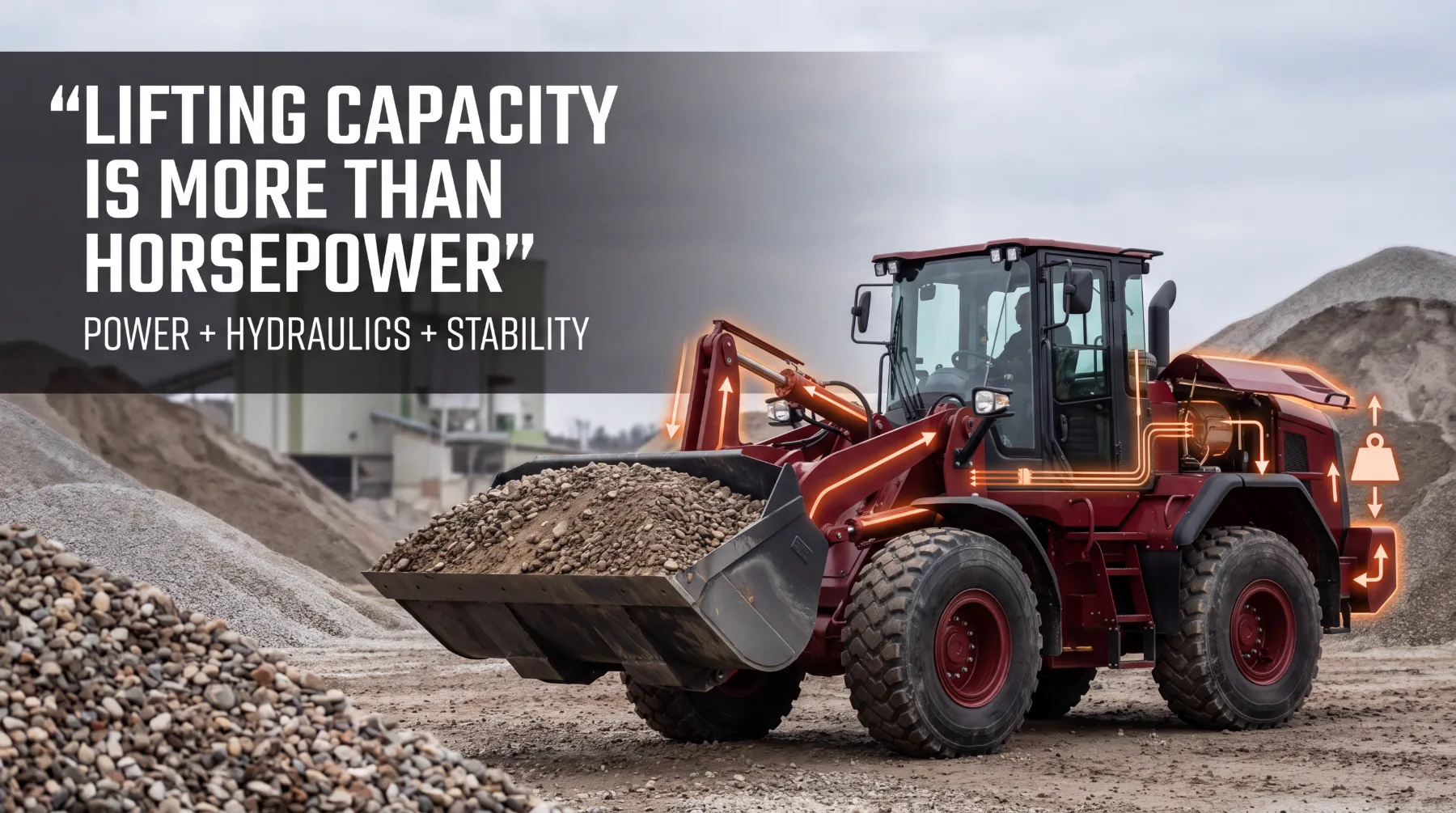
Why Wheel Loader Lifting Capacity Depends on More Than Engine Horsepower
Horsepower is often the first number buyers check when comparingwheel loaders, and it is easy to assume that more power means a heavier lift. The reality is more complicated. Engine horsepower is only the starting point. What actually raises a load is a chain of systems working together, from the hydraulics that turn power into lifting force to the weight and geometry that keep the machine stable. A loader with a strong engine can still fall short on lifting capacity if the rest of the machine is not built to match. This guide breaks down the five factors that truly define lifting capacity, so you can judge a wheel loader by what matters rather than by horsepower alone.
Hydraulic System Determines Lifting Performance
Engine horsepower supplies the raw energy, but the hydraulic system is what converts that energy into the force that raises a load. Without a capable hydraulic system, even a powerful engine cannot lift heavy material effectively. The engine drives the hydraulic pump, the pump moves fluid under pressure, and that pressurized fluid pushes the cylinders that raise the lift arms. Every part of that chain shapes how much the loader can actually lift, which is why hydraulics deserve as much attention as engine output. Two figures matter most here: pump flow and hydraulic pressure. Pump flow controls how fast the lift arms move, so a higher flow lets the loader raise a load quickly and keep cycle times short. Hydraulic pressure controls how much force the cylinders generate, so higher pressure translates directly into greater lifting force. A loader needs both working in balance, since strong pressure with weak flow lifts slowly, while strong flow with weak pressure cannot handle heavy loads. System efficiency ties these together and often separates a good loader from an average one. Consider where efficiency shows up: Pump quality affects how much of the engine's power reaches the cylinders rather than being lost as heat. Cylinder sizing determines how effectively pressure becomes usable lifting force at the arms. Hydraulic routing influences how smoothly fluid moves through the system under load. When these elements are well matched, the loader converts engine power into lifting force with minimal loss, delivering strong, responsive performance. When they are not, power leaks away before it ever reaches the load. This is why two loaders with similar horsepower can lift very differently. The one with a better-engineered hydraulic system puts more of its power to work, and that is the machine that lifts heavier loads with confidence.
Operating Weight Affects Stability
A wheel loader must stay stable while it lifts, and stability depends heavily on the machine's own weight. Lifting a heavy load at the front of the machine creates a tipping force, and the loader relies on its operating weight to counter that force and stay planted. A powerful engine does nothing to prevent tipping. No matter how much horsepower drives the hydraulics, the machine can only lift what it can hold safely without losing its footing. This is where operating weight sets a hard limit that horsepower cannot overcome. A heavier machine carries more mass to resist the tipping force created by a raised load, so it can handle heavier material safely. A lighter machine, even one with an impressive engine, reaches its stability limit sooner. The load may be well within the hydraulic system's lifting power, yet still exceed what the machine can carry without becoming unstable. In practice, stability, not raw lifting force, often defines the safe working limit. The way weight is carried matters as much as the total figure. A machine built for heavy lifting places its mass to balance the loads it will handle, keeping the center of gravity where it belongs even with a full bucket raised. This is why manufacturers publish rated operating capacity as a fraction of the tipping load, building in a safety margin that respects stability rather than pure lifting force. For operators, the lesson is practical. Judging a loader by horsepower alone ignores the weight and balance that actually keep it safe under load. A machine needs enough mass, distributed correctly, to lift its rated load without approaching the point of tipping. When you evaluate lifting capacity, look at operating weight alongside power, because stability is what turns lifting force into safe, dependable work.
Lift Arm Geometry Changes Capacity
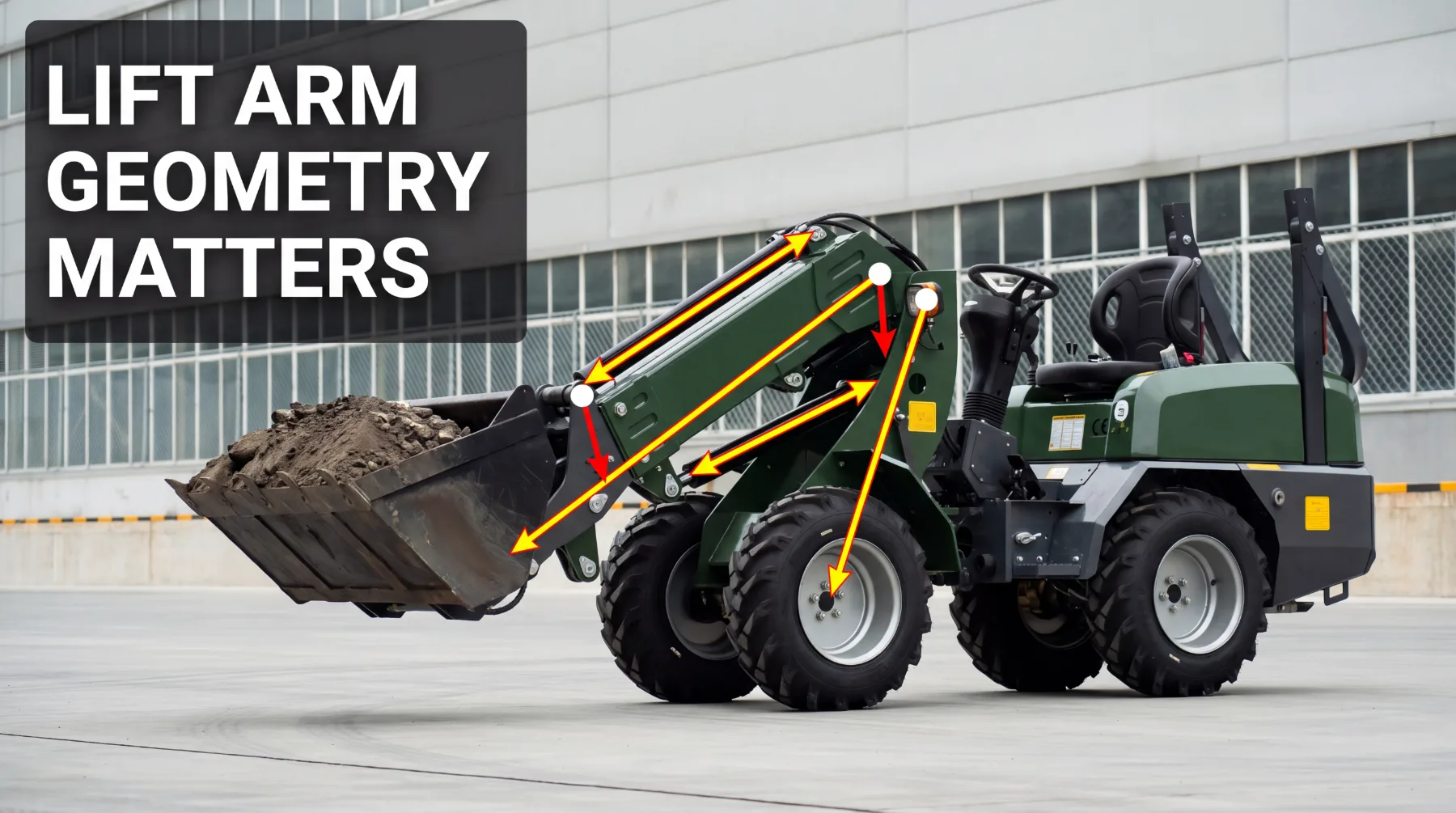
The design of a wheel loader's lift arms has a direct effect on how much force the machine can apply, and where in the lifting cycle it applies that force. Lift arm geometry, meaning the shape, length, and pivot arrangement of the linkage, determines how hydraulic force translates into lifting and digging performance. Two loaders with identical hydraulics can lift and dig differently simply because their linkage designs route force in different ways. Geometry matters because force is not constant throughout the lifting cycle. As the arms raise from ground level to full height, the leverage acting on the linkage changes, which affects how much the loader can lift at each point. A well-designed linkage keeps lifting force strong and consistent across the full range of motion, so the machine handles a load dependably whether the arms are low or fully raised. A poorly matched design may lift well at one point and weaken at another, limiting practical capacity. Linkage design also shapes breakout force, which is the force the bucket generates to pry material loose from a pile or the ground. Consider how geometry influences performance: Linkage type such as Z-bar or parallel-lift designs favors either strong breakout force or better load handling and visibility. Arm length and pivot points determine the leverage available at different stages of the lift. Bucket-to-arm connection affects how efficiently cylinder force becomes digging and curling power. Different designs suit different priorities. A Z-bar linkage typically delivers strong breakout force for aggressive digging, while a parallel-lift design keeps loads level and suits handling tasks like carrying pallets or placing material precisely. Neither is universally better; each matches a particular kind of work. When you assess a wheel loader, look beyond horsepower and hydraulics to how the lift arms are engineered, because that geometry decides how effectively the machine's force reaches the load throughout every lift.
Counterweight and Load Balance Matter
Balance is the quiet factor that often defines how much a wheel loader can lift in real conditions. A loader carries its heaviest loads at the front, and without something to balance that weight, the machine would pitch forward as the load rises. The counterweight and the machine's overall weight distribution provide that balance, keeping the loader steady and its rear wheels firmly grounded when it carries material. Poor balance can limit practical lifting capacity even when the engine has power to spare. The counterweight, usually built into or added to the rear of the machine, works as a deliberate counterbalance to the load up front. It shifts the machine's center of gravity rearward, offsetting the tipping force a raised load creates. The heavier and better-positioned the counterweight, the more front-end load the machine can carry safely before stability becomes a concern. This is why loaders built for heavy lifting carry substantial counterweights, and why weight distribution is engineered as carefully as the hydraulics. Load balance affects the machine throughout its work, not just at the moment of lifting. When a loader travels with a raised load, drives over uneven ground, or turns while carrying material, good weight distribution keeps it stable and predictable. A machine that is poorly balanced feels tippy and unsafe under these conditions, forcing the operator to carry lighter loads than the hydraulics could otherwise manage. In effect, poor balance throttles the machine's real capacity regardless of its horsepower or hydraulic strength. For dependable performance, the counterweight and load distribution must match the loads the machine is built to handle. A loader with balance suited to its intended work lifts, carries, and maneuvers confidently, using its full rated capacity safely. When balance falls short, practical capacity drops below what the rest of the machine could deliver, which is why weight distribution belongs in any honest assessment of lifting capability.
Rated Capacity Depends on the Whole Machine
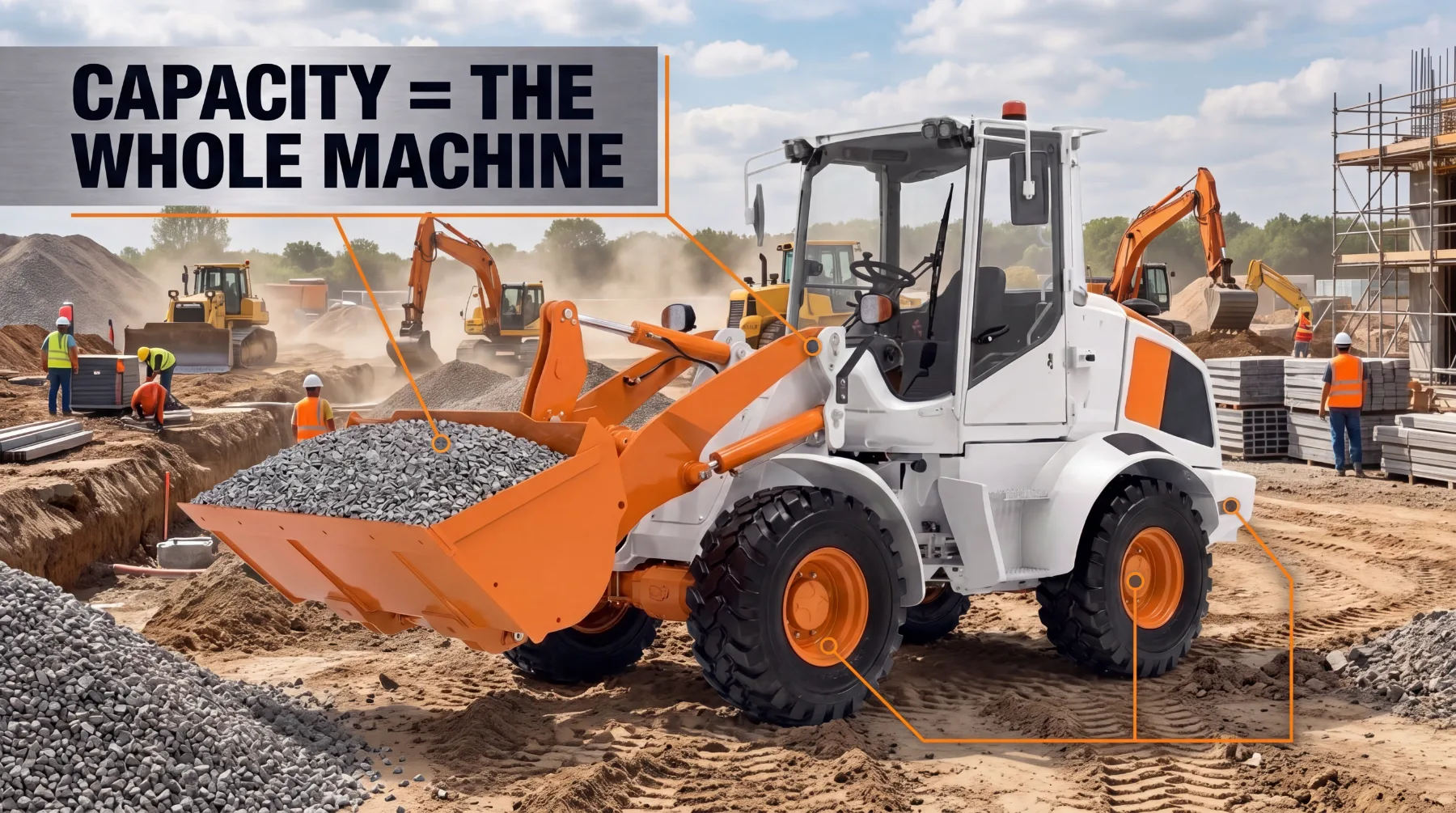
True lifting capacity is never the product of a single specification. It is the result of the engine, hydraulics, lift arms, tires, chassis, and overall design working together as one system. Each element contributes, and each can limit the whole if it is undersized or poorly matched. This is why rated capacity gives a far more honest picture of a loader's capability than horsepower ever could, and why choosing a machine on power alone can mislead you. Think of the machine as a chain in which every link must hold. The engine supplies power, the hydraulics convert it into lifting force, the lift arms apply that force through the lifting cycle, and the machine's weight and counterweight keep everything stable. Even the components that rarely get attention play a part: Tires carry the machine and its load, and they must support the weight and provide the traction that lifting and carrying demand. Chassis and frame bear the stress of heavy loads and hold the machine's structure rigid under strain. Axles and drivetrain transfer power and support the loads the machine handles across a working day. Because these systems depend on one another, a weakness in any one caps the machine's real capacity. A loader with a strong engine and capable hydraulics still cannot exceed what its frame, tires, and balance allow. This is precisely why manufacturers publish rated operating capacity, a figure calculated from the whole machine and built with a safety margin, rather than simply listing horsepower and letting buyers assume the rest. When you compare wheel loaders, treat rated capacity as the number that matters and horsepower as one input among many. Study how the complete machine is engineered, from hydraulics and lift geometry to weight, counterweight, tires, and chassis. A loader designed with all these elements in balance delivers the lifting capability its rating promises, and that is the machine you can rely on to perform safely and productively on every job. Conclusion Engine horsepower is a useful specification, but it never tells the full story of what a wheel loader can lift. Real lifting capacity comes from the hydraulic system that converts power into force, the operating weight that keeps the machine stable, the lift arm geometry that applies force through the cycle, and the counterweight that balances heavy loads. All of these work together, and the rated capacity reflects the whole machine rather than any single figure. When you choose your next wheel loader, look past horsepower and study how every system is engineered to work as one. To go deeper, explore our guides on matching a loader to your workload and understanding rated operating capacity.
Frequently Asked Questions
1. Why can't I judge a wheel loader's lifting capacity by horsepower alone? Horsepower only measures the engine's power output, not how that power becomes lifting force or whether the machine can lift safely. The hydraulic system converts engine power into force at the lift arms, and the machine's weight, counterweight, and geometry determine how much it can raise without tipping. A loader with high horsepower but weak hydraulics, insufficient operating weight, or poor balance will lift less than its engine suggests. This is why two loaders with similar horsepower can have very different rated capacities. Always judge lifting capability by the rated operating capacity, which reflects the complete machine rather than a single engine specification. 2. How does the hydraulic system affect lifting capacity? The hydraulic system is what actually raises a load, converting engine power into lifting force. The engine drives a pump that moves fluid under pressure, and that pressurized fluid powers the cylinders that lift the arms. Pump flow controls how fast the arms move, while hydraulic pressure controls how much force the cylinders generate. Both must work in balance, since strong pressure with weak flow lifts slowly and strong flow with weak pressure cannot handle heavy loads. System efficiency also matters, because a well-engineered hydraulic system delivers more of the engine's power to the load with less loss, producing stronger, more responsive lifting. 3. Why does operating weight matter so much for lifting? Lifting a heavy load at the front of the machine creates a tipping force, and the loader relies on its own weight to resist that force and stay stable. Horsepower does nothing to prevent tipping, so a machine can only safely lift what its weight and balance allow. A heavier loader carries more mass to counter the tipping force, letting it handle heavier material without becoming unstable. A lighter machine reaches its stability limit sooner, even if the hydraulics could lift more. In practice, stability often sets the safe working limit, which is why operating weight is central to real lifting capacity. 4. What is breakout force and how does lift arm geometry affect it? Breakout force is the force the bucket generates to pry material loose from a pile or the ground, and it is essential for digging performance. Lift arm geometry, meaning the shape, length, and pivot arrangement of the linkage, determines how hydraulic force translates into both breakout force and lifting capacity. A Z-bar linkage typically delivers strong breakout force for aggressive digging, while a parallel-lift design keeps loads level and suits handling and placement tasks. The geometry also affects how consistent lifting force stays throughout the lift cycle. Because linkage design routes force differently, two loaders with identical hydraulics can dig and lift quite differently. 5. Why do manufacturers publish rated operating capacity instead of just lifting force? Rated operating capacity reflects the whole machine working together, which gives a far more honest picture of real capability than lifting force or horsepower alone. It accounts for the engine, hydraulics, lift arms, counterweight, tires, chassis, and weight distribution, and it includes a safety margin based on the machine's tipping load. Because every system depends on the others, a weakness in any one limits the whole, so a single specification cannot capture true capacity. The rated figure tells you what the loader can lift safely and dependably in real conditions, making it the number you should rely on when comparing machines.