Skid Steer for Material Handling and Construction Work
Discover how skid steers improve construction productivity through efficient material handling, truck loading, site preparation, grading, and versatile attachments, with practical tips for safe operation and effective jobsite planning.
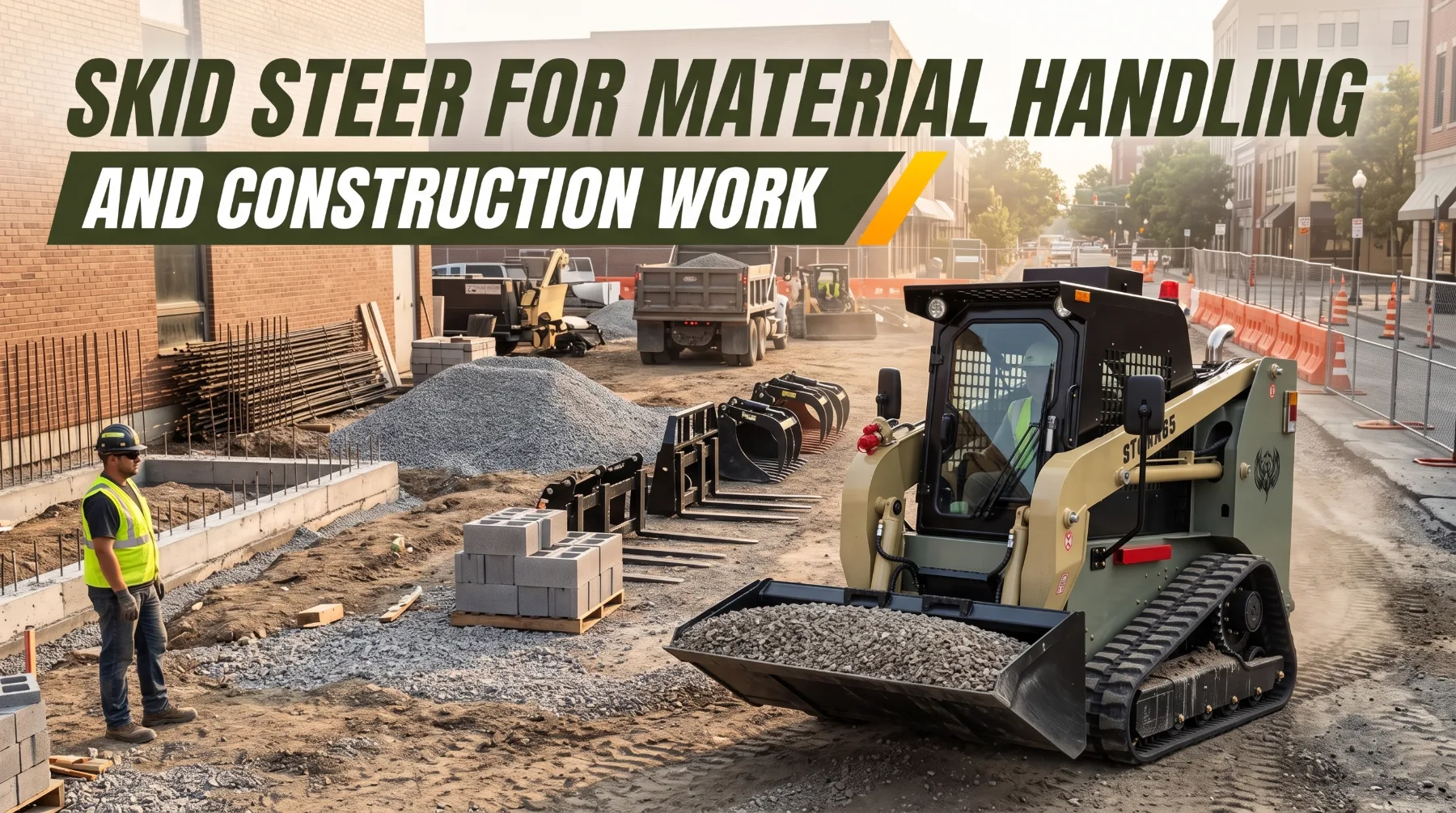
Across construction projects, skid steers handle tasks ranging from material transport and truck loading to debris removal and surface preparation. Poor site layout, unsuitable attachments, and oversized loads can slow progress, damage materials, and increase handling risks. Organizing travel routes, stockpiles, and work areas helps reduce wasted movement and improve daily output.
Choosing the right attachment and operating method helps match the machine to each task. General-purpose buckets handle soil, gravel, and loose debris, while pallet forks transport block and other palletized materials. Grapples manage irregular demolition waste, and appropriate load sizes help maintain stability during travel and truck loading. Machine capacity, material weight, ground conditions, and available turning space also influence efficiency.
Effective site planning starts with positioning stockpiles near active work areas, keeping travel paths clear, and establishing safe turning points. Operators should select suitable attachments, distribute loads evenly, and follow rated capacity limits to support safe material handling. Combining organized workflows with proper operating techniques helps maintain consistent productivity across construction projects.
Moving Materials Around the Jobsite
Material movement is the backbone of skid steer work. On a typical construction site, soil, gravel, sand, debris, and other materials arrive at one point and need to reach several others. A skid steer carries those materials between stockpiles, work areas, and disposal points far faster than a crew working by hand, which frees laborers to focus on installation and finishing.
The machine's compact size is a major advantage. A skid steer can travel along building walls, between material piles, and through narrow site passages where larger loaders struggle to turn. That access only pays off when the travel path and ground conditions suit the machine. Soft soil, recent backfill, deep ruts, and scattered debris slow travel, unsettle loads, and wear tires quickly. Before material movement begins, walk the route, fill holes and ruts where practical, clear debris, and lay ground protection mats where the machine must cross soft or finished surfaces.
How the load travels matters as much as the route. Carry the bucket low, just high enough to clear the ground and obstacles, and keep the load centered. A low load keeps the center of gravity down, protects forward visibility, and reduces spillage over bumps. On slopes, travel straight up and down rather than across, and keep the heavy end uphill as the manufacturer directs. Slow down well before rough ground instead of braking hard on it.
Stockpile placement also shapes travel efficiency. Piles set close to the work, with a firm, clear path between them, shorten every cycle. Separate piles keep gravel, topsoil, and sand from mixing, and placing them away from excavation edges, walkways, and traffic lanes keeps the site safe. Short, steady trips over a prepared route move more material per hour than long trips over rough ground at higher speed.
Key takeaway:akeaway: A skid steer moves soil, gravel, sand, and debris efficiently between work areas when the travel path is prepared, loads are carried low and centered, and stockpiles sit close to the work.
Loading and Stockpile Management
Loading is one of the most common jobs a skid steer performs. With a bucket, the machine collects loose material and places it into trucks, hoppers, containers, or designated storage areas. Effective loading depends on bucket capacity, material density, machine capability, and the distance between the stockpile and the discharge point.
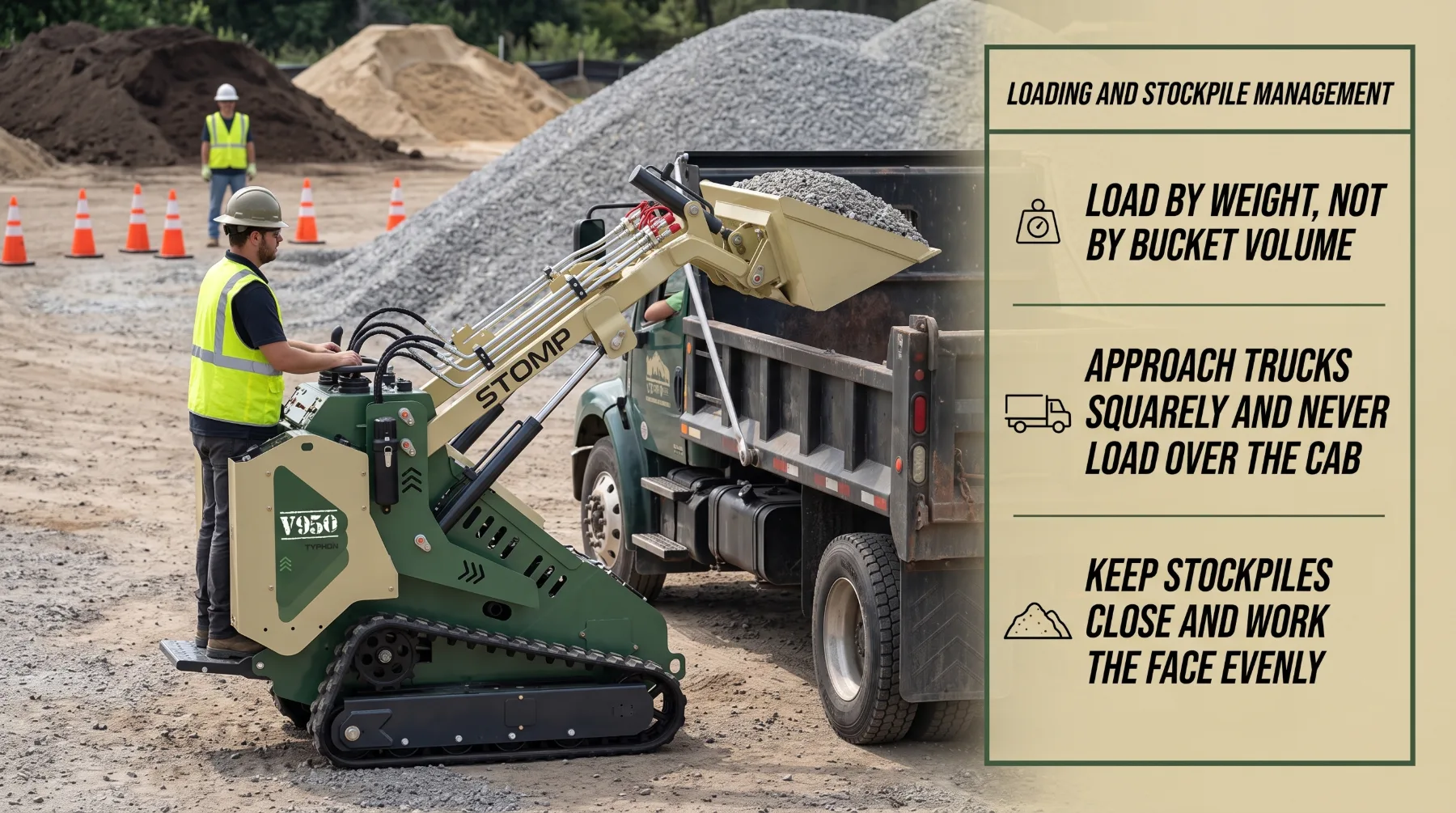
A productive loading cycle starts at the pile. Approach the material squarely with the machine level and the bucket flat on the ground, push in at a steady speed, and curl the bucket back as it fills. A slight lift during the curl helps fill the bucket and reduces tire spin. Back out smoothly with the load carried low, travel to the discharge point, and raise the bucket only as you approach the truck or hopper. Tilt the bucket forward gradually so material lands where it's needed without spilling over the side.
Material density determines how much you can safely carry. A bucket of dry topsoil weighs far less than the same bucket of wet clay, crushed stone, or broken concrete. Dense materials can reach the machine's rated operating capacity long before the bucket looks full, and the bucket's own weight counts against that capacity. Load by weight first, using the material's approximate density and allowing for added weight from moisture. A light feeling at the rear, slow lifting, or heavy bouncing during travel is a clear signal to reduce the load.
Truck loading calls for extra care. Approach the truck at a right angle, confirm the machine can reach over the side walls, and spread material evenly from front to back. Never raise or swing a load over the truck cab or anyone nearby, and keep the driver in the cab or in a designated safe position. Good stockpile management supports every cycle. Work the pile face evenly to avoid undercutting, keep the loading area firm and level, and place piles so the distance to the discharge point stays short.
Key takeaway:akeaway: Efficient loading depends on smooth cycles, loads matched to material density and rated capacity, careful truck loading, and stockpiles placed close to the discharge point.
Site Preparation and Grading
Every slab, sidewalk, parking area, and landscape feature depends on properly prepared ground. Skid steers support this work by spreading aggregate, leveling soil, backfilling, and shaping surfaces before paving or construction begins. With the right technique and a suitable grading attachment, a skid steer can produce a consistent surface and reduce the hand raking a crew would otherwise need.
Spreading material well starts with partial loads. Carry a moderate amount of gravel or base material, lower the bucket close to the ground, and tilt it gradually as the machine moves forward so material releases in an even layer. Then smooth the surface by back-dragging, pulling the bucket backward with light down pressure. Where the machine is equipped with a float function, use it to let the bucket follow the ground. Overlap each pass slightly so the strips blend together, and keep the cutting edge level throughout.
Accuracy turns rough work into finished work. Set grade stakes, string lines, or a laser level before you start, and check elevations often as material goes down. Drainage should guide every grading decision, so the finished surface moves water away from buildings and toward suitable outlets. Small corrections during spreading are far easier than reworking a compacted base. Base material under slabs and paving should be placed in lifts and compacted according to project requirements.
For larger areas or tighter tolerances, a dedicated grading attachment such as a box blade, land plane, or grader attachment often produces more consistent results than a bucket alone. Backfilling around new foundations requires care as well. Place backfill in controlled lifts, avoid dumping heavy loads against fresh walls, and keep the machine a safe distance from wall edges and excavations. Before digging or cutting grade, contact your local utility locating service and confirm lines are marked.
Key takeaway:akeaway: A skid steer spreads aggregate, levels soil, and prepares surfaces efficiently when operators use partial loads, smooth back-dragging, frequent grade checks, and suitable grading attachments.
Attachment Options for Construction Tasks
Attachments make skid steers versatile by allowing one machine to handle loading, lifting, clearing, trenching, and grading. Choosing the right attachment and checking compatibility, hydraulic requirements, and rated capacity help improve efficiency and jobsite safety.
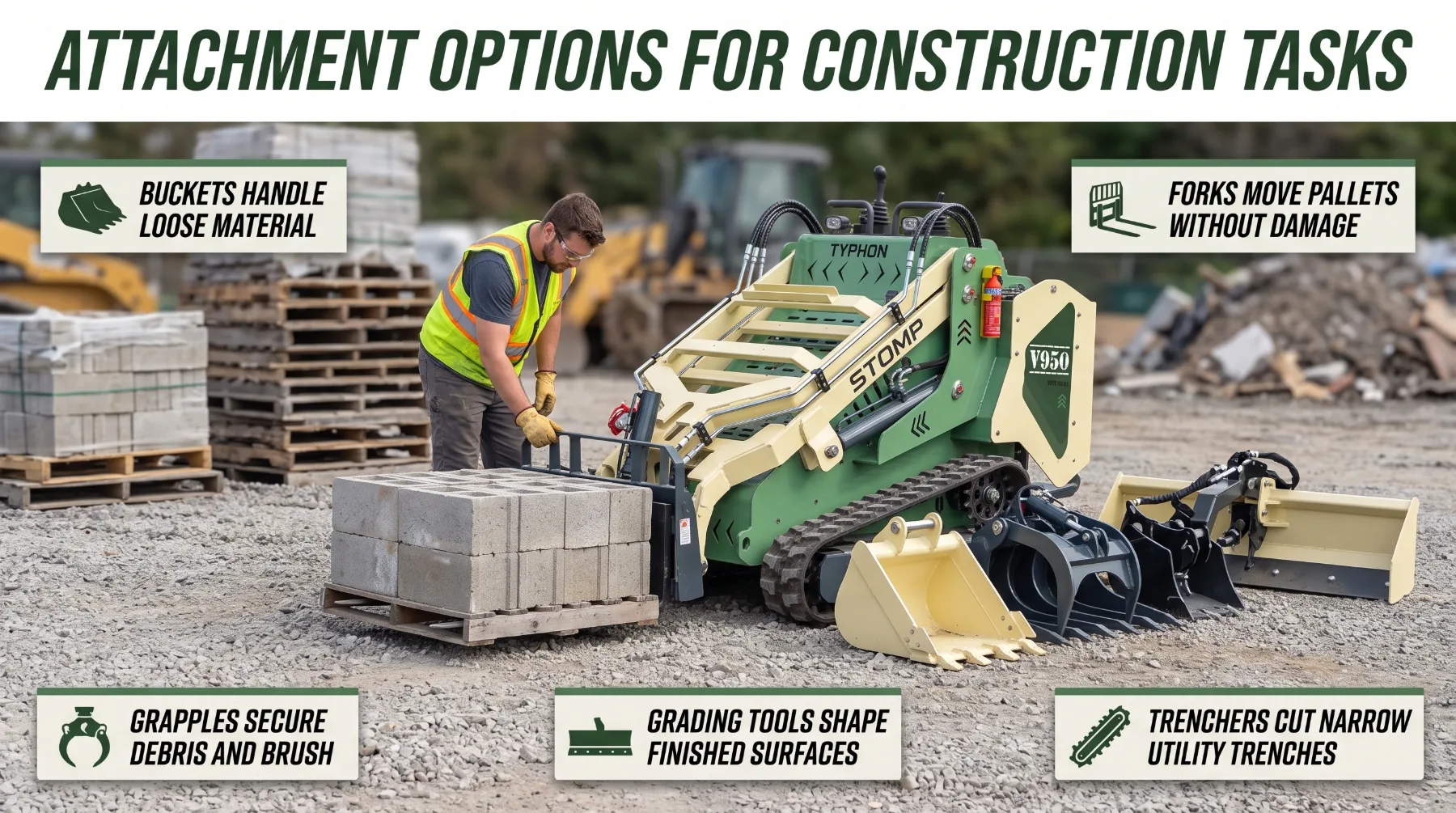
- Buckets: Handle soil, gravel, sand, and debris. Choose the bucket type and size based on the material and the machine's rated capacity.
- Pallet Forks: Move pallets of blocks, bricks, pavers, and bagged materials. Position the forks correctly, center the load, and carry it low for better stability.
- Grapples: Secure brush, logs, scrap lumber, and bulky debris. Make sure the load is held firmly and cannot shift during movement.
- Trenchers: Cut narrow trenches for utilities, irrigation, and drainage. Check hydraulic compatibility and locate underground utilities before digging.
- Grading Attachments: Smooth and level surfaces for paving, sod, or concrete preparation. Choose an attachment suited to the required finish and follow its operating instructions.
Every attachment change should follow the same safe procedure. Park on firm, level ground, clean mud and debris from the coupler, seat the attachment, and engage the locking levers or powered lock according to the manufacturer's instructions. Visually confirm that both locking pins or wedges pass fully through the attachment's slots before lifting any load. For hydraulic attachments, relieve system pressure before connecting hoses, wipe couplers clean, and route hoses away from pinch points.
Key takeaway:akeaway: Buckets, pallet forks, grapples, trenchers, and grading attachments expand a skid steer's capabilities, so confirm compatibility, hydraulic requirements, rated capacity, and a fully engaged lock before every use.
Maneuverability and Jobsite Access
A skid steer's compact dimensions let it work around buildings, material piles, fences, and restricted access routes. That maneuverability makes it valuable on infill lots, renovation projects, and busy commercial sites. It also brings responsibilities, since tight spaces put the machine close to people, structures, and other equipment.
Skid steers steer by varying the speed and direction of the wheels or tracks on each side, which allows the machine to turn within a very small footprint. That tight turning helps in confined areas, but it also means the rear of the machine and the attachment sweep through space quickly. Before operating in a restricted area, measure the narrowest passages, gate widths, and overhead clearances, and compare them with the machine's dimensions, including the attachment in its travel position. Leave room for safe operation rather than planning to the inch.
Adequate clearance matters most when turning, carrying loads, and working near people. A loaded bucket or a pallet on forks extends the machine's working envelope and can strike walls, fences, and stored materials during a turn. Raised loads also block forward visibility. Carry loads low, turn gradually where space allows, and look in the direction of travel before every move. Sharp counter-rotating turns on pavement and finished surfaces can also scuff the surface and wear tires quickly.
Site planning supports safe access. Separate machine travel routes from pedestrian walkways with barriers where possible, mark turnaround areas so the machine doesn't need long reversing moves, and require high-visibility clothing for everyone on site. Keep workers on foot clear of pinch points between the machine and fixed objects. Use a trained spotter where visibility is limited, and stop all movement if anyone enters the work area unexpectedly. Fasten the seat belt and lower the safety bar before operating, and never bypass safety interlocks.
Key takeaway:akeaway: Compact dimensions let a skid steer work in restricted areas, but operators still need adequate clearance for the machine and attachment, especially when turning, carrying loads, or working near people and structures.
Matching Operation to the Workload
A skid steer's versatility delivers its full value only when the machine is set up and operated for the work at hand. Machine capacity, hydraulic performance, attachment type, material weight, and ground conditions all influence productivity. Planning the work sequence and reducing unnecessary travel improve cycle times while keeping the machine within its operating limits.
Start by matching the machine to the job. Rated operating capacity sets how much the machine can safely carry, and auxiliary hydraulic flow and pressure determine which powered attachments it can run effectively. A machine working near its limit on every load wears faster and leaves no margin on rough or sloped ground. Wheeled skid steers generally suit firm, paved, and gravel surfaces, while tracked models spread weight across soft or sensitive ground. Choose the configuration that suits the surfaces you work on most.
Planning the sequence shapes daily output. Group similar tasks together so attachment changes stay to a minimum, and organize work so the machine finishes the farthest areas first and works back toward the access point. That approach keeps the machine off finished surfaces and fresh grades. Coordinate with the crew so material arrives when and where it's needed, and keep stockpiles close to their placement areas to shorten every trip.
Operating technique ties everything together. Smooth, gradual control inputs keep loads stable and reduce wasted motion. Steady, consistent cycles sustained over the full shift move more material than bursts of speed followed by spillage, repositioning, and cleanup. Adjust technique to each task, using efficient cycles for loading, small precise inputs for grading, and slow, careful lifting for pallets. Many machines offer adjustable control response, so use smoother settings for fine work and confirm the active control pattern before moving. Stay alert to changing ground conditions throughout the day, since a route that was firm in the morning can soften after rain or heavy use.
Key takeaway:akeaway: Matching machine capacity, hydraulic performance, attachments, material weight, and ground conditions to the job, while planning the sequence and reducing unnecessary travel, keeps productivity high and operation within safe limits.
Conclusion
Skid steers support a remarkable range of material-handling and construction tasks from one compact, maneuverable machine, and the results depend on how well the machine, attachment, and operating method fit each job. Prepared travel routes and well-placed stockpiles keep material moving efficiently, while smooth loading cycles and loads matched to material density keep trucks and hoppers filling cleanly within rated capacity. Partial loads, careful back-dragging, frequent grade checks, and the right grading tools turn rough ground into surfaces ready for paving and construction. Buckets, pallet forks, grapples, trenchers, and grading attachments expand the machine's reach across the jobsite when each one is compatible and fully secured, and compact maneuverability pays off when operators respect clearance, visibility, and the people working nearby. When you plan the work sequence, manage loads carefully, and keep every movement controlled, your skid steer delivers dependable, efficient performance across residential, commercial, and infrastructure projects. Before your next shift, walk the travel routes, confirm the right attachment is mounted and locked, and check the capacity decal against the weight of the day's materials.
Frequently Asked Questions
What materials can a skid steer handle?
Depending on the machine and attachment, skid steers can handle soil, gravel, sand, construction debris, pallets, brush, and other materials. Always estimate load weight and stay within the machine's rated operating capacity.
Which attachments are useful for construction work?
Buckets, pallet forks, grapples, trenchers, and grading attachments support loading, lifting, digging, and surface-preparation tasks. Confirm compatibility, hydraulic requirements, and a fully engaged lock before use.
Can a skid steer work in confined spaces?
Yes. Its compact design helps it access restricted areas, provided the machine and attachment fit safely within the available space. Measure passages and clearances, and keep people clear of pinch points.
What affects skid steer material-handling productivity?
Machine capacity, attachment choice, material weight, travel distance, ground conditions, and operator technique all influence productivity. Planning the work sequence and shortening travel routes improve cycle times.