Using Compact Tri-Loaders for Paver Preparation and Hardscape Installation
Discover how compact tri-loaders simplify paver preparation and hardscape installation by transporting aggregate, bedding materials, and paver pallets through tight spaces. Learn how to manage loads safely, prepare stable bases, coordinate crews, and protect finished paving for efficient, high-quality results.
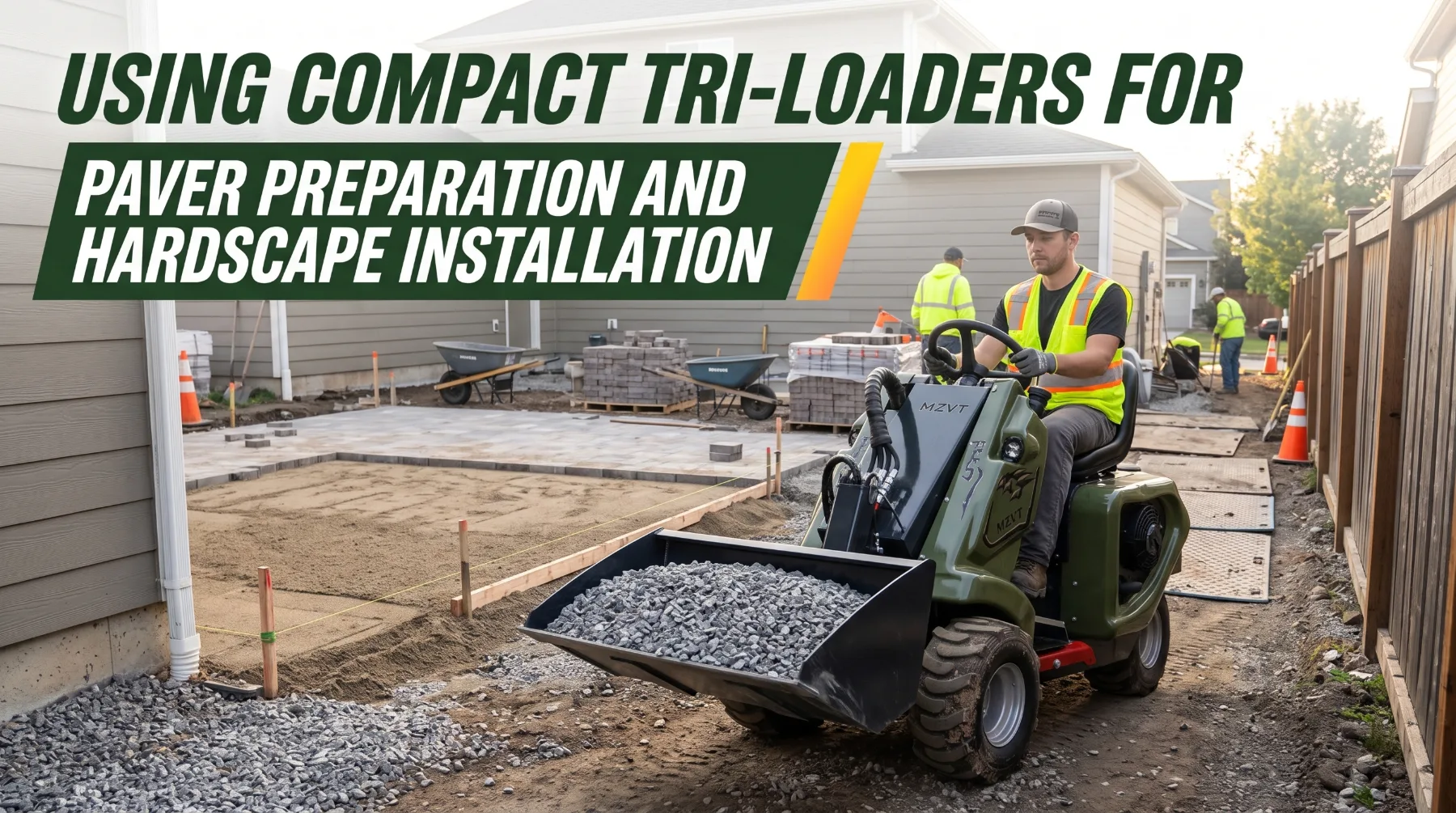
A paver patio, walkway, or driveway is only as good as the work beneath it. Every hardscape project depends on a carefully built sequence: excavation to the right depth, a compacted base of aggregate, a smooth layer of bedding material, and pavers set to precise lines and grades. Each layer supports the next. When one is disturbed, contaminated, or built out of tolerance, the finished surface can settle, shift, or crack long before it should.
That sequence also involves moving a great deal of heavy material. A single residential patio can require many tons of base aggregate, several yards of bedding sand, and multiple pallets of pavers. Much of it has to travel from a driveway or street delivery point, through gates and side yards, and into a backyard work zone where larger equipment cannot fit. Moving it with wheelbarrows is slow and physically punishing. Moving it carelessly with a machine can rut the base, scatter bedding sand, and damage freshly laid pavers.
Compact tri-loaders bridge that gap. Their small footprint and steady control let crews carry aggregate, bedding material, and compatible palletized loads through tight access routes to the installation area. Used well, a tri-loader speeds up material handling, reduces strain on the crew, and keeps the project on schedule.
Used carelessly, the same machine can undo hours of careful preparation. A heavy bucket of wet aggregate can exceed the machine's rated capacity. A sharp turn on a screeded bed can ruin the grade. A careless pass across newly set pavers can shift units before the joints are filled. A worker kneeling to lay pavers can sit in the operator's blind spot.
Moving Base Aggregate
Base aggregate forms the supporting layer beneath a finished hardscape and must be placed and compacted according to project specifications. A tri-loader helps move crushed stone, sand, and other materials from stockpiles to the installation area, but dense materials can quickly exceed the machine's rated capacity.
Bucket size does not indicate load weight. Crushed stone, sand, and soil can weigh significantly more when wet, so check supplier information and estimate the weight before loading. Compare the estimated load with the machine's rated capacity, including the attachment's weight. Reduce the bucket fill for heavy materials, load evenly, and lower the bucket immediately if the machine shows signs of instability or overloading.
Keep travel routes firm and clear before hauling begins. Check for soft soil, slopes, irrigation heads, drainage covers, and other hazards that could affect stability. Use suitable ground protection on sensitive surfaces, reassess routes after rain, and carry the bucket low during travel. If the load blocks visibility, reduce the fill or use a safer method of transport.
Key takeaway: Estimate aggregate weight, stay within rated capacity, travel on firm ground, and keep the bucket low for better visibility and stability.
Coordination With Installation Crews
Hardscape projects involve workers setting pavers, preparing bedding, operating compactors, and cutting materials near machine travel routes. Since workers may be looking down or operating noisy equipment, clear communication is essential for preventing collisions and keeping work organized.
Before starting, brief the crew on delivery routes, staging areas, work sequences, and restricted zones. Agree on hand signals or radio calls for stopping, reversing, and placing loads. Use one trained spotter when visibility is limited, and ensure the spotter remains visible from a safe position outside the machine's travel path and turning area.
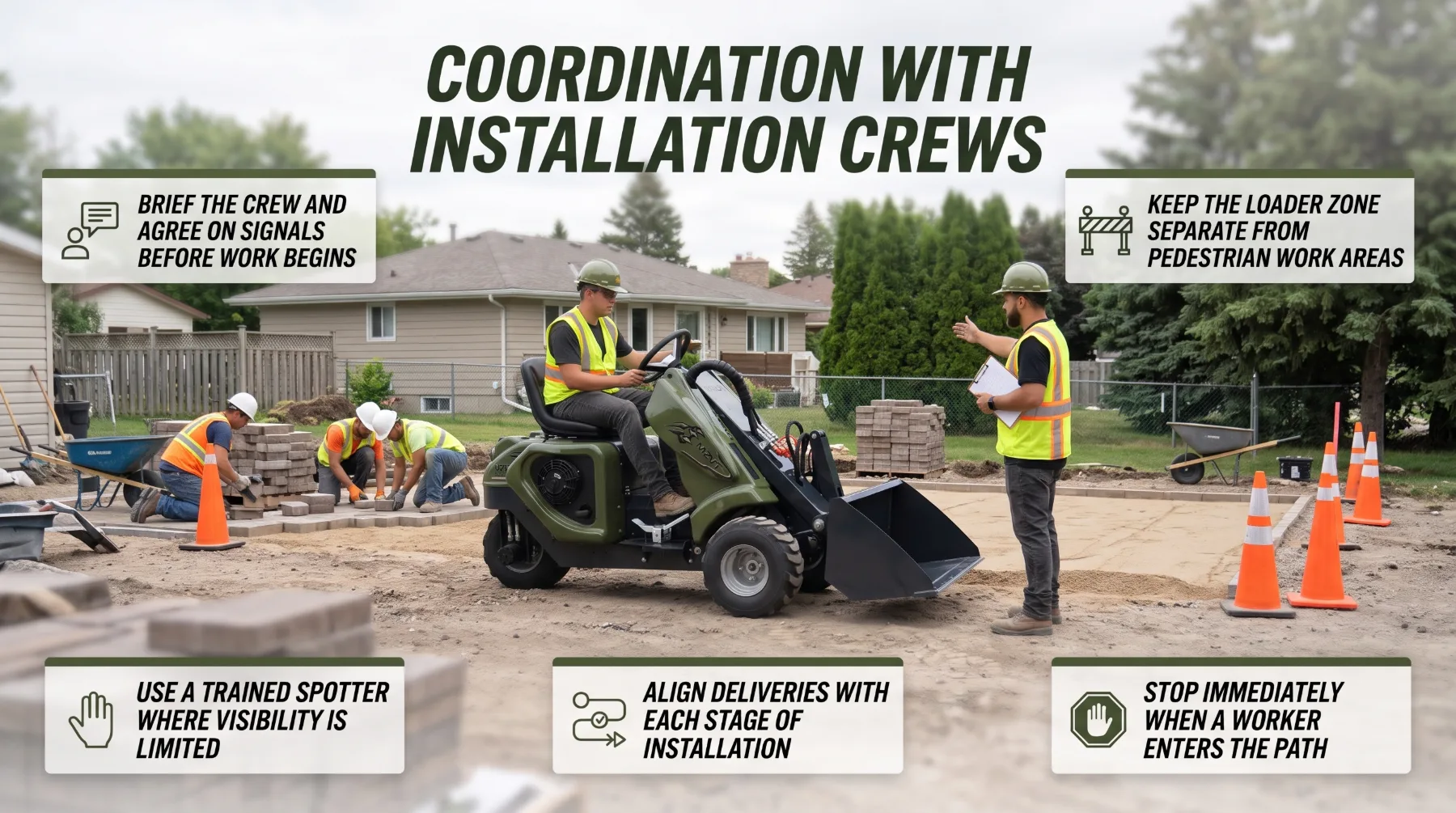
Keep workers away from the tri-loader's travel route, turning area, and loading and unloading points. Stop immediately if someone enters the operating zone, the spotter disappears from view, or instructions become unclear. Inspect the brakes, steering, tires or tracks, hydraulic functions, attachment locks, horn, lights, backup alarm, and seat belt before each shift. Remove the machine from service if a defect affects safe operation.
Key takeaway: Brief the crew before work, separate pedestrian areas from machine routes, use a spotter when needed, and stop whenever the operating area is not clear.
Preparing the Work Area
Proper site preparation helps create a stable foundation for hardscape installation. A tri-loader can move excavated soil, remove debris, and transport aggregate, but the work area must be cleared and prepared according to the project plan before base materials are placed.
Remove vegetation, roots, topsoil, construction waste, and unsuitable soil where required. Organic material can decompose and leave gaps beneath the finished surface, while loose debris may create uneven support. Move excavated material to designated stockpiles that do not block access routes, drainage paths, or material staging areas.
Before excavation, complete the required utility locating process, including contacting 811 in the United States where applicable. Mark the installation boundaries, excavation depth, finished elevations, and drainage slopes using the project plans and suitable measuring tools. Place and compact base material in specified layers using the required equipment, and plan machine routes to avoid disturbing prepared sections.
Key takeaway: Clear unsuitable material, locate buried utilities, mark project elevations, and protect prepared ground while following the specified grading and compaction requirements.
Distributing Bedding Material
Bedding material sits between the compacted base and the pavers, helping create a consistent surface for installation. Because this layer is thin and easily disturbed, careful material delivery is important for maintaining the required grade and preventing uneven paving.
Use the bedding material specified for the project and keep it separate from soil and base aggregate. Clean the bucket before loading to prevent contamination. Deliver sand or other approved bedding material in manageable amounts that match the installation crew's working pace, placing loads at designated locations where workers can spread them efficiently.
Avoid driving heavily loaded equipment across the prepared base unless the work plan permits it. Do not drag the bucket across the surface or make sharp turns that could loosen material or change the grade. Once bedding has been screeded, keep machine and foot traffic off it. Monitor weather conditions and avoid preparing more bedding than the crew can cover with pavers during the same work period.
Key takeaway: Keep bedding material clean, deliver manageable loads, protect the prepared base, and never travel over screeded bedding.
Handling Pavers and Palletized Materials
Pavers often arrive on pallets that can be heavy and difficult to balance. Moving them with a tri-loader requires an approved attachment, accurate load information, and a clear route to prevent dropped materials, damaged products, and injuries.
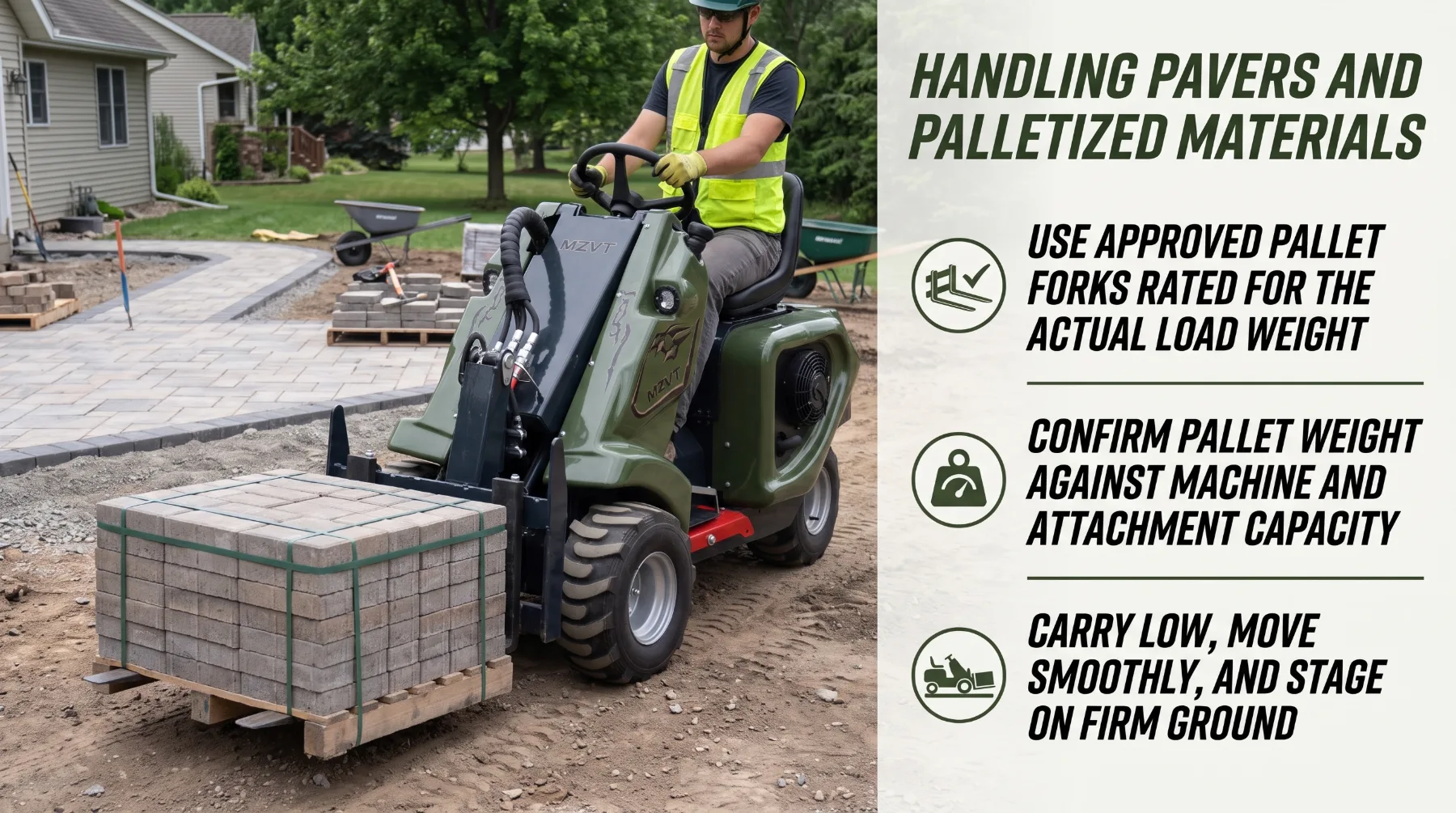
Use approved pallet forks or other attachments designed for the specific machine and load. Inspect the attachment for damage and confirm that its mounting locks engage fully before lifting. Check the actual pallet weight using supplier information, then compare it with the attachment rating and the machine's rated capacity, including the load center. Split oversized loads into smaller, secure loads when necessary.
Before transport, inspect pallets for broken boards, loose wrapping, and shifted pavers. Center the load, keep restraints intact until the pallet reaches its placement location, and carry it as low as practical while maintaining ground clearance. Travel smoothly and avoid sudden braking or sharp turns. Stage pallets on firm, level ground away from soft soil, slopes, and newly prepared paving surfaces.
Key takeaway: Use approved pallet-handling attachments, verify load weight, secure pallets, and transport them low over firm ground.
Maneuvering Around Finished Hardscape
As hardscape installation progresses, finished paving leaves less room for machine travel. Newly installed pavers can shift, chip, or settle if driven over before the installation has reached the stage specified for equipment access.
Plan the installation sequence so materials can be delivered without crossing completed sections. Where practical, begin laying pavers at the farthest point and work toward the exit. Keep a designated travel lane open until deliveries are complete, and mark restricted areas with cones or barriers to prevent accidental entry.
Use low speeds, wide turns, and gentle braking when operating near finished surfaces. Avoid driving over newly installed pavers unless the installation method and site plan specifically permit it. Pay special attention to edges, transitions, steps, and edge restraints, which can be damaged by wheel loads or contact with the attachment. Clean up spilled aggregate and sand promptly to prevent surface scratches and contamination.
Key takeaway: Plan material routes before installation, protect finished paving, and use slow, controlled movements near edges and transitions.
Conclusion
Compact tri-loaders can support paver preparation and hardscape installation by moving aggregate, bedding materials, and compatible loads through spaces larger equipment cannot reach. That value depends on how the machine is used and maintained at every stage. Regular maintenance checks, including inspecting hydraulic hoses, fluid levels, tires or tracks, and attachment connections, help maintain reliable performance and reduce unexpected downtime. Estimating the true weight of dense, damp aggregate keeps each bucket within rated capacity, while firm, protected routes and a low carry position preserve stability and visibility. Accurate excavation limits, clear elevation references, and adherence to the project's grading and compaction specifications create a base that will hold up for years, while careful route planning keeps the machine off prepared sections.
Bedding material delivered in controlled amounts, without disturbing the base or the screeded layer, protects the grade that every paver depends on. Approved attachments, verified pallet weights, and stable, low-carried loads keep paver handling safe. Thoughtful sequencing, low speeds, and wide turns protect finished hardscape, especially at edges and transitions. Clear communication, a defined operating zone, and a firm rule to stop when anyone enters the path keep the installation crew safe.
When you plan each phase with these practices in mind, proper load control, route planning, and coordination protect prepared surfaces, maintain an orderly work sequence, and deliver a finished hardscape your customers can rely on.
FAQs
Can a tri-loader spread aggregate for a paver base?
It may assist with material distribution, but the final grade and compaction must meet the project's specifications. A tri-loader can carry aggregate to the work area and place it where the crew can spread it efficiently. Base material is typically placed in specified lifts and compacted with suitable compaction equipment to the required density. Avoid using wheel traffic as a substitute for compaction, and keep the machine off compacted sections wherever possible to protect established elevations.
Can a loader carry a pallet of pavers?
Only if the attachment and machine are rated for the actual load and the load can be secured safely. Full pallets of pavers can weigh several thousand pounds, which may exceed the capacity of many compact machines. Confirm the pallet weight from supplier data, check the rating of both the forks and the machine at the relevant load center, and split the load into smaller approved quantities if it exceeds capacity. Use only approved pallet forks or carriers, keep the load low, and travel on firm ground.
Should the loader travel across newly installed pavers?
Avoid doing so unless the installation method and site plan permit it. Newly set pavers can shift, chip, or settle under equipment loads, especially before edge restraints are secured, joints are filled, and the surface has been compacted. Plan the installation to work toward the exit so the machine never needs to cross finished sections. If crossing is permitted and unavoidable, use approved ground protection, keep the machine lightly loaded, and travel slowly in a straight line without turning.
How can loader movements be coordinated with paver crews?
Use clear travel routes, agreed signals, and separation between the operating area and workers on foot. Hold a briefing before each shift to review deliveries, routes, and staging areas. Mark the loader's operating zone, require workers to make eye contact and receive a signal before approaching, and use a trained spotter where visibility is limited. Schedule deliveries to match the crew's pace, and stop the machine immediately whenever a worker enters its path.