August 11, 2026
7 Essential Wheel Loader Bucket Capacity Tips for Better Performance
Discover wheel loader bucket capacity, bucket types, material density, loading limits, and 7 essential tips for safer, more efficient performance.
Wheel Loader Bucket Capacity Explained
Bucket capacity is one of the most important specifications on any wheel loader, yet it's often misunderstood. Get it right, and you move material efficiently, protect your machine, and keep every cycle safe and productive. Get it wrong, and you risk overloading, premature wear, and lost time. This post breaks down what bucket capacity really means, the factors that shape it, how to choose the right bucket for your work, and how capacity affects performance. You'll also find practical tips for maximizing both efficiency and safety, so you can match your bucket to the job with confidence and get the most from your equipment. What Does Wheel Loader Bucket Capacity Mean?
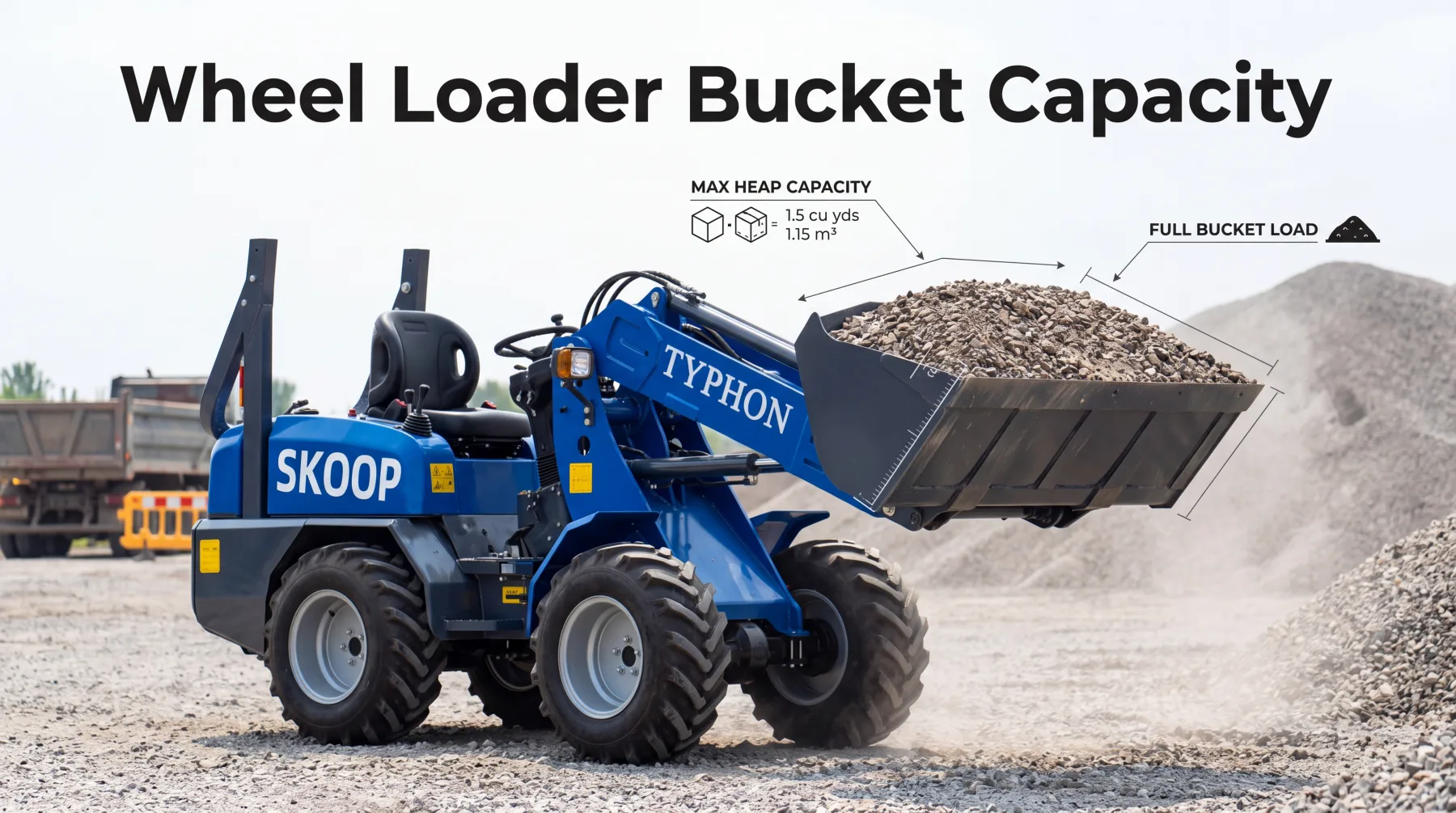
Wheel loader bucket capacity refers to the volume of material a bucket can safely carry, and it's typically measured in cubic yards in the United States or cubic meters elsewhere. In simple terms, it tells you how much material fits in the bucket during a single pass. That figure forms the foundation for judging how well a particular machine suits the work you need it to do, which is why understanding it matters so much before you buy, rent, or assign a loader to a job. Capacity is usually expressed in a couple of different ways, and knowing the difference helps you read the specifications accurately: Struck capacity, the volume the bucket holds when material is level with its edges, with nothing heaped above. Heaped capacity, the larger volume the bucket holds when material mounds above the edges at a natural angle. Manufacturers publish both figures, and comparing them correctly keeps your expectations realistic when planning how much a machine can actually move per cycle. Understanding capacity does more than help you compare machines; it directly protects your equipment and your operation. When you know a bucket's true capacity, you can choose a loader sized to your workload rather than one that's too small to keep pace or too large for the space and materials involved. Just as importantly, this knowledge helps you avoid overloading, which strains the hydraulics, compromises stability, and accelerates wear across the machine. Treating bucket capacity as a working specification rather than a rough guess gives you a dependable basis for smart, safe decisions and steady, efficient performance on every job.
Factors That Affect Bucket Capacity
Bucket size is the obvious starting point, but it's only one part of a larger equation. A bucket rated for a certain volume won't always carry that volume safely, because several other factors determine how much material the loader can actually handle. Focusing on bucket size alone leads to overloading and disappointment, so it pays to understand everything that influences the effective, usable load. Material density is often the deciding factor. A bucket filled with light mulch weighs far less than the same bucket filled with wet sand or gravel, even though the volume is identical. Because the loader has a rated lift capacity measured in weight, dense material can push the machine to its limits long before the bucket is physically full. This is why the type of material being handled has such a direct impact on the effective load you can safely carry. Several interconnected factors work together to determine real-world capacity: Material density, which sets how much a given volume actually weighs. Bucket design, including shape and profile, which affects how efficiently material fills and how much heaps. Loader lift capacity, the weight the machine can safely raise and carry. Material type, from loose soil to rock, which influences both weight and fill behavior. Weighing these factors together, rather than looking at bucket size in isolation, gives you an accurate picture of what the loader can move. The practical takeaway is straightforward: capacity is a balance between volume and weight. A large bucket handling dense material may exceed the machine's rated lift capacity even when it looks only partly filled, while the same bucket handles light material easily at full volume. Matching bucket volume to material density and the loader's lift capability ensures you work within safe limits, protecting both productivity and the machine itself.
Choosing the Right Bucket for the Job
The right bucket makes a real difference to how well a wheel loader performs, because different bucket types are engineered for different applications. Using a bucket suited to the task improves productivity, protects the machine from unnecessary strain, and helps you get more done with less wear. Choosing the wrong bucket, by contrast, can slow you down, damage equipment, and drive up operating costs over time. Manufacturers offer a range of bucket designs, each optimized for particular materials and conditions: General-purpose buckets, versatile options for everyday loading of soil, gravel, and mixed materials. Light-material buckets, larger-volume designs built for low-density materials such as mulch, snow, or wood chips. Rock buckets, reinforced and shaped to handle heavy, abrasive materials like stone and hard aggregate. High-capacity buckets, sized to move maximum volume in operations where speed and throughput are the priority. Matching one of these designs to your typical work is the key to getting the performance and durability the machine is capable of delivering. The reasoning behind these designs is practical. A light-material bucket carries a large volume because low-density materials weigh little, letting you move more per cycle without overloading. A rock bucket, on the other hand, is built smaller and stronger to handle dense, punishing material safely and resist the wear that rock inflicts. Using a general-purpose bucket for rock would wear it out quickly, while using a rock bucket for mulch would waste capacity and slow the job. By selecting the bucket designed for your material and application, you improve cycle efficiency, reduce strain on both the bucket and the loader, and extend the working life of your equipment. Taking the time to match the bucket to the job is a simple decision that pays off in steady productivity and lower long-term costs.
How Bucket Capacity Impacts Performance
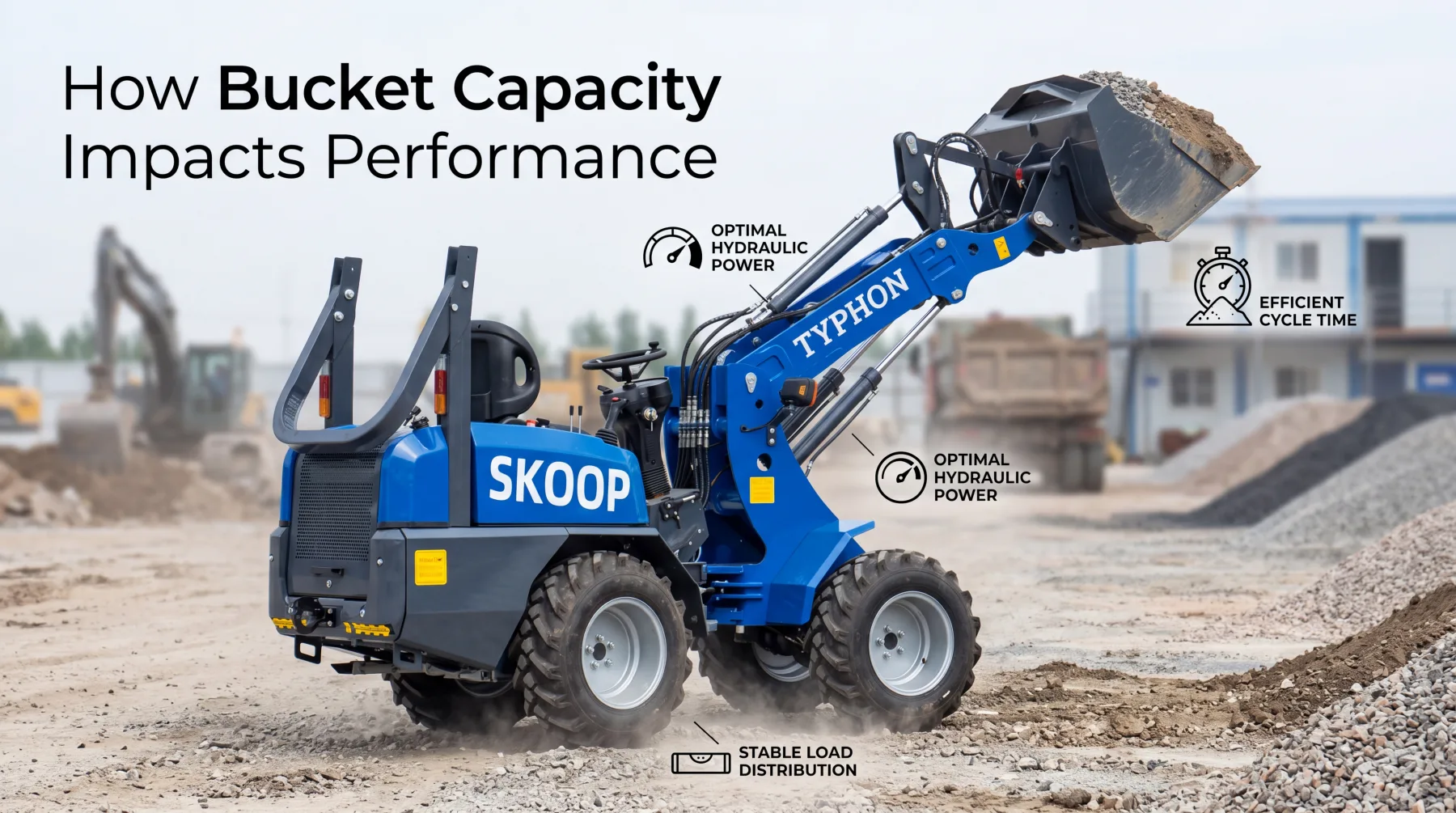
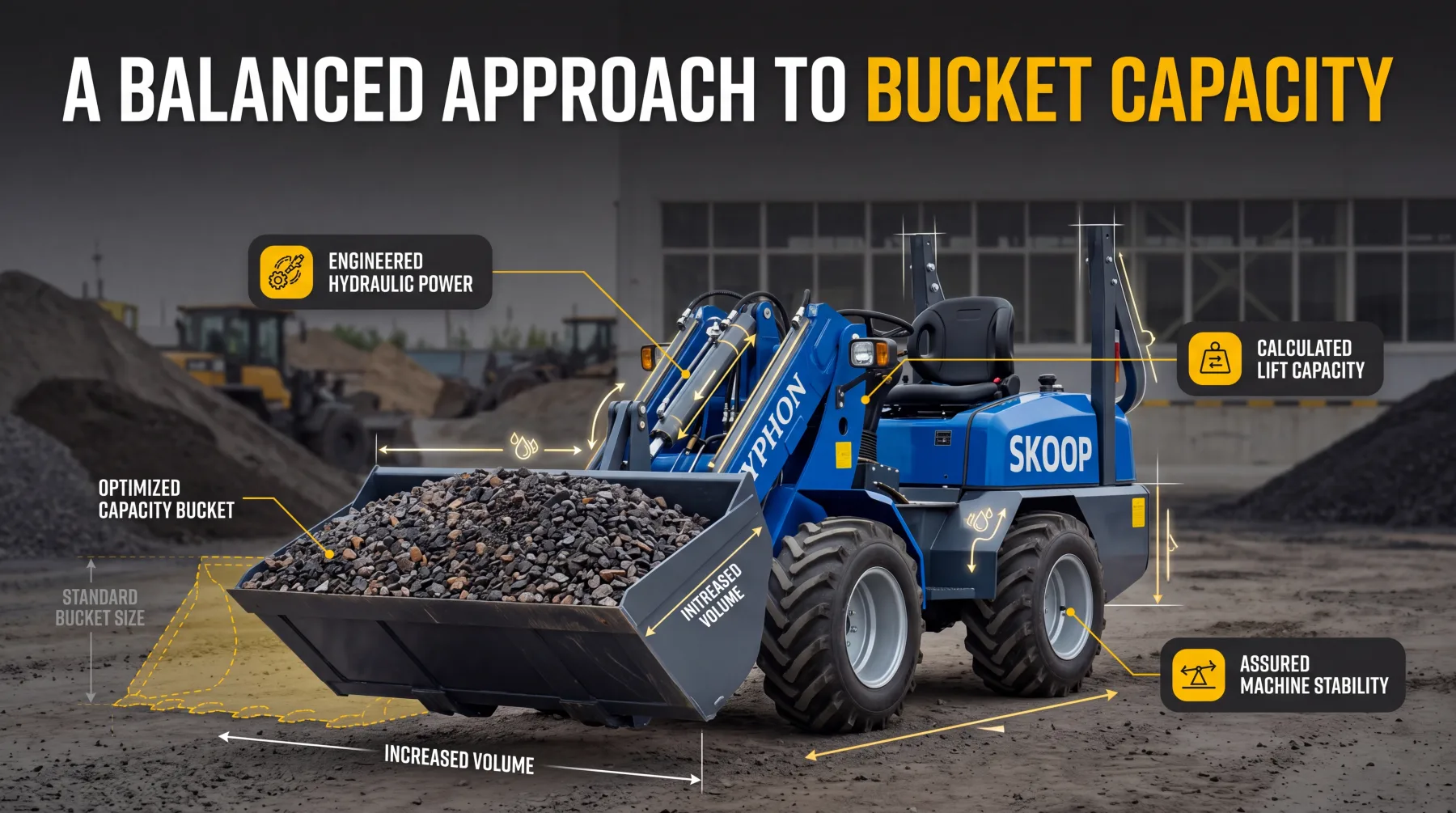
Bucket capacity has a direct effect on how a wheel loader performs, and bigger isn't always better. A larger bucket moves more material per cycle, which can boost productivity significantly when conditions allow. Fewer passes mean faster job completion, lower fuel use per unit of material, and better overall efficiency. For the right material and a properly matched machine, choosing a larger bucket is a smart way to increase throughput and get more done in less time. The advantages come with real limits, though, and ignoring them creates problems. An oversized bucket, or one loaded with dense material, can reduce the machine's stability by shifting weight forward and raising the load. It can also exceed the loader's rated capacity, pushing the hydraulics and lifting components beyond what they're designed to handle. When that happens, you risk tipping, poor control, accelerated wear, and even sudden component failure, all of which cost far more than the productivity a bigger bucket promised. The solution is careful matching, and a few relationships matter most: Bucket capacity to hydraulic power, ensuring the system can lift and curl the load smoothly and reliably. Bucket capacity to lifting capability, keeping the loaded weight within the machine's rated limits. Load size to stability, maintaining a safe center of gravity throughout the lift and carry. Balancing these factors is what turns capacity into genuine performance rather than a liability. The goal is to match bucket capacity with the machine's hydraulic power and lifting capability so the loader works efficiently within its design. A well-matched bucket lets the machine perform at its best, moving material quickly while staying stable, controllable, and protected from strain. Getting this balance right ensures that greater capacity actually delivers greater productivity, rather than trading efficiency for risk and premature wear.
Tips for Maximizing Efficiency and Safety
Sound operating habits are what turn a properly sized bucket into consistent, safe productivity. Even the right bucket on the right machine can cause trouble if it's loaded carelessly or maintained poorly. By following a few proven practices, operators protect both the equipment and everyone on the job site while getting the most material moved per shift. The way you load the bucket has an immediate effect on safety and machine health. Overfilling may seem like a way to move more material, but it strains the hydraulics, hurts stability, and spills material that has to be cleaned up later. Even, balanced loading keeps the machine controllable and reduces uneven stress on the bucket and lifting components. Respecting the manufacturer's rated operating limits is equally essential, since those figures reflect the safe boundaries the machine was engineered to work within. A handful of practical habits go a long way toward better efficiency and safety: Avoid overfilling the bucket, loading to a safe, appropriate level rather than heaping beyond capacity. Distribute loads evenly, keeping material balanced to maintain stability and control. Follow rated operating limits, staying within the manufacturer's specified weight and capacity boundaries. Building these habits into daily operation prevents the overloading and imbalance that lead to wear and accidents. Regular inspection completes the picture and keeps everything working as it should. Checking the bucket routinely for cracks, worn edges, and damaged teeth lets you catch problems early, before they worsen or affect performance. A bucket in good condition fills more efficiently and handles material better, while proper loading techniques keep the whole machine operating within safe limits. Together, careful loading and consistent inspection improve productivity and extend the service life of both the bucket and the wheel loader, giving you dependable performance you can count on shift after shift. Conclusion Understanding wheel loader bucket capacity is essential for choosing the right machine, moving material efficiently, and protecting your equipment. Capacity is a balance of volume and weight, shaped by material density, bucket design, and the loader's lifting capability. Selecting a bucket suited to your material and matching its capacity to the machine's hydraulic power keeps operation safe, stable, and productive. Combine that with disciplined loading habits and regular inspections, and you maximize both efficiency and equipment life. Get these fundamentals right, and your wheel loader will deliver reliable, cost-effective performance on every job, moving more material with less wear and greater confidence.