August 22, 2026
Why Does My Road Roller Leave Uneven Compaction
Wondering why does my road roller leave uneven compaction? Fix issues with travel speed, lift thickness, soil moisture, and vibration settings today.
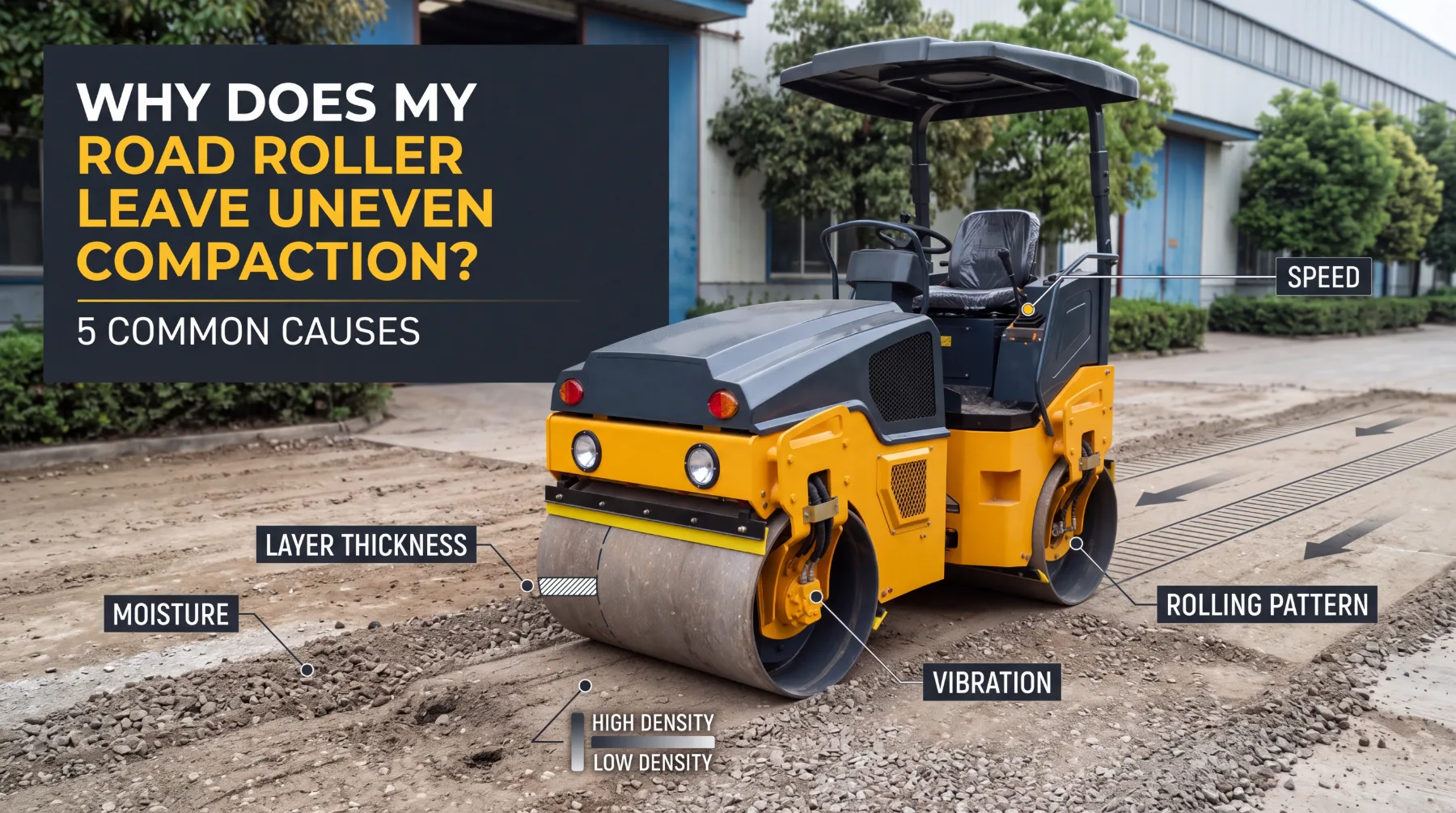
Why Does My Road Roller Leave Uneven Compaction?
Uneven compaction is one of the most frustrating problems on any job, and it rarely happens by accident. When a finished surface shows soft spots, low density, or inconsistent firmness, the roller itself usually isn't at fault; the way it's being operated is. The good news is that nearly every cause of uneven compaction traces back to a factor you can identify and correct. Speed, layer thickness, moisture, vibration settings, and rolling pattern all play a direct role in how uniformly the material comes together. This post walks through these five common causes, explaining why each one leads to uneven results and what dependable, uniform compaction actually requires.
Incorrect Compaction Speed
Travel speed has a bigger influence on compaction quality than many operators realize. A road roller compacts material by applying energy to it as the drum passes over the surface, and that energy transfer takes time. When the roller moves too quickly, each section of material receives fewer impacts and less contact with the drum, which means the compaction energy never fully reaches the particles below. The result is a surface that looks finished but hasn't actually achieved the density it needs, leaving weak areas that can settle or fail later. Speed that varies from pass to pass creates a different but equally serious problem. When the roller speeds up and slows down across the work area, the amount of energy delivered changes right along with it. Sections traveled slowly receive more compaction energy, while sections traveled quickly receive less, producing visible and measurable variation across the same surface. This inconsistency is a leading reason a job can look uneven even when everything else appears to be done correctly. Maintaining a steady, appropriate travel speed is the fix, and it delivers noticeably more uniform results. Keep these principles in mind: Match speed to the material and machine, following the manufacturer's guidance for the roller and the conditions. Hold a consistent pace across every pass rather than accelerating and braking through the work. Slow down for demanding material, giving the drum enough time to transfer energy into thick or resistant lifts. A controlled, even speed lets the roller apply the same energy to every part of the surface, which is exactly what uniform compaction demands. When you resist the urge to rush and keep your pace steady from one end of a pass to the other, you give the material a consistent chance to reach full density everywhere.
Improper Layer Thickness
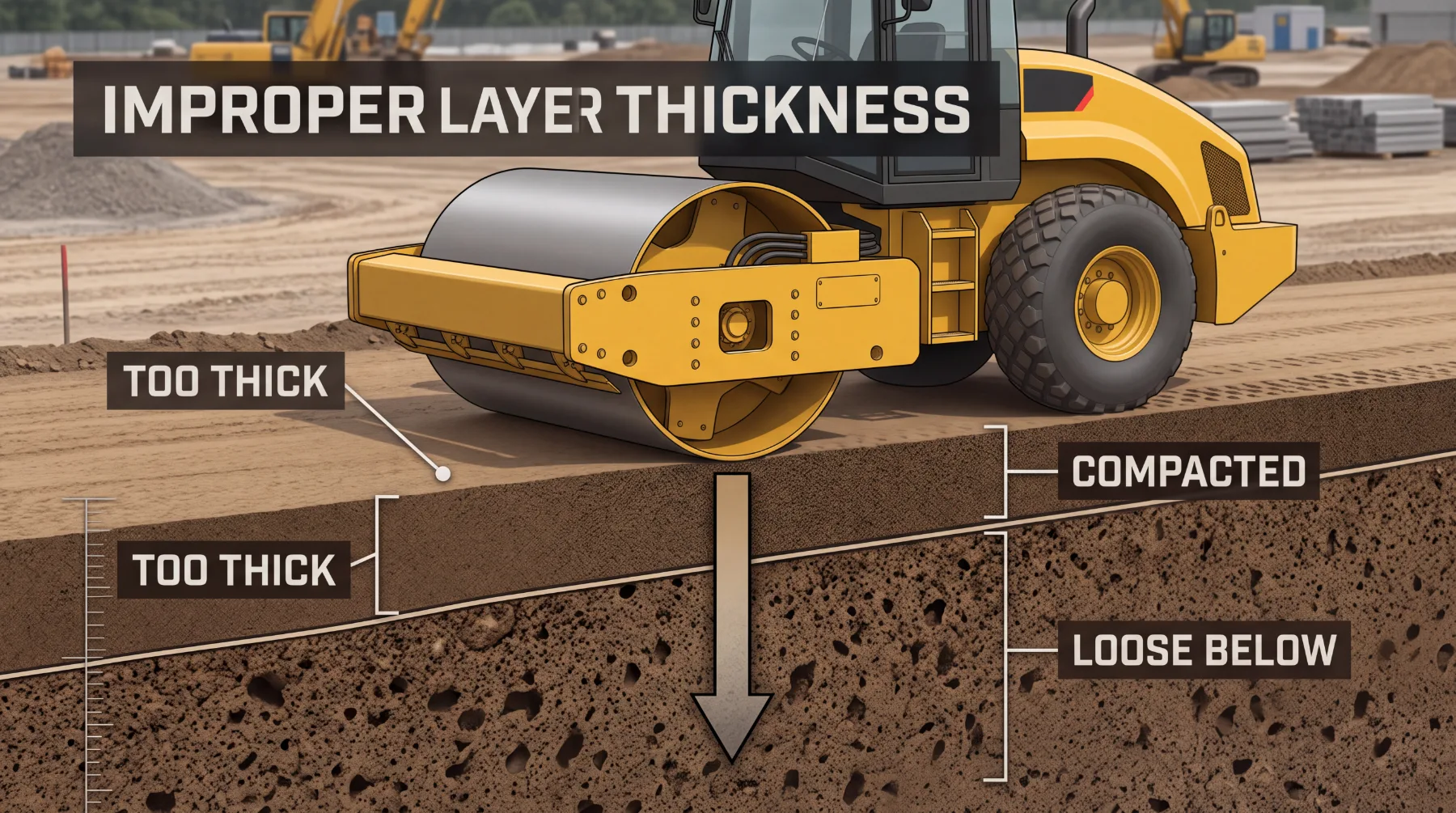
The thickness of the material layer, or lift, has a direct effect on how evenly a roller can compact it. Compaction force generated at the drum has to travel down through the material to be effective, and that force weakens the deeper it goes. When a lift is too thick, the energy from the roller simply can't reach the bottom of the layer with enough strength to compact it properly. You end up with a surface that's well compacted on top but loose and under-compacted underneath, an uneven condition that isn't visible from above but undermines the entire result. This depth problem is one of the most common and most overlooked causes of uneven compaction. Because the surface can look and feel firm, it's easy to assume the full layer is dense when it isn't. The hidden softness beneath the surface eventually reveals itself through settlement, cracking, or premature failure once the material is put under load. Using a suitable lift thickness allows the compaction force to reach the full depth of the layer effectively. Rather than trying to compact an overly thick lift in one effort, building the material up in appropriate layers ensures each one is fully compacted before the next goes down. Keep these points in mind: Follow recommended lift thickness for your material type and the compaction equipment you're using. Build up in layers when placing deep fill, compacting each lift thoroughly before adding the next. Verify density through the full depth, not just at the surface, to confirm the entire layer is sound. Matching lift thickness to what your roller can genuinely compact is a straightforward way to eliminate a major source of uneven results. When the force reaches every part of the layer, top to bottom, the compaction becomes uniform throughout rather than strong on the surface and weak below.
Uneven Moisture Content
Moisture plays a decisive role in how well soil compacts, and getting it wrong makes uniform density nearly impossible to achieve. Soil particles need the right amount of water to slide into a tight, dense arrangement under the roller's energy. When the material is too dry, the particles resist movement and friction keeps them from packing together closely, leaving the soil loose no matter how many passes you make. Dry material simply won't reach target density, and the areas that are driest will always lag behind the rest. Too much moisture causes the opposite problem but ends in the same uneven result. When soil is oversaturated, the excess water fills the spaces between particles and prevents them from compressing together properly. The water bears the load instead of the soil, creating spongy, unstable areas that can't be compacted effectively. As moisture varies across a work area, so does the density, and patches that are too wet or too dry stand out as soft or loose spots in the finished surface. Maintaining the right moisture level is what allows particles to move into their densest possible arrangement and reduces those problem areas. The goal is consistent moisture throughout the material, close to the optimum level for the soil you're working with. Consider these practices: Check moisture across the whole area, since inconsistent moisture leads directly to inconsistent compaction. Add water to dry material and allow wet material to dry, working toward a uniform, workable moisture level. Aim for optimum moisture content for your specific soil type to achieve maximum density. Consistent, correct moisture is one of the most powerful factors in uniform compaction. When every part of the material carries the right amount of water, the particles pack together evenly under the roller, and the soft, loose areas that plague poorly conditioned soil disappear.
Incorrect Vibration Settings
Vibration is what gives a road roller much of its compacting power, but that power only works well when the settings match the job. Vibration frequency and amplitude must be suited to the material you're compacting and the conditions on site. Amplitude refers to how much force each vibration delivers, while frequency refers to how often those impacts occur. When these settings are matched thoughtfully to the material, the roller drives energy into the layer efficiently and produces an even, reliable density. Settings that don't fit the material lead directly to inconsistent results. Vibration that's too aggressive for a given material can over-compact the surface or even loosen and disturb material that was already dense, creating variation rather than uniformity. Settings that are too light have the opposite effect, failing to deliver enough energy to compact the layer fully and leaving areas under-compacted. In both cases, the finished surface shows the uneven density and rough finish that come from a mismatch between the machine's output and the material's needs. Getting vibration settings right takes attention to the specific material and conditions in front of you. What works for one soil type or lift may be wrong for another, so the settings deserve adjustment as conditions change. Keep these considerations in mind: Match amplitude and frequency to the material, following manufacturer guidance for the soil or surface you're compacting. Adjust for changing conditions, since different lifts, materials, and moisture levels may call for different settings. Avoid over-compaction, easing off aggressive vibration once the material approaches full density. Thoughtful vibration settings are essential to a uniform result. When frequency and amplitude are tuned to the material and the job, the roller delivers consistent energy that builds even density and a smooth finished surface, instead of the patchy compaction that mismatched settings produce.
Inconsistent Rolling Pattern
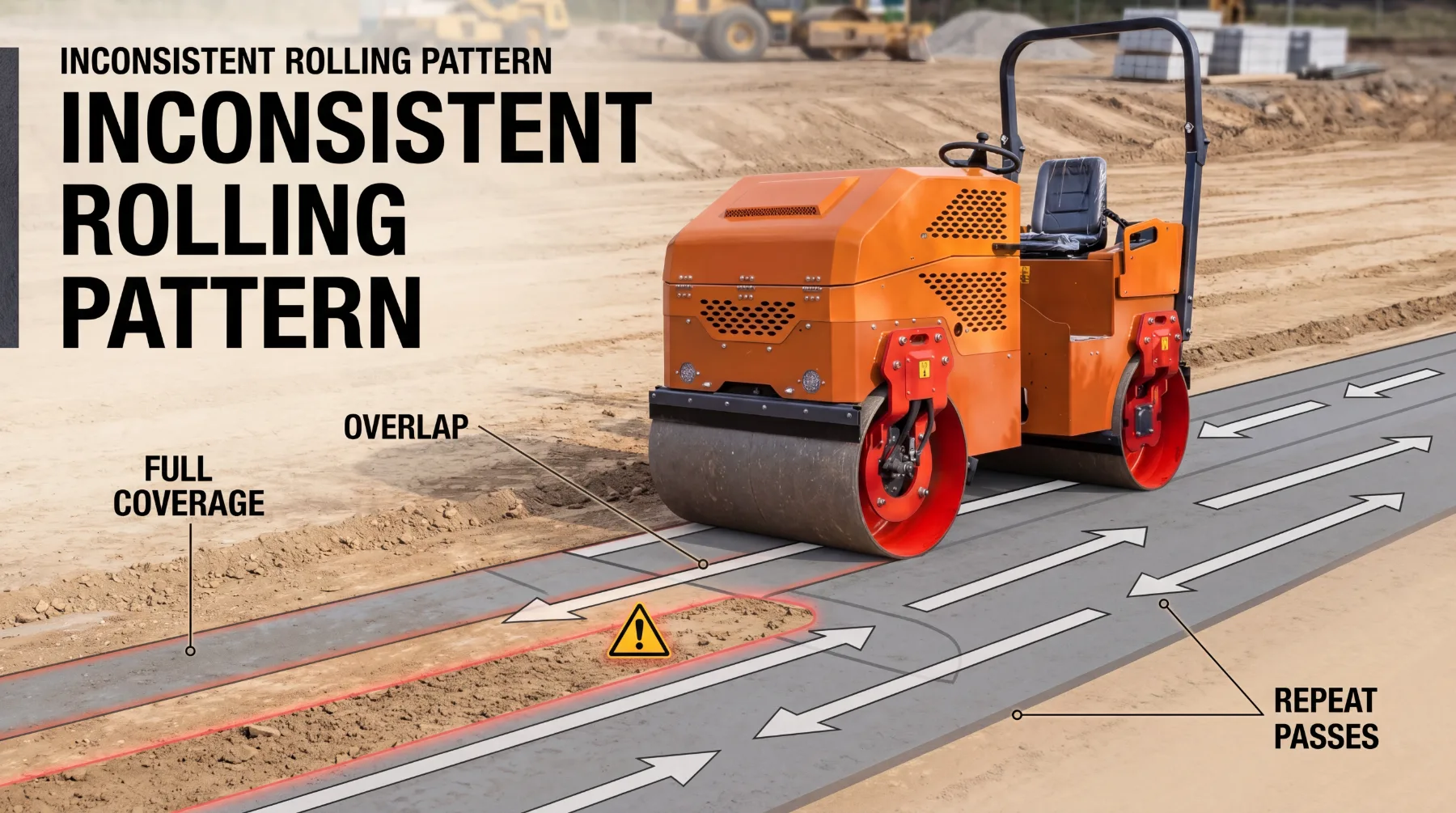
Even with correct speed, thickness, moisture, and vibration, an inconsistent rolling pattern will still leave uneven compaction behind. The rolling pattern determines which parts of the surface receive the roller's energy and how many times. When passes are uneven, some sections get worked thoroughly while others receive too little attention, producing the very inconsistency you're trying to avoid. A disciplined, repeatable pattern is what ensures the entire surface receives the same treatment from one edge to the other. Missed areas and insufficient overlap are the usual culprits behind pattern-related problems. If the roller skips a strip or the operator loses track of which sections have been covered, those spots end up under-compacted while the surrounding material is dense. Insufficient overlap between passes leaves narrow bands along the edges of each pass that never receive full compaction, creating regular weak lines across the surface. These gaps may be hard to see, but they show up clearly in density testing and in how the finished surface performs. Following a consistent rolling pattern with proper overlap is the direct solution, and it makes uniform results far easier to achieve. A methodical approach ensures full, even coverage every time. Keep these practices in mind: Overlap each pass by the recommended amount so no strip of material is left under-compacted. Cover the full area systematically, working in an organized pattern rather than a random one. Complete the required number of passes uniformly across the whole surface, not just in select spots. A consistent pattern ties together all the other factors that produce good compaction. When every part of the surface receives the same passes, the same overlap, and the same energy, the finished result comes out uniform. Careful, organized rolling is often the difference between a surface that compacts evenly and one riddled with soft spots and weak seams. Conclusion Uneven compaction almost always comes down to one or more of these five causes working against you. Moving too fast or at an inconsistent speed prevents the roller from delivering even energy, while overly thick lifts keep that energy from reaching the full depth of the layer. Soil that's too dry or too wet resists uniform density, and vibration settings that don't match the material produce inconsistent results. Finally, an uneven rolling pattern with missed areas or too little overlap leaves weak spots no matter how well everything else is managed. The encouraging reality is that each of these factors is within your control. By holding a steady speed, building suitable lifts, maintaining proper moisture, matching your vibration settings to the material, and following a disciplined rolling pattern with adequate overlap, you can eliminate the sources of uneven compaction and produce the uniform, dependable results your work demands.