July 14, 2026
How to Reduce Your Wheel Loader Bucket Spillage During Material Transport
Stop losing profit to wheel loader bucket spillage. Master these 5 vital adjustments to travel speeds, bucket angles, and operator loading techniques.
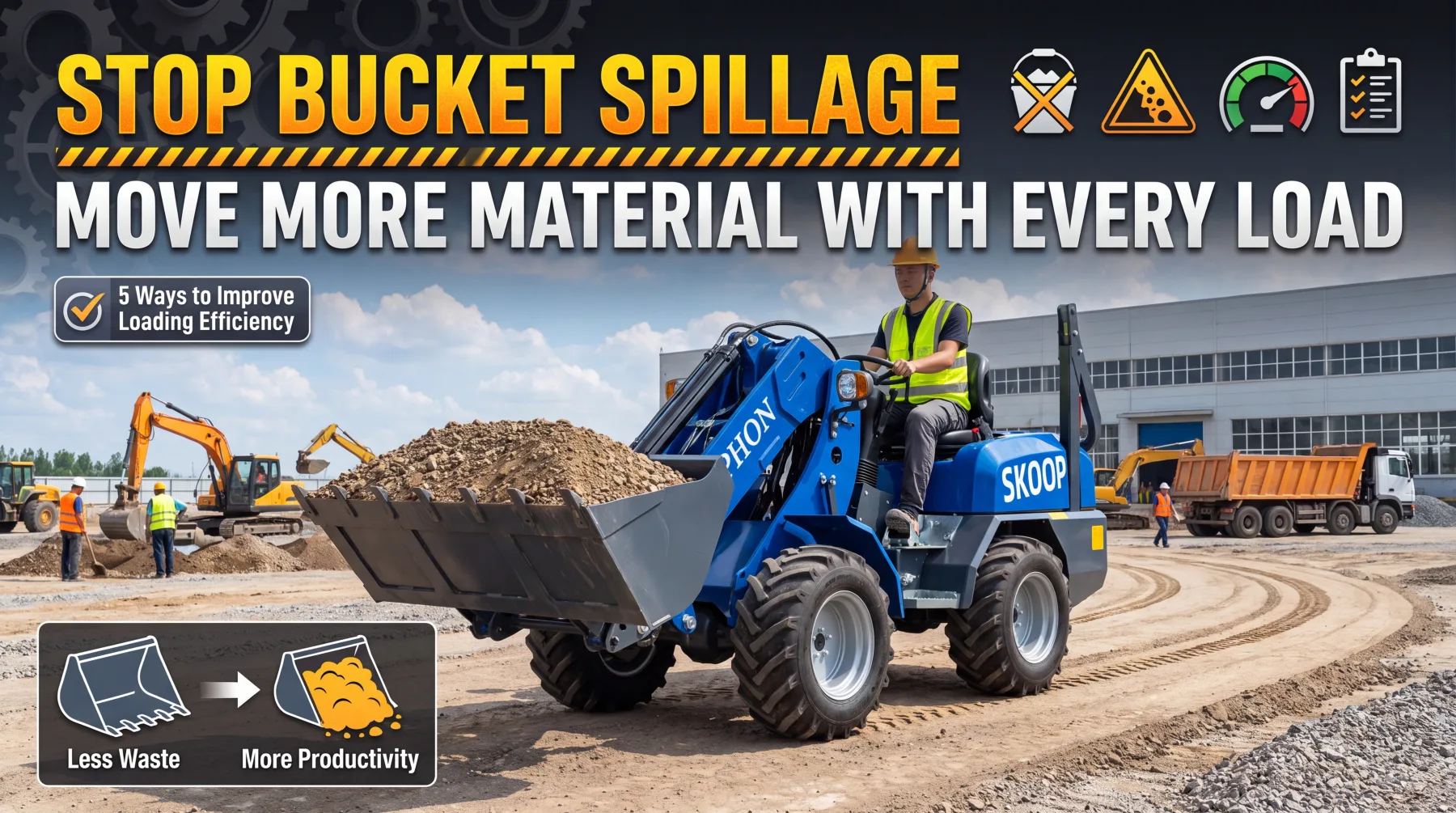
Wheel Loader Bucket Spillage: 5 Vital Ways to Stop Costly Loss
Extra cleanup, repeated passes, and added wear all chip away at your productivity and your budget over the course of a shift. Spillage also creates hazards on the job site, leaving loose debris where crews walk and machines travel. The good news is that most bucket spillage comes down to a handful of controllable factors, and once you understand them, you can move material cleanly and confidently. This guide walks you through five proven ways to keep your loads where they belong: choosing the right bucket size, refining your loading technique, controlling travel speed, managing bucket angle, and keeping your machine well maintained. Get these fundamentals right, and you protect your material, your schedule, and your bottom line.
Choose the Right Bucket Size for the Material
Spillage prevention starts before the bucket ever touches a pile. The size and type of bucket you run must match both your wheel loader's rated capacity and the material you plan to move, because a mismatch almost guarantees losses on every trip. When you use a bucket that fits the machine and the job, you avoid the overloading that sends material spilling over the sides during transport, and you keep the loader operating within the limits it was designed to handle. Overloading is one of the most common and avoidable causes of spillage. When you fill an oversized bucket or heap loose material well above the rim, the excess simply falls away as the machine moves, jolts, and turns. Beyond the wasted material, an overloaded bucket shifts the machine's balance forward, strains the hydraulics, and makes the whole load harder to control. Matching bucket capacity to the density of your material keeps the load stable and contained from the moment you scoop.
Different materials call for different bucket choices, and thinking this through pays off across the shift: - Dense materials like wet sand, gravel, or crushed stone need a smaller or standard-duty bucket so weight stays within the loader's rated limits. - Light, bulky materials such as mulch, snow, or loose soil suit a larger, high-capacity bucket that moves more volume without exceeding weight limits. - Sticky or clumping materials benefit from a bucket shape that loads and releases cleanly rather than trapping and dropping material.
Choosing the correct bucket for each task is the foundation everything else builds on. When the bucket fits the machine and the material, you carry full, stable loads that stay put from the pile to the drop point.
Adjust Your Loading Technique
Even the right bucket will spill if the operator loads it carelessly. How you scoop, lift, and carry a load has a direct effect on how much material reaches its destination, so refining your technique is one of the fastest ways to cut spillage without spending a dime. Smooth, deliberate handling keeps material settled in the bucket, while rushed or jerky movements shake it loose before you ever leave the loading area. Proper bucket positioning during the scoop sets up a clean load. Enter the pile with the bucket level and low, then curl it back to capture material fully rather than skimming the surface or overfilling the front edge. A well-formed load sits balanced and centered in the bucket, which resists spilling far better than material piled unevenly toward the lip. Once you have a good scoop, roll the bucket back toward the machine to tuck the load in tight before you begin to lift.
Smooth lifting and controlled movements carry that stable load safely to the pile. Raise the bucket steadily instead of snapping it up, and avoid sudden stops, sharp turns, or abrupt direction changes that throw material toward the edges. Every jolt you send through the machine transfers to the load, so the calmer your inputs, the more secure the material stays. Keep the loaded bucket low during travel as well, which lowers the center of gravity and gives you far better control than carrying it high. Operators who treat loading and carrying as a single, deliberate sequence lose far less material than those who work in a hurry. Building these habits into every cycle protects your load, reduces cleanup, and keeps the machine steady and safe from the pile to the drop point.
Maintain the Correct Travel Speed
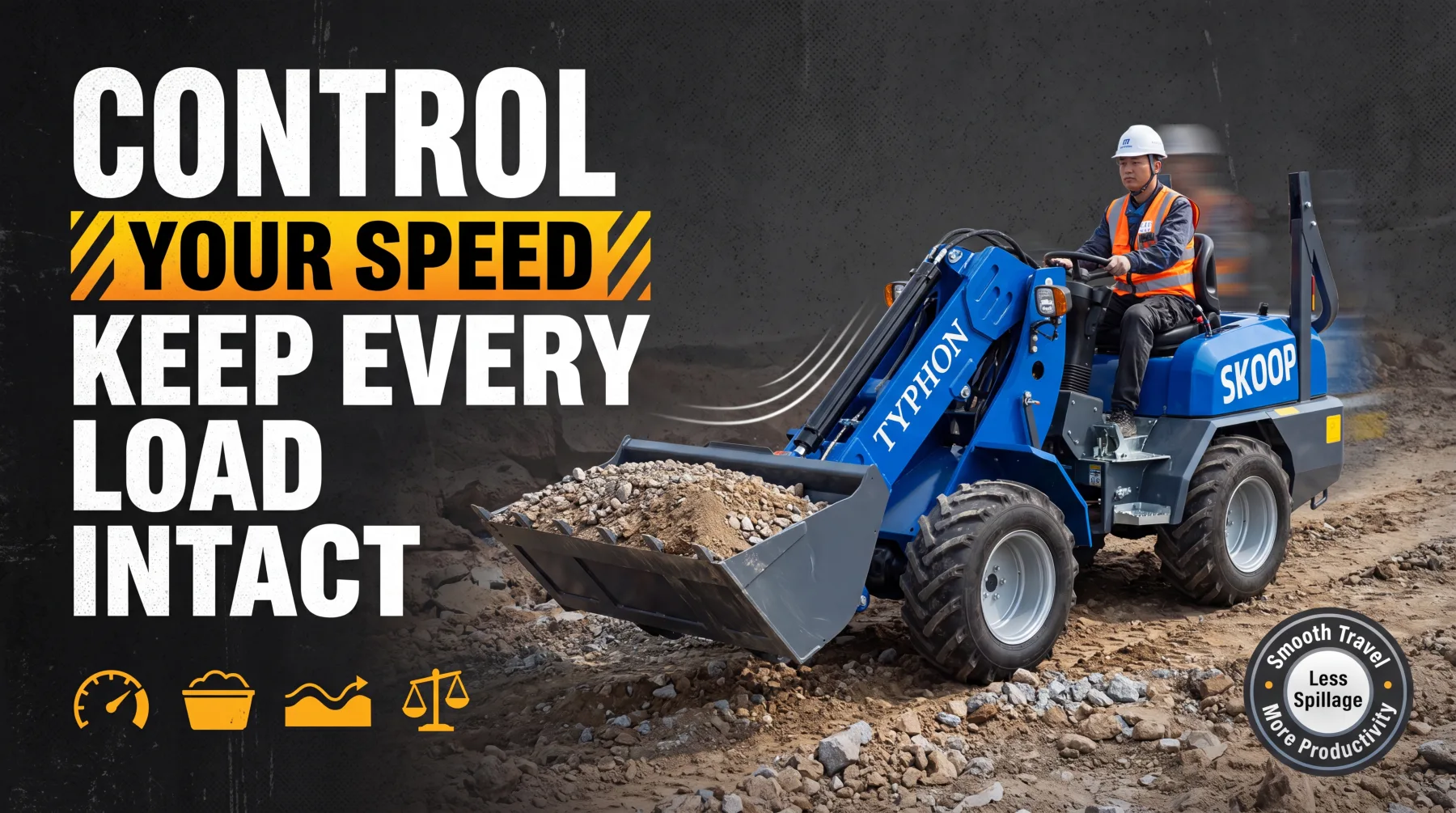
Speed is one of the most underrated causes of bucket spillage, and it is entirely within the operator's control. Driving too fast, especially over rough or uneven terrain, causes the machine to bounce, and every bounce jolts material up and out of the bucket. What feels like an efficient, quick trip across the yard often ends with a trail of spilled material and a load that arrives lighter than it left. Slowing to a steady, controlled pace keeps the load settled and dramatically reduces those losses.
Rough terrain demands extra care because it works directly against load stability. Potholes, ruts, debris, and uneven ground all send shocks through the machine that shake the bucket and its contents. When you race across that kind of surface, the material has no chance to stay put. Reducing your speed over rough patches lets the loader absorb the bumps more gradually, so the load rides steadily instead of vibrating over the edges. Where possible, choosing a smoother travel path also helps keep material contained and eases wear on the machine.
A consistent, moderate travel speed protects far more than the load. It gives you better control of the machine, improves your reaction time if an obstacle or worker appears, and reduces the strain that constant jolting places on the tires, frame, and hydraulics. Rushing rarely saves the time operators expect, because respilled material means extra passes, cleanup, and repeated handling that erase any gains. By holding a steady pace suited to the ground you are crossing, you keep each load intact, protect the equipment, and maintain a safer, more predictable operation throughout the shift. Smooth and steady almost always moves more material per hour than fast and careless.
Keep the Bucket Angle Properly Adjusted
The angle at which you carry the bucket has a powerful effect on whether material stays in or spills out. A bucket tilted too far forward invites material to slide over the leading edge with every bump and incline, while a properly rolled-back bucket cradles the load and holds it securely against the back of the bucket. Getting this angle right is a simple adjustment that makes an immediate, visible difference in how much material reaches the pile.
During transport, keep the bucket rolled back toward the machine so the opening tilts slightly upward. This position uses the shape of the bucket to contain the load, preventing the excessive forward tipping that dumps material as you travel, climb grades, or hit uneven ground. When the bucket sits level or angled forward, even gentle movements can spill the contents, so maintaining that consistent rearward tilt throughout the trip keeps the material where it belongs. Only when you reach the drop point should you roll the bucket forward to release the load in a controlled dump.
Terrain and grade change how carefully you need to manage the angle. Traveling uphill naturally shifts the load toward the back of the bucket, which helps, but heading downhill or crossing a slope tilts the opening forward and raises the spill risk. On those grades, holding a firm rearward tilt and moving slowly keeps the load contained. Proper bucket angle does more than prevent spillage. It also improves handling by keeping weight positioned well over the machine, which supports stability and control. When you make a habit of carrying every load with the correct rolled-back angle, you contain the material, protect against tipping, and move each load more efficiently and safely across the job site.
Maintain Your Wheel Loader Components
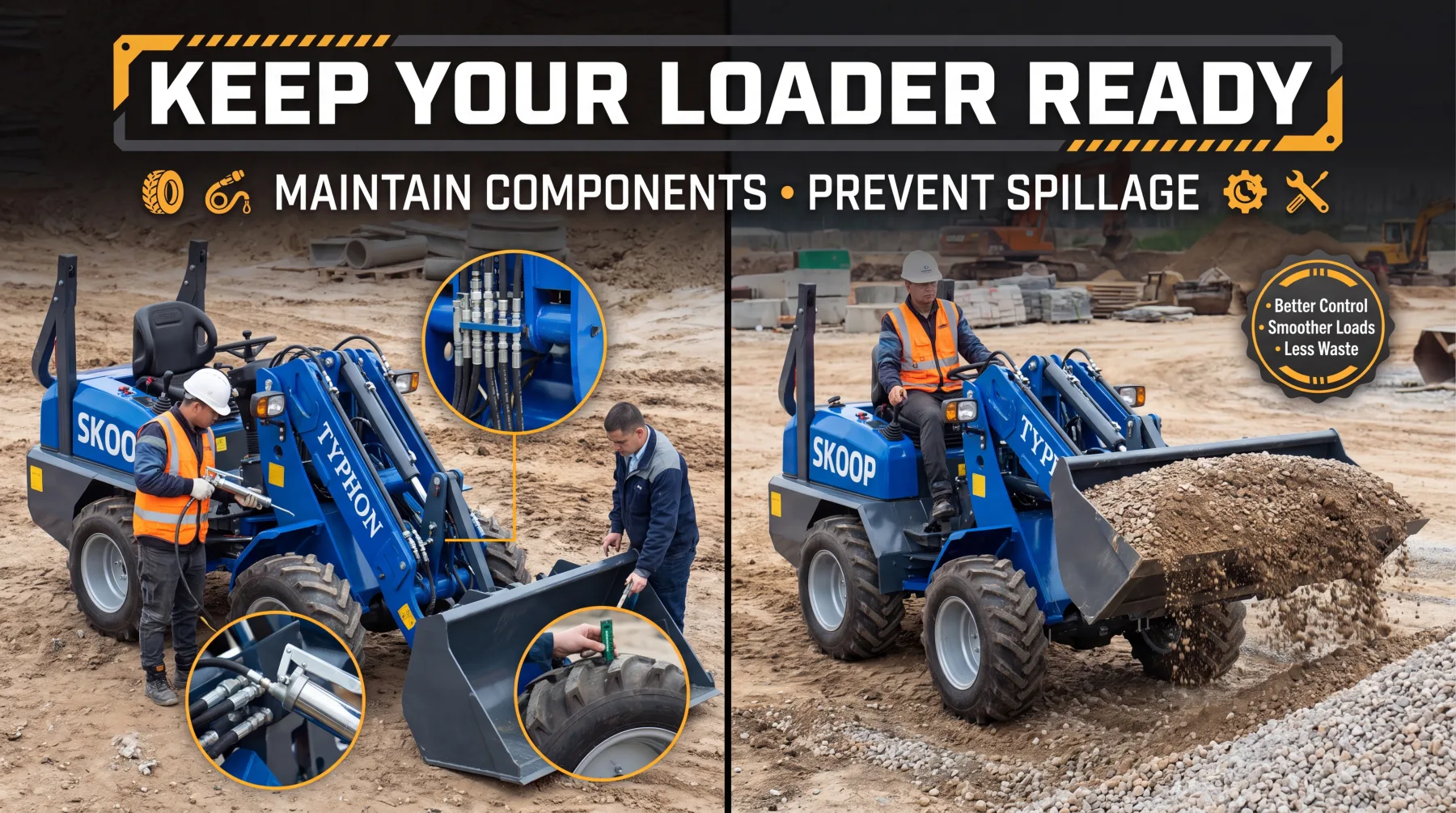
A well-maintained machine handles loads far more predictably than a neglected one, and predictability is exactly what prevents spillage. When tires, hydraulics, and linkage systems all work as designed, the operator gains the smooth, precise control needed to carry material without losing it. Worn or poorly maintained components introduce the very jolts, hesitations, and imprecise movements that shake material out of the bucket, so regular upkeep is a direct investment in cleaner, more efficient transport.
Tires deserve close attention because they are your first line of defense against a rough ride. Underinflated, unevenly worn, or damaged tires transmit more shock to the machine and make travel bumpier, which unsettles the load with every pass. Keeping tires properly inflated and in good condition helps the loader ride smoothly and hold a stable, level stance while carrying material. Even inflation across all four tires also keeps the machine balanced, so the bucket stays where the operator sets it rather than dipping or tilting unexpectedly.
The hydraulic and linkage systems govern how precisely the bucket responds, and their condition directly affects spillage. Well-maintained hydraulics deliver smooth, controlled lifting and tilting, while low fluid, worn seals, or leaking lines cause jerky, sluggish movement that jostles the load. The linkage, including pins, bushings, and connecting components, must be tight and well greased so the bucket holds its angle steadily instead of drifting or wobbling during travel. Regularly checking these systems, topping off fluids, and greasing wear points keeps the machine responsive and steady under heavy loads. When every component performs the way it should, the operator can carry full loads with confidence, knowing the machine will move smoothly and hold each load securely from the pile to the drop point.
Conclusion
Reducing bucket spillage comes down to controlling the details that quietly drain your productivity. Start with a bucket sized correctly for both your loader and your material to prevent overloading, then refine your loading technique with balanced scoops, smooth lifts, and controlled movements. Hold a steady travel speed suited to the terrain, keep the bucket rolled back to a proper angle throughout transport, and maintain the tires, hydraulics, and linkage systems that give you precise control.
Each of these practices reinforces the others, so together they keep your loads intact from the pile to the drop point. Put them into practice on every cycle, and you will move more material with less waste, less cleanup, and a safer, more efficient operation. If your machine needs service or the right bucket for the job, reach out to your dealer to get equipped for dependable, spill-free material transport.