June 27, 2026
How to Safely Operate a Wheel Loader on Uneven Terrain
Learn the inspection, load handling, speed control, slope travel, and stability habits that keep a wheel loader safer on rough ground.
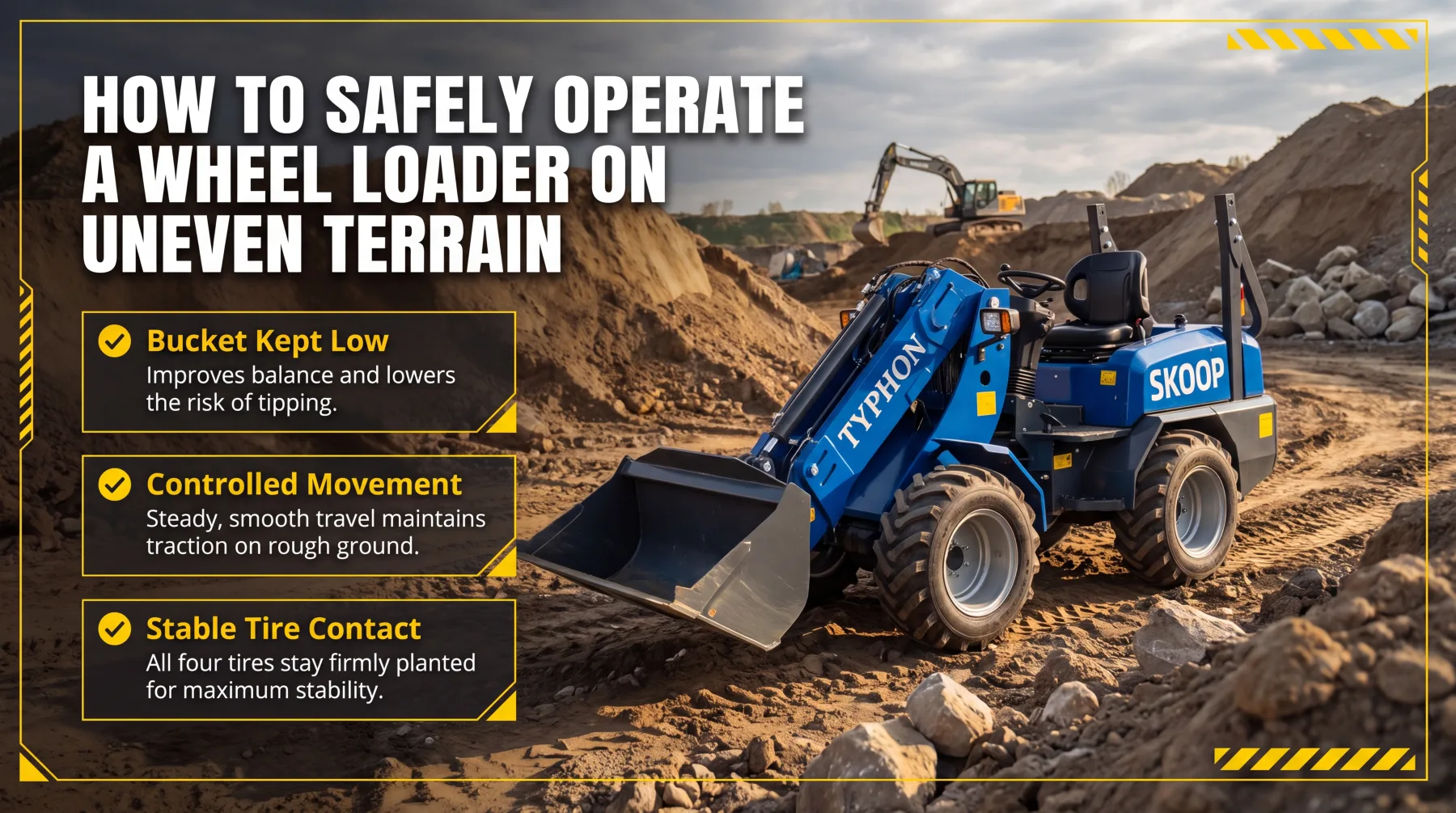
A wheel loader moves serious weight, and that strength becomes a liability the moment the ground beneath it stops cooperating. Uneven terrain tests both the machine and the operator, demanding sharp awareness, smart planning, and disciplined technique on every pass. When you understand how slope, surface, and load interact, you can keep the loader stable, protect yourself, and finish the work without the costly setbacks that come from a tip, a slide, or a damaged machine. This guide walks you through five practical areas that determine whether your loader stays steady on rough ground, from the inspection you run before the shift to the stability features that help you in the moment. Each section builds on the one before it, giving you a complete approach you can carry onto any job site where the footing is far from flat and the stakes are high.
1. Conducting Pre-Shift Ground Inspections
Safe operation starts long before you climb into the cab, and a thorough walk of the work area is the foundation everything else rests on. Uneven terrain hides hazards that can turn a routine task into a rollover, so you need to physically survey the path the loader will travel rather than judging it from the seat. Walking the route lets you spot deep ruts, soft or saturated soil, buried debris, and sudden drop-offs that could rob the machine of traction or pull it off balance. Beyond simply looking, you should assess the slope and firmness of the ground so you can plan a route that keeps the loader well within its stability ratings and away from the high-risk zones that invite trouble. A few minutes of careful inspection saves hours of recovery and repair, and it gives you the confidence to commit to each move.
As you walk the site, pay close attention to soft or waterlogged soil, deep ruts and washouts, hidden debris or obstacles, slope angle, and runoff paths. Once you have mapped these hazards, plan your route to favor firm, level ground and mark or avoid the spots that exceed safe limits. Communicate any flagged areas to the rest of the crew so everyone shares the same picture of the site. By treating the pre-shift inspection as a non-negotiable step, you replace guesswork with knowledge and set yourself up to operate with control instead of reacting to surprises.
2. Maintaining a Low Center of Gravity
The single most important habit for stability on uneven ground is keeping the loader's center of gravity as low as possible, because height is what turns a manageable load into a tipping hazard. Every time you raise the bucket while traveling, you lift the combined weight of the machine and its load higher off the ground, and that elevated mass makes the loader far more prone to rolling when a wheel drops into a rut or rides up a slope.
Carry the bucket low while traveling, ideally within a foot of the ground, to keep weight near the axles. Point the load uphill on inclines, avoid raising the load during turns, and match load size to the ground conditions. When you must climb or descend a grade, keep the load low and oriented uphill so the loader's balance stays in your favor and the rear stays planted. Sudden lifts on uneven surfaces can shift the center of gravity at the worst possible moment, so make any height adjustments only when the machine sits on firm, level footing.
3. Mastering Controlled Speed and Braking
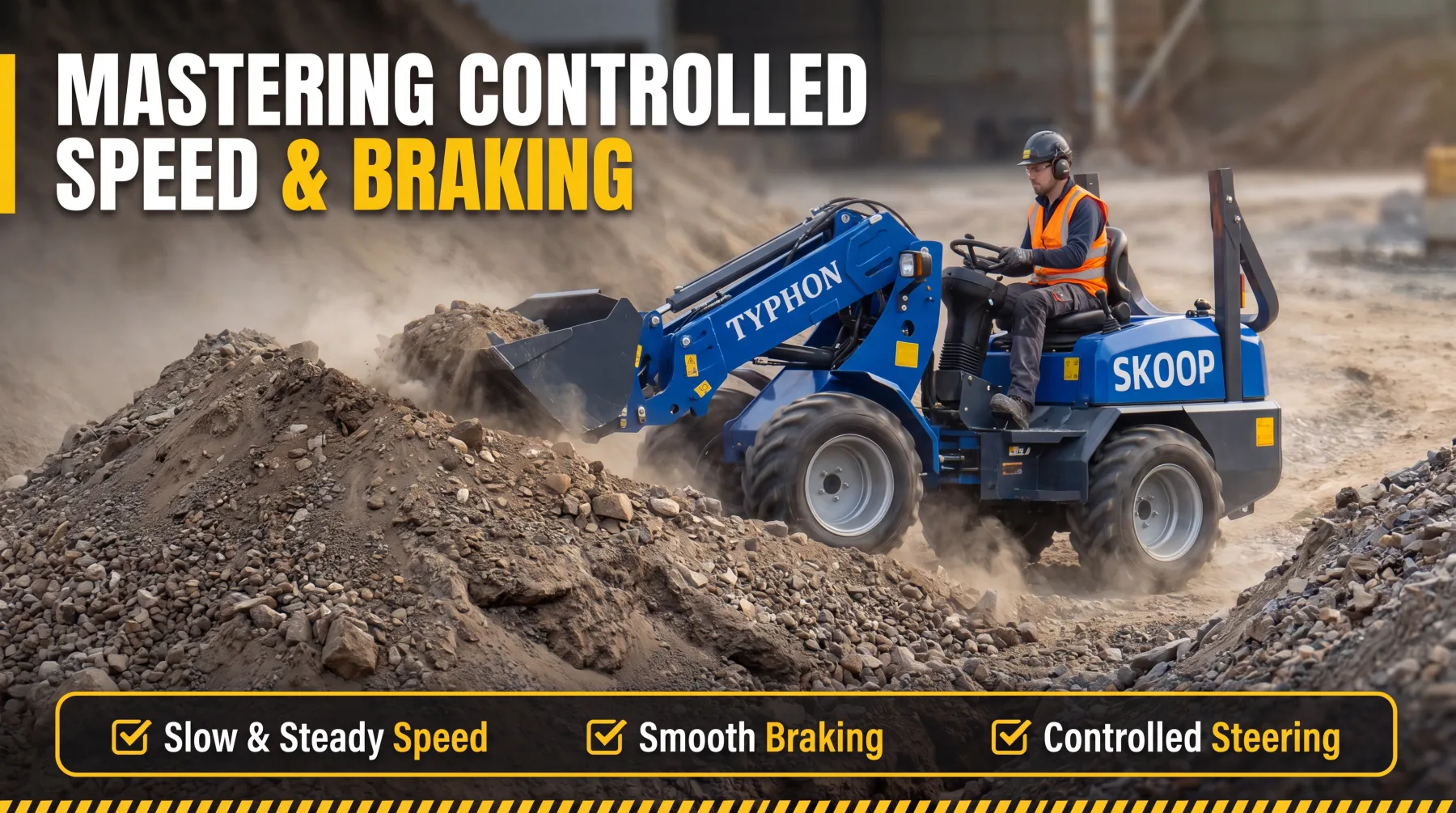
Smooth, deliberate control is what separates safe operation on uneven ground from a series of near misses, and it all comes down to how you manage speed and braking. Rough terrain punishes sudden inputs, because every abrupt acceleration, sharp turn, or hard stop sends shock through the machine that can make it bounce, lose surface contact, or shift its load unexpectedly. Operating slowly gives you time to read the ground, react to a dip or rise, and keep all four wheels working together for traction and balance.
Keep your speed slow and steady, use smooth throttle inputs, brake gently and early, and avoid sharp directional changes. When you do need to slow down, anticipate the stop and begin braking sooner so you never have to rely on a hard, sudden application that upsets the loader's balance. Treat the throttle and brake as tools for managing momentum rather than simply going and stopping, and you will find the machine far easier to keep planted.
4. Traversing Slopes and Inclines Correctly
Slopes present the greatest stability challenge a wheel loader faces, and the way you approach them determines whether you stay upright or risk a dangerous side-tip. The fundamental rule is simple but easy to forget under time pressure: always travel straight up or straight down a grade, never across it. Crossing a slope diagonally or sideways puts the machine's weight off to one side, dramatically raising the chance that it rolls when a wheel meets a rut, a soft patch, or a sudden change in angle.
Travel straight up and down the grade, keep the load low and uphill, lower the bucket immediately if unstable, and reduce speed on the descent. If the loader begins to lose traction or feels like it is starting to slip on an incline, do not try to power through or steer your way out of it. Lower the bucket to the ground right away, because contact with the surface gives the machine an anchor that can arrest a slide and restore stability before the situation worsens.
5. Utilizing Machine Stability Features and Techniques
Modern wheel loaders come equipped with features designed to help you stay stable on rough ground, and knowing how to use them gives you a real advantage. The most valuable of these is often ride control, a system that dampens the motion of the boom and absorbs the shocks that uneven terrain sends through the machine. Without it, traveling over bumps and dips can create a teeter-totter effect, where the load and boom rock back and forth and unsettle the entire loader.
Engage ride control whenever you travel to dampen boom motion and prevent the teeter-totter effect on bumpy ground, and make wide, gradual turns that spread weight transfer over a longer arc instead of jerking the machine sharply. Take time to learn your specific model's aids, since stability systems and their controls vary between makes and machines, and keep your tires properly inflated and matched, because consistent tire condition supports even, predictable handling.
Conclusion
Operating a wheel loader on uneven terrain comes down to preparation, awareness, and disciplined technique working together on every pass. When you walk the ground before each shift, keep your load low, manage speed and braking smoothly, respect the fall line on slopes, and put your machine's stability features to good use, you build layers of protection that keep both you and the equipment safe. None of these habits takes long to learn, yet together they make the difference between a productive day and a costly accident. Rough ground will always demand more from an operator, but with the right approach it becomes a challenge you can handle with confidence rather than a constant source of risk.