July 27, 2026
Can a Mini Road Roller Handle Soil Compaction?
This stability saves you from the costly repairs and callbacks that poor compaction inevitably brings.
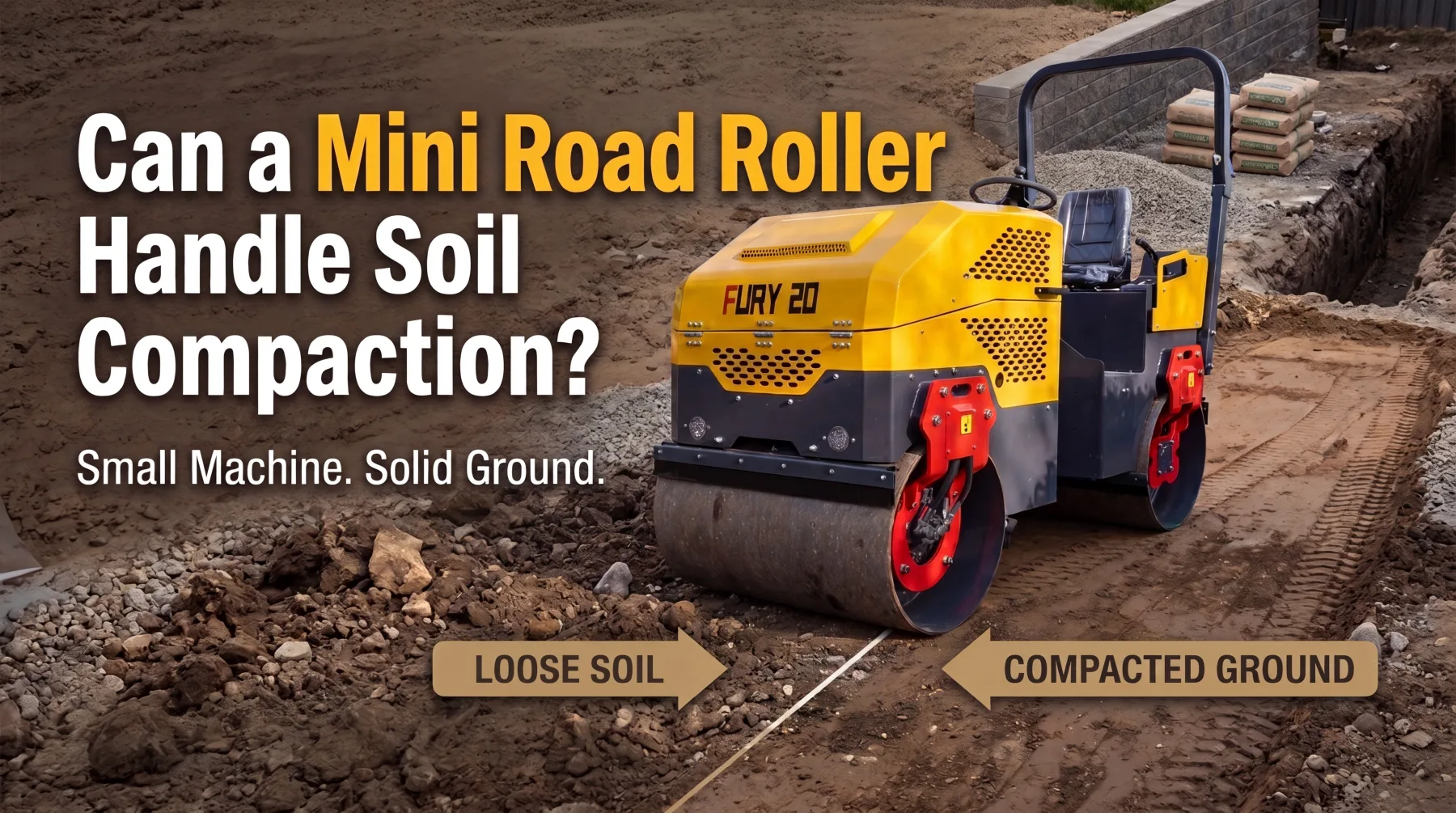
Small projects often face a big question: do you really need a full-size roller to compact soil properly, or can a compact machine get the job done? For contractors, landscapers, and property owners working in tight spaces, the answer matters for both budget and results. Skip proper compaction and you invite settlement, cracking, and unstable ground that fails within a season. A mini road roller offers a practical middle ground, but knowing what it can handle, which soils suit it, and how to operate it well is what turns good intentions into a solid foundation. This guide walks you through whether mini rollers compact soil effectively, which soil types respond best, how to choose the right machine, the benefits they deliver, and the best practices that produce lasting stability. Can Mini Road Rollers Compact Soil Effectively? Yes, mini road rollers compact soil effectively when matched to the right job. Despite their smaller size, these machines are engineered to press soil particles together, remove air pockets, and create the dense, stable surface that construction and landscaping work depend on. They combine drum weight with, in many models, vibration force to consolidate soil far more thoroughly than hand tampers or foot traffic ever could. For the scale of work they are built for, mini rollers deliver genuine, reliable compaction results. Their real strength lies in accessibility and versatility. A mini roller fits into confined spaces where a full-size machine simply cannot maneuver, such as narrow trenches, backyard projects, tight utility corridors, and areas close to structures. This makes them a dependable choice across a wide range of smaller applications where compaction still matters just as much as it does on a major road. Mini road rollers prove their value across many everyday jobs: Small construction projects where space is limited but firm ground is essential. Landscaping work such as preparing beds, paths, and lawn areas. Driveways that need a compacted base to resist rutting and settling. Utility work including trench backfill and repairs around pipes and cables. For these applications, the mini roller offers the compaction power you need without the bulk, transport challenges, and cost of a larger machine. It handles various soil types capably, adapts to tight sites, and gives smaller operations access to professional-grade compaction. When your project calls for a solid foundation in a space a big roller cannot reach, a mini road roller answers that need with confidence and consistency. Which Soil Types Are Best for Mini Road Rollers? Different soils respond to compaction in different ways, and understanding those differences helps you get the best results from a mini roller. The two broad categories that matter most are granular soils and cohesive soils, and each behaves distinctly under the drum. Matching your machine and technique to the soil in front of you is what separates thorough compaction from wasted effort. Granular soils, such as sand and gravel, consist of loose, coarse particles that shift easily and drain well. These soils respond best to vibration, because the rapid pulses momentarily reduce friction between particles and let them settle tightly together. A vibratory mini roller excels here, driving the grains into a dense, stable mass. Cohesive soils, such as clay and silt, are made of fine particles that stick together and hold moisture. These soils compact better under static pressure and kneading force, since vibration alone does less to consolidate the sticky, tightly bound material. Choosing the right approach for each soil type keeps your compaction effective: Granular soils (sand, gravel): Compact best with vibratory rollers that settle loose particles. Cohesive soils (clay, silt): Respond better to static weight and pressure than to vibration alone. Mixed soils: Often benefit from a vibratory roller with adjustable settings to suit both components. Many mini rollers offer both static and vibratory operation, giving you the flexibility to adapt to whatever ground your project presents. Recognizing whether you are working with granular or cohesive material lets you select the correct mode and technique from the start. This understanding is fundamental, because even the best machine underperforms when its compaction method fights against the nature of the soil rather than working with it.
Choosing the Right Mini Road Roller for Soil Compaction
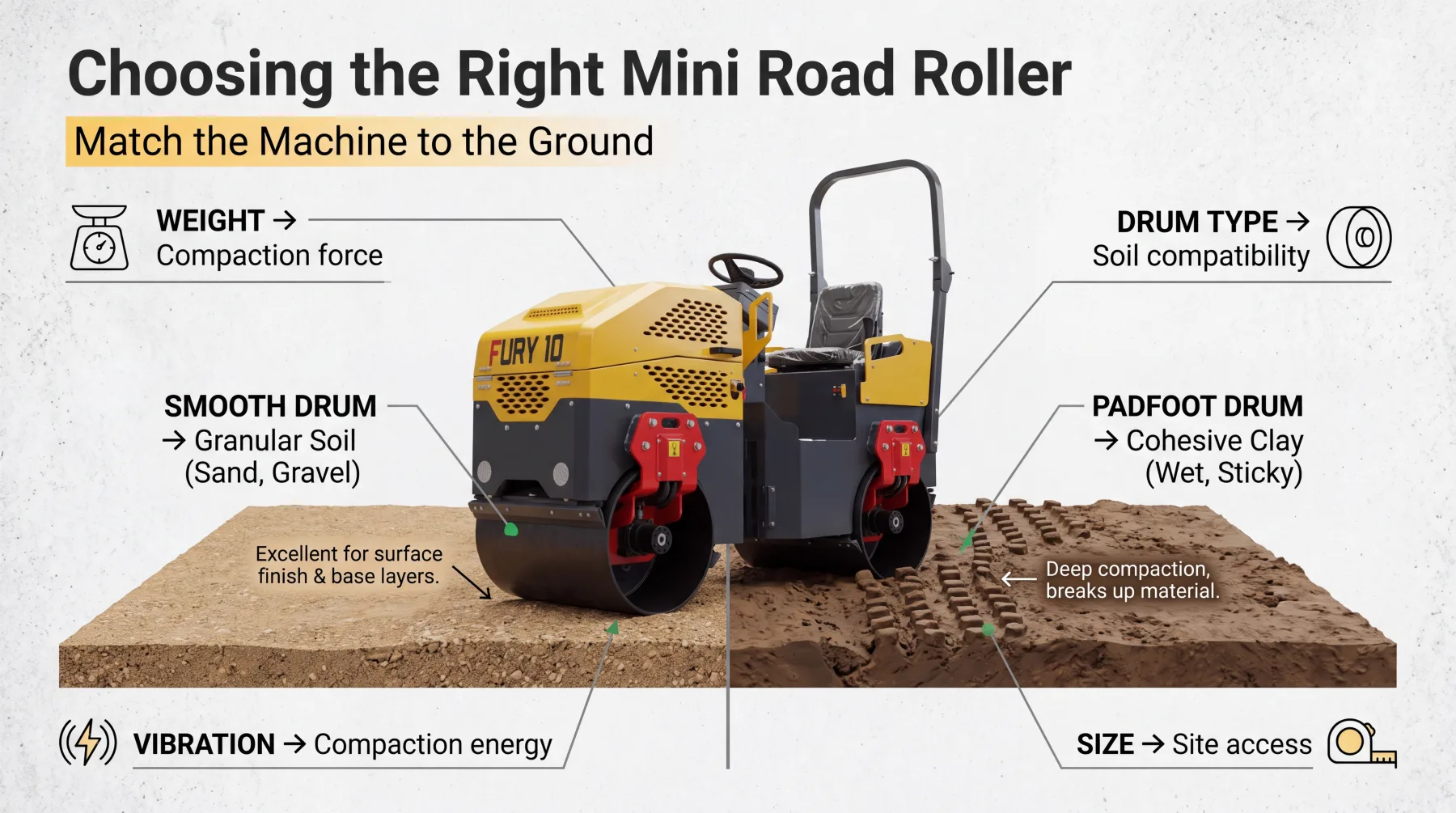
Selecting the right mini road roller comes down to matching the machine's specifications to your project and soil conditions. Three factors deserve your closest attention: operating weight, drum type, and vibration system. Getting these right ensures thorough compaction without over- or under-working the ground, and it keeps the machine practical for the sites you actually work on. Operating weight determines how much static force the roller applies. A heavier mini roller consolidates thicker layers and denser soils more effectively, while a lighter machine suits shallow lifts and tighter access. Drum type matters just as much. Smooth drums press the surface flat and work well for granular soils and finishing passes, while padfoot or sheepsfoot drums use protrusions to knead cohesive clay and silt from within, reaching deeper into the material. Choosing the drum that suits your soil is often the difference between real density and a merely firm-looking surface. Weigh these key specifications as you compare machines: Operating weight matched to your soil density and the thickness of each lift. Drum type, with smooth drums for granular soil and padfoot drums for cohesive soil. Vibration system, tuned to provide the compaction energy your material needs. Machine size suited to the access, space, and maneuverability your site demands. The vibration system ties everything together. For granular soils, strong vibration is essential to settle loose particles, while cohesive soils may call for reduced vibration or static operation. Many mini rollers let you adjust or switch off vibration to match the ground. The right combination depends entirely on your specific conditions, so assess your soil type, layer thickness, and site access honestly before you choose. A machine matched to those realities delivers dependable compaction, while a mismatched one wastes time and leaves the foundation weaker than it should be.
Benefits of Using a Mini Road Roller on Soil
A mini road roller delivers benefits that reach well beyond a smoother surface, and the most important is improved soil density. By pressing particles tightly together and driving out air pockets, the roller transforms loose soil into a dense, load-bearing mass. That density is what allows the ground to carry weight without shifting, rutting, or breaking down, giving every structure built on top of it a dependable base to rely on. Reduced settlement is the natural result of that added density, and it protects your project long into the future. Uncompacted soil continues to settle over time as air gaps collapse under weight and weather, leading to uneven surfaces, cracked pavement, and sinking foundations. Properly compacted soil has already been consolidated, so it settles far less once the project is complete. This stability saves you from the costly repairs and callbacks that poor compaction inevitably brings. The advantages of using a mini road roller on soil add up quickly: Greater soil density that increases load-bearing strength and stability. Reduced future settlement, preventing cracks, dips, and uneven surfaces. A stable foundation for roads, pathways, driveways, and building projects. Better water resistance, since dense soil resists erosion and softening. These benefits make the mini roller a valuable investment for anyone building on soil in confined or smaller-scale settings. A compacted base supports roads and pathways that stay level, foundations that hold firm, and driveways that resist deformation under repeated traffic. When you compact soil properly with a mini roller, you are not just finishing a surface; you are building the durable groundwork that determines how well everything above it performs for years to come.
Best Practices for Effective Soil Compaction
Good compaction depends as much on technique as on the machine itself, and a few proven practices make a significant difference. Moisture level is the most important and most overlooked factor. Soil compacts best at its optimal moisture content, because the right amount of water helps particles slide into place and bind together. Soil that is too dry resists compaction and stays loose, while soil that is too wet becomes unstable and cannot hold density. Aim for damp, workable material, adding water if the ground is dry, and you will achieve stronger results with less effort. Rolling patterns and pass count bring the technique together. Consistent, overlapping passes ensure the entire area receives equal compaction, rather than leaving soft spots between stronger sections. Move the roller in a steady, methodical pattern, overlapping each pass slightly, and work systematically across the whole surface. Speed matters too, since moving too fast leaves gaps and uneven density, so a slow, controlled pace lets the drum and vibration do their work thoroughly. Follow these practices for uniform, lasting compaction: Maintain the right moisture level, keeping soil damp but never saturated. Use consistent, overlapping rolling patterns to cover the full area evenly. Control roller speed, moving slowly so each pass works the full layer. Make enough passes, compacting until the soil reaches the density it needs. The correct number of passes depends on your soil type, layer thickness, and machine, but the principle stays the same: compact in manageable lifts and continue until the ground reaches full density rather than stopping at the surface. Compacting soil in thinner layers, one lift at a time, produces far better results than trying to consolidate a deep layer in a single effort. When you manage moisture carefully, roll in consistent patterns, control your speed, and complete adequate passes, you produce the uniform, stable ground that quality work demands. Conclusion A mini road roller absolutely can handle soil compaction, and it does so with impressive capability for the projects it was built for. These machines compact granular and cohesive soils effectively, fit into tight spaces a full-size roller cannot reach, and deliver the dense, stable ground that small construction, landscaping, driveway, and utility work depend on. Success comes from matching the machine to the job: choose the right operating weight, drum type, and vibration system for your soil, then apply sound techniques like proper moisture control, consistent rolling patterns, and adequate passes. Do that, and you gain improved soil density, reduced settlement, and a dependable foundation that lasts. Assess your soil and site conditions honestly, select the right mini roller, and operate it with care, and you will build stable, long-lasting ground on every project you take on.