July 21, 2026
Excavator Hardware Explained: A Beginner's Guide to Parts and Maintenance
Conclusion Understanding your excavator is the foundation of operating it safely and keeping it running for the long haul.
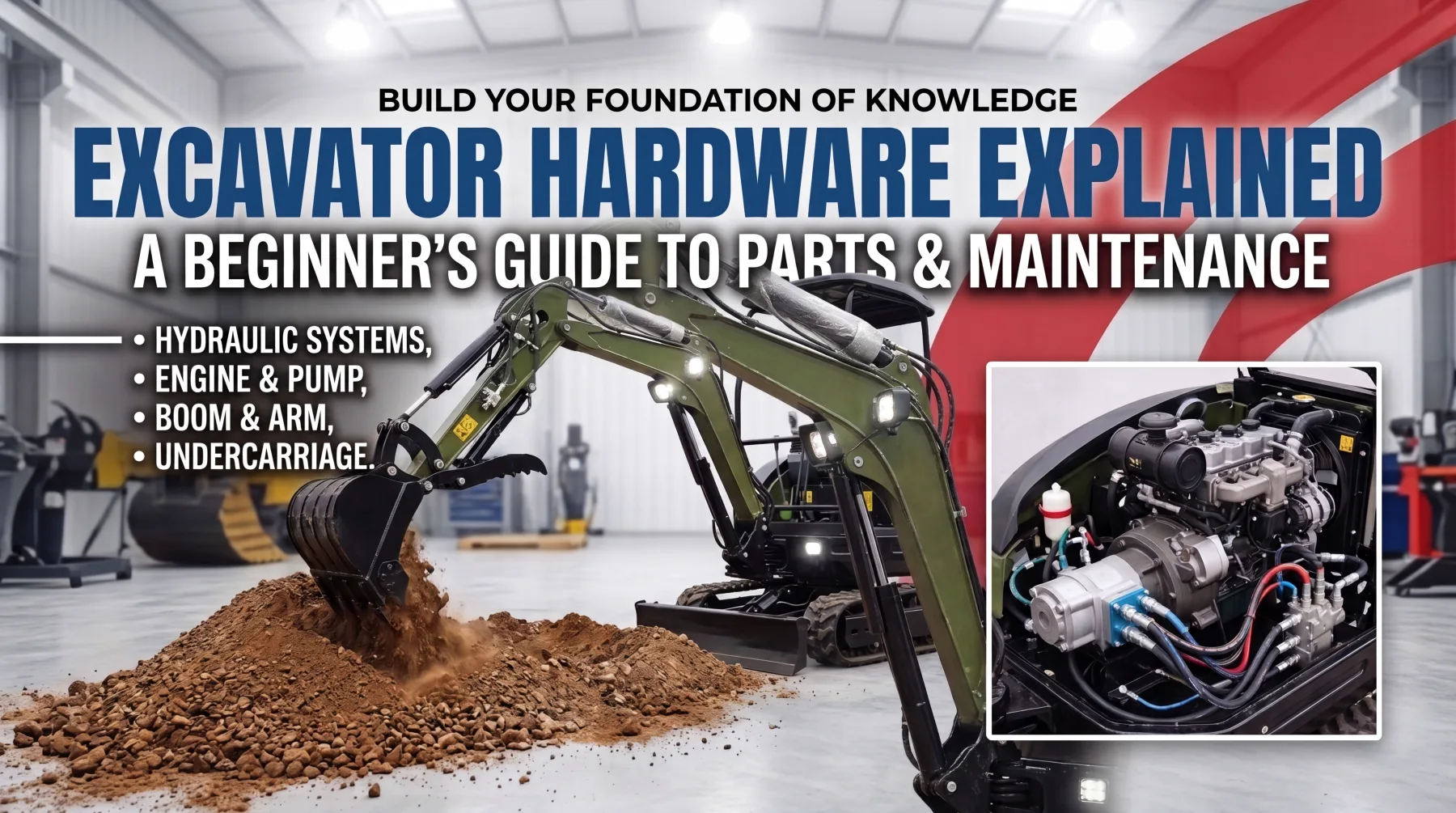
An excavator is one of the hardest-working machines on any job site, and understanding how it is built is the first step toward operating and maintaining it well. For beginners, the machine can look like a complicated tangle of steel, hoses, and hydraulics, but it becomes far less intimidating once you learn what each part does and why it matters. Knowing your equipment inside and out protects your investment, keeps your crew safe, and prevents small problems from turning into expensive breakdowns. This guide breaks down the main parts of an excavator, explains how the hydraulic system brings it to life, and walks you through the maintenance tasks, warning signs, and best practices that keep the machine running strong. Read on to build a solid foundation of knowledge you can put to work right away.
Understanding the Main Parts of an Excavator
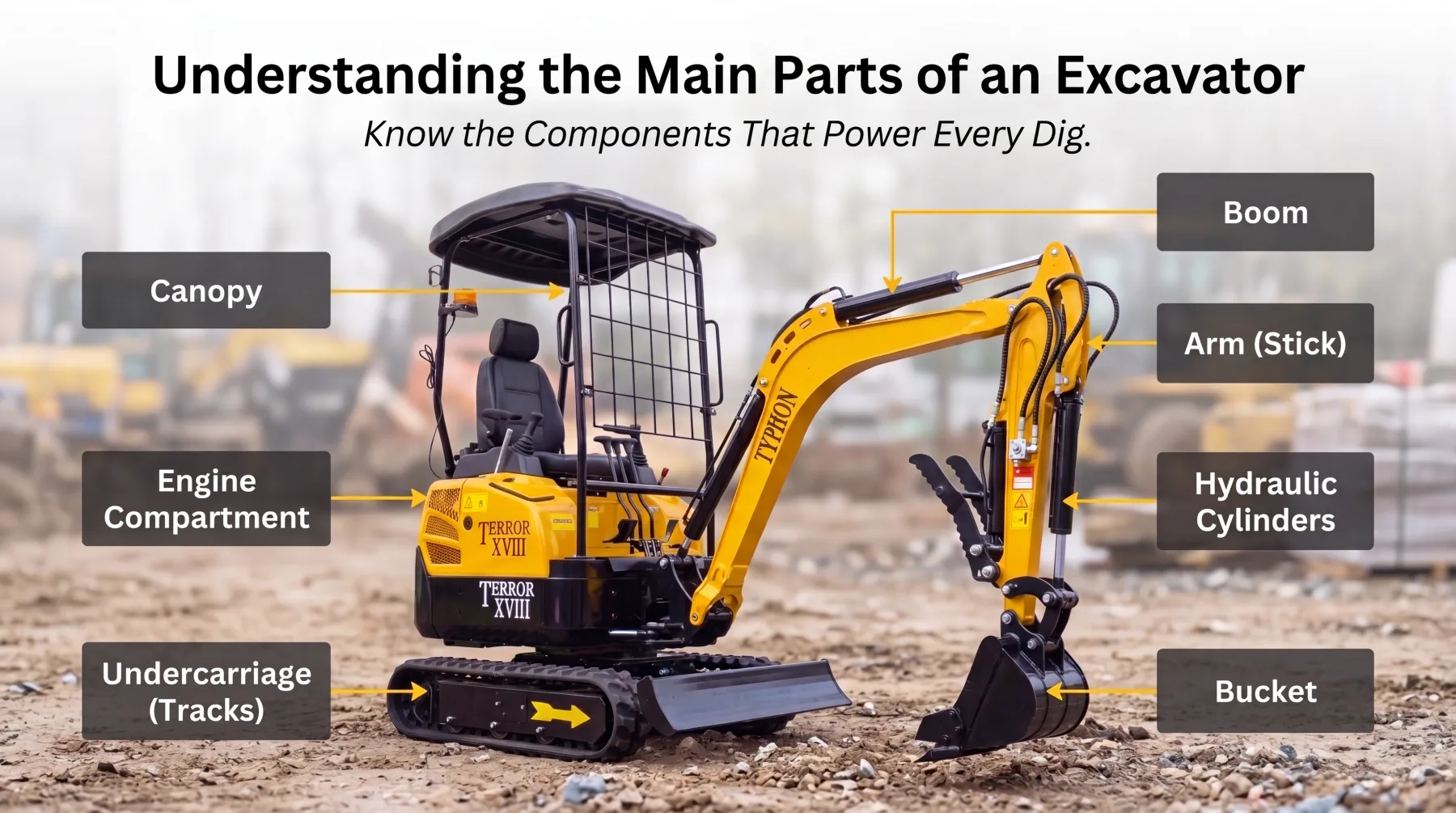
Every excavator, from a compact mini to a large machine, is built from the same core components working together as a system. The most recognizable parts are the boom, arm, and bucket, which together form the digging front of the machine. The boom is the large, curved arm that attaches to the body and provides reach and height. The arm, sometimes called the stick, extends from the boom and controls the digging depth. At the end sits the bucket, the toothed attachment that actually breaks ground and scoops material. These three parts move in coordination to dig, lift, and dump with precision. Beneath the working end, the undercarriage carries the machine's weight and provides mobility. On a tracked excavator, this includes the tracks, rollers, idlers, and drive sprockets that let the machine move across rough or soft ground with stability. The undercarriage bears enormous stress, so its condition directly affects both safety and performance. The remaining components power and control everything else. Here is how the key parts contribute: Engine: Supplies the power that drives the hydraulic system and moves the machine. Hydraulic system: Converts engine power into the fluid pressure that operates the boom, arm, bucket, and tracks. Cab / Canopy: Houses the operator, controls, and instruments, serving as the command center for the entire machine. When these parts function as a unit, the engine feeds power to the hydraulics, the hydraulics drive the boom, arm, and bucket, and the undercarriage keeps everything stable and mobile. The operator ties it all together from the cab, coordinating each movement. Understanding this relationship helps you see the excavator not as a collection of separate pieces but as one connected machine where the health of every part supports the whole.
How the Hydraulic System Powers an Excavator
The hydraulic system is the true heart of an excavator, and it is what gives the machine its remarkable strength. Rather than relying on gears and belts alone, an excavator uses pressurized hydraulic fluid to transfer power from the engine to every moving part. This system multiplies force dramatically, allowing a machine to pry apart compacted earth, lift heavy loads, and place them with careful control. Understanding how the main hydraulic components work makes the machine far easier to operate and maintain. Several key parts work in sequence to make this happen. Each plays a distinct role in turning engine power into controlled movement: Hydraulic pumps: Driven by the engine, these draw fluid from the tank and push it through the system under high pressure, generating the force everything else depends on. Hydraulic cylinders: These convert fluid pressure into straight-line motion, extending and retracting to move the boom, arm, and bucket. Hoses and lines: These carry pressurized fluid throughout the machine, connecting the pump to the cylinders and valves. Control valves: These direct the flow of fluid to the right cylinder at the right moment, translating the operator's control inputs into precise action. The process flows smoothly once you picture it. When the operator moves a joystick, the control valves open to send pressurized fluid from the pump into the appropriate cylinder. That fluid forces the cylinder to extend or retract, which drives the boom, arm, or bucket in the intended direction. The hoses keep the fluid moving cleanly between components, and when the operator releases the control, the valves redirect the flow and the movement stops. This constant, precise circulation of fluid is what gives an excavator both its power and its fine control. Because the entire system depends on clean fluid at proper pressure, keeping the hydraulics healthy is one of the most important responsibilities an owner has.
Common Excavator Maintenance Tasks
Routine maintenance is what keeps an excavator dependable, and most essential tasks are straightforward once they become habit. Checking fluid levels is the natural starting point, since the machine relies on several fluids to run properly. Engine oil, hydraulic fluid, coolant, and fuel should all be inspected regularly and topped off or changed according to the manufacturer's schedule. Low or dirty fluid forces components to work harder and wear faster, so staying on top of levels protects the engine and hydraulic system from avoidable damage. The undercarriage and moving joints demand consistent attention as well. The tracks take a beating on rough ground, so inspecting them for proper tension, wear, and damage helps prevent costly failures and keeps the machine stable. Pivot points, where the boom, arm, and bucket connect, need regular lubrication to reduce friction and prevent premature wear. A well-greased machine moves smoothly and lasts far longer than one running on dry, worn joints. Filters and hydraulic components round out the routine. Keeping them in good shape ensures clean fluid and reliable power delivery. A practical maintenance routine typically includes: Checking and topping off fluids, including engine oil, hydraulic fluid, coolant, and fuel. Inspecting the tracks for correct tension, wear, and any signs of damage. Lubricating pivot points on the boom, arm, and bucket to reduce friction. Replacing filters for oil, fuel, air, and hydraulic fluid at recommended intervals. Monitoring hydraulic components for leaks, pressure issues, or worn hoses and seals. Performing these tasks on a consistent schedule prevents the gradual buildup of wear that leads to breakdowns. None of them require advanced skill, only discipline and attention. When you make routine maintenance part of your regular workflow, you catch small issues early, extend the life of the machine, and keep it ready to perform whenever the job calls.
Signs Your Excavator Parts Need Attention
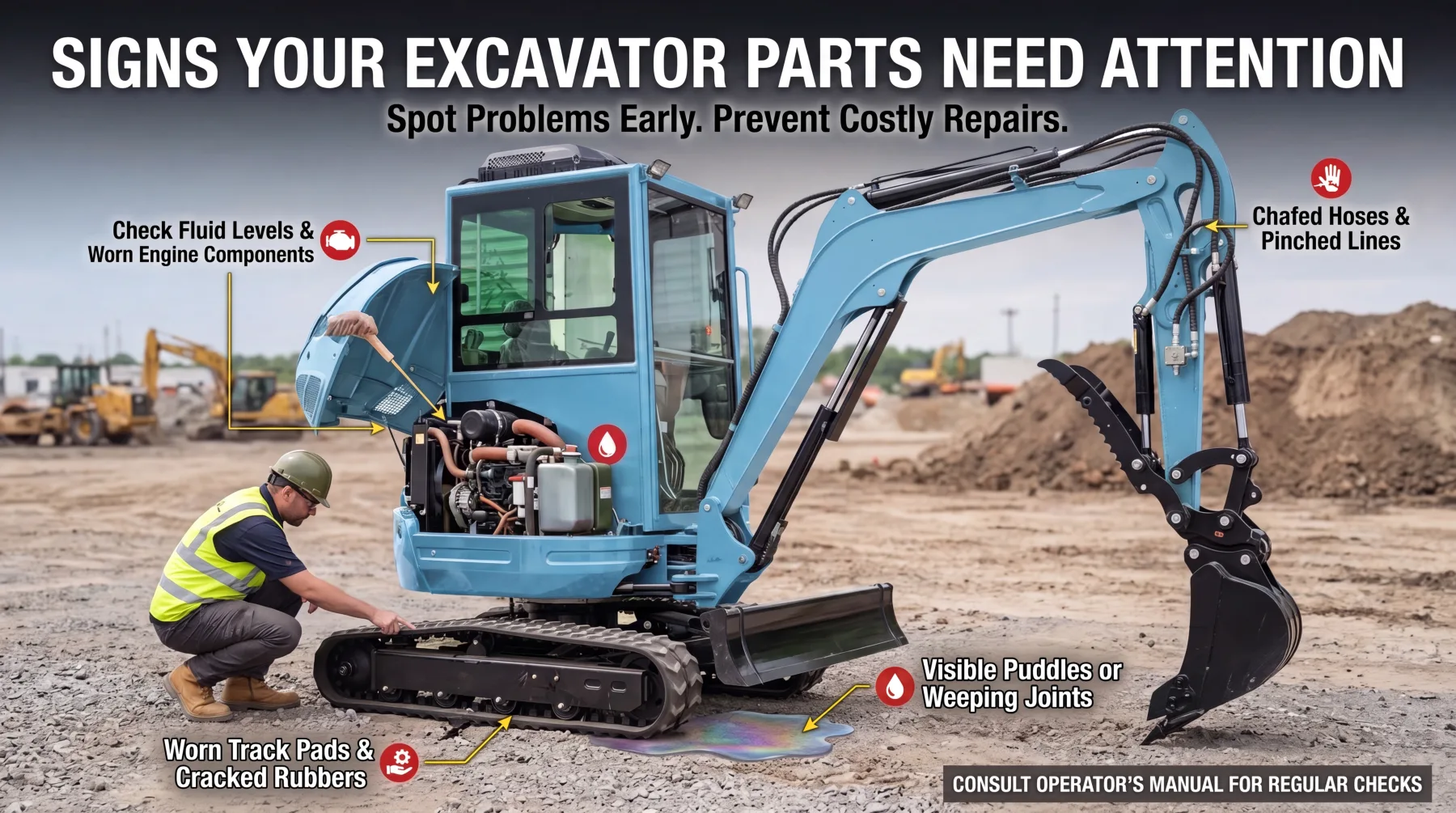
Even a well-maintained excavator will eventually show signs that a part needs service, and learning to recognize these warnings early can save you from major repairs. Hydraulic leaks are among the most common and telling symptoms. Puddles of fluid beneath the machine, damp hoses, or a drop in hydraulic performance all point to a leak somewhere in the system. Because the hydraulics power nearly every function, even a small leak deserves prompt attention before it grows into a larger failure or a loss of pressure that halts the machine entirely. Your senses are valuable diagnostic tools. Unusual noises such as knocking, whining, grinding, or hissing often signal trouble long before a part fails completely. A whining hydraulic pump may indicate low fluid or a developing fault, while grinding from the undercarriage can mean worn rollers or bearings. Reduced digging power is another clear warning, suggesting the hydraulic system is not building proper pressure or that a pump or valve is wearing out. When the machine feels weaker or slower than usual, it is telling you something needs to be checked. Several warning signs are worth watching for during daily operation: Hydraulic leaks shown by fluid puddles, damp hoses, or falling performance. Unusual noises like knocking, whining, or grinding from the engine, pump, or undercarriage. Excessive track wear, including loose tension, missing pads, or uneven wear patterns. Reduced digging power or slower, weaker movements than normal. Overheating, marked by high temperature readings, steam, or a burning smell. Overheating in particular should never be ignored, since it can quickly cause serious engine or hydraulic damage. Whenever you notice any of these signs, stop and investigate rather than pushing the machine to keep working. Addressing problems the moment they appear keeps small issues from becoming expensive repairs and helps your excavator stay safe and productive.
Best Practices for Keeping Your Excavator in Top Condition
Getting the longest, most reliable service from your excavator comes down to a handful of disciplined habits. The single most important practice is following a consistent maintenance schedule. Manufacturers provide service intervals for good reason, and sticking to them ensures that fluids, filters, and components are checked and replaced before wear turns into failure. A written schedule, kept where operators and mechanics can see it, keeps maintenance from slipping through the cracks and helps you plan service around your workload rather than around unexpected breakdowns. Quality matters just as much as timing. When parts need replacing, using quality replacement components protects the machine and preserves its performance. Cheap or ill-fitting parts may save money upfront but often wear out quickly, fail sooner, and can even damage connected components. Genuine or high-grade replacement parts fit correctly and last longer, giving you better value over the life of the machine and fewer surprises down the road. Daily attention keeps everything else on track. A few consistent habits make a lasting difference: Follow the maintenance schedule and keep clear records of every service performed. Use quality replacement parts that match the machine's specifications. Clean the machine regularly to remove dirt, mud, and debris that trap moisture and hide developing problems. Perform daily inspections before each shift, checking fluids, hoses, tracks, and the undercarriage for anything out of place. Regular cleaning deserves special mention, because caked-on mud and debris can conceal leaks, cracks, and wear while accelerating corrosion. A clean machine is easier to inspect and simply lasts longer. Combined with daily walk-around inspections, these practices let you catch problems at their earliest and cheapest stage. When you build these habits into your routine, you protect your investment, reduce downtime, and keep your excavator performing dependably for years of demanding work. Conclusion Understanding your excavator is the foundation of operating it safely and keeping it running for the long haul. Once you know the main parts and how the boom, arm, bucket, undercarriage, engine, and cab work together, the machine becomes far easier to manage. Add a clear grasp of how the hydraulic system delivers its power, and you can appreciate why clean fluid and healthy components matter so much. From there, consistent maintenance, quick attention to warning signs, and disciplined best practices form a routine that protects both performance and value. Treat your excavator with steady, informed care, and it will reward you with dependable strength on every job. Start with the fundamentals in this guide, build good habits early, and you will keep your machine in top condition for years to come.