August 19, 2026
How Rain Affects Scissor Lift Safety & Performance
Discover how rain impacts scissor lift safety, from slip risks and ground stability to electrical hazards. Learn the crucial signs of when to stop operating your lift in wet weather.
How Rain Affects Scissor Lift Safety and Performance
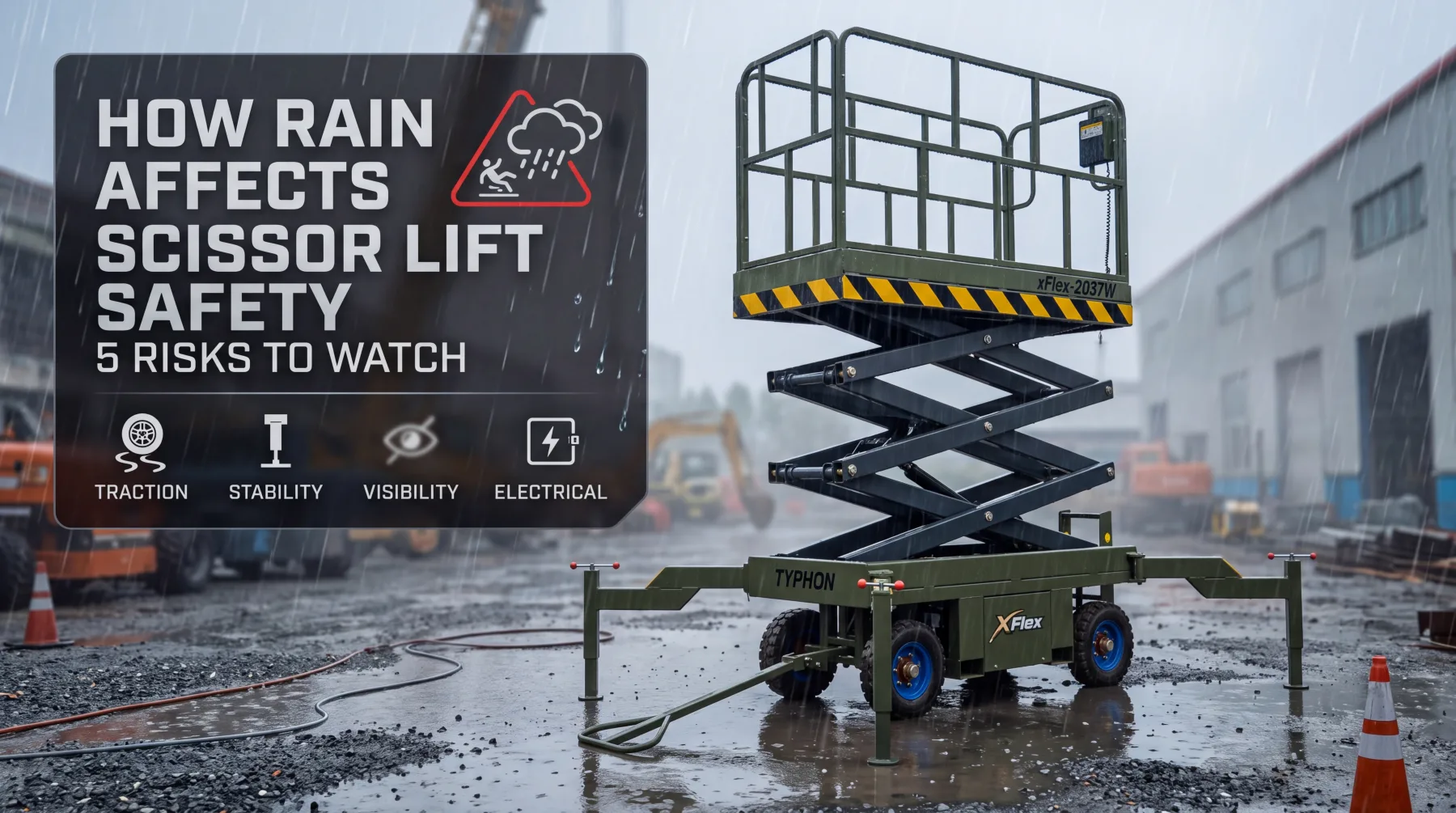
Rain changes everything about how a scissor lift behaves and how safely your crew can operate it. What feels like a routine job on a dry afternoon can turn hazardous the moment the weather shifts, affecting traction, footing, visibility, and even the machine's electrical systems. Understanding these risks before the clouds roll in helps you make smart decisions that protect your people and your equipment. This post walks through five ways rain affects scissor lift safety and performance: slip risks on wet surfaces, ground stability, electrical and control concerns, reduced visibility, and knowing when it's time to stop working altogether.
How Wet Surfaces Increase Slip Risks
Rain turns ordinary working surfaces into slip hazards, and a scissor lift has plenty of surfaces that matter. The platform where operators stand, the steps used to climb aboard, and the ground surrounding the machine all become slippery once they're wet. Water reduces the friction that keeps boots planted, and that loss of grip is exactly what leads to slips, trips, and falls. On an elevated platform, a slip carries far more serious consequences than it would at ground level, which makes wet surfaces one of the first hazards to address when rain arrives. The platform deserves special attention because operators work there at height, often while handling tools or materials. A wet, slick platform surface can cause an operator to lose footing during even simple movements, and the fall protection systems in place become far more important when traction is compromised. Steps and access points present a similar danger, since climbing on or off the machine with wet boots on wet metal invites a fall before work even begins. Keeping surfaces clean and dry whenever possible is the most practical defense against these risks. A few habits go a long way toward safer footing: Wipe down the platform and steps before use and periodically throughout the shift when conditions allow. Clear mud, debris, and standing water that collect on the platform and access points. Wear appropriate slip-resistant footwear suited to wet conditions. Move deliberately on and around the machine, avoiding rushed steps on slick surfaces. None of these measures eliminate the hazard entirely, but together they meaningfully reduce it. When rain is unavoidable, staying disciplined about keeping surfaces as clean and dry as conditions permit helps maintain safer working conditions and keeps operators steady where a loss of footing could cause real harm.
How Rain Affects Scissor Lift Stability
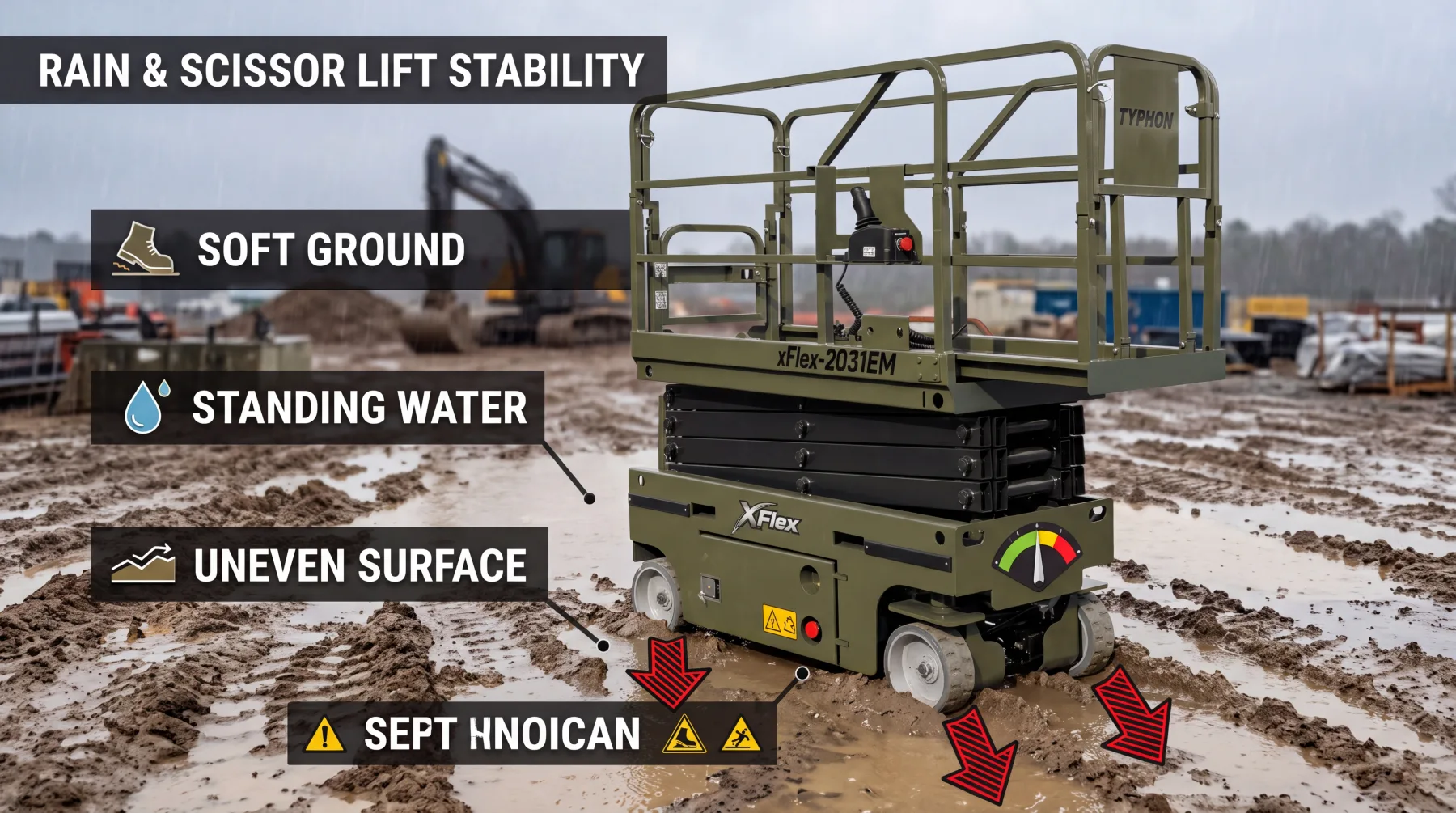
A scissor lift depends on stable, secure contact with the ground beneath it, and rain can quietly undermine that foundation. When the operating surface becomes wet or muddy, the traction between the machine's wheels or base and the ground diminishes. That reduced grip affects how securely the lift sits and, on machines capable of moving, how safely they can travel. Ground that felt firm and dependable in dry weather can behave very differently once rain has soaked into it, and treating a saturated surface with the same confidence as a dry one is a serious mistake. The bigger concern is what happens to the ground itself. Saturated soil loses much of its load-bearing strength, meaning it can shift, compress, or give way under the concentrated weight of a scissor lift. Uneven ground compounds the problem, because water tends to pool in low spots and soften them unevenly, creating the potential for the machine to tilt or settle out of level. A scissor lift raised to full height amplifies any instability at the base, so even a small shift in the ground can translate into a dangerous condition on the platform above. Careful assessment before positioning the machine is essential in wet conditions. Walk the area and evaluate the surface honestly before committing the lift to it. Look for standing water, soft spots, mud, and any signs that the ground won't reliably support the load. If the surface is uneven or clearly saturated, it needs to be addressed or avoided entirely rather than trusted. Firm, level, well-drained ground is always the goal, and in rainy weather that goal takes on added importance. Taking the time to confirm the machine sits on stable footing protects against tip-overs and settling, keeping the lift secure from the base up throughout the work.
Electrical and Control System Considerations
Water and electricity are a risky combination, and a scissor lift relies on electrical components, controls, and connections to function safely. When these systems are exposed to rain, problems can develop if the lift isn't specifically designed and rated for wet conditions. Moisture reaching sensitive components can cause malfunctions, short circuits, or unreliable control response, any of which can create hazards for an operator working at height. Not every scissor lift is built to shrug off rain, so understanding your particular machine's capabilities is a critical first step. The controls that operate the lift are especially important, because an operator depends on them to raise, lower, and position the platform precisely. If water interferes with control connections or the control panel itself, the machine may respond erratically or fail to respond as expected. That kind of unpredictability is dangerous on any machine, and far more so on one lifting a person into the air. Electrical connections and wiring are equally vulnerable, and water intrusion can lead to corrosion and faults that compromise reliability over time as well as in the moment. This is where the manufacturer's guidance becomes indispensable. The operating manual specifies whether and how the machine may be used in wet conditions, along with any steps required to protect sensitive components. Following that guidance closely is the responsible way to operate: Check the machine's rating for wet or outdoor conditions before operating in rain. Follow manufacturer instructions for protecting electrical components and controls. Inspect controls and connections for signs of water intrusion or malfunction before use. Stop operation if controls behave unpredictably or electrical faults appear. Respecting these considerations protects both the operator and the equipment. A scissor lift that isn't suited to rain shouldn't be forced to work in it, and even a capable machine deserves careful attention to its electrical systems when the weather turns wet. Trusting the manufacturer's guidance keeps the machine responding the way it should.
Reduced Visibility During Rainy Conditions
Heavy rain does more than make surfaces slick; it makes it genuinely harder to see. An operator working on a scissor lift needs a clear view of the surroundings to work safely, and rain interferes with that view in several ways at once. Falling rain reduces how far and how clearly a person can see, water on protective eyewear or the operator's face adds to the problem, and the general gloom of a storm dims the entire work area. When visibility drops, so does an operator's ability to recognize and avoid the hazards around them. The hazards that become harder to see in rain are exactly the ones that matter most. Obstacles in the machine's path or near the platform can go unnoticed until it's too late to react. People working nearby, on the ground or at height, become harder to spot, raising the risk of a collision or a dropped-object incident. Overhead hazards deserve particular concern, since power lines, structures, and other obstructions above the platform are already easy to overlook and become even more so when rain obscures the view upward. Missing any of these can lead to a serious accident. Poor visibility calls for extra caution and, at times, a full stop to the work. An operator who can't see clearly enough to confirm the area is safe shouldn't continue as if nothing has changed. Slowing down, moving deliberately, and double-checking the surroundings all help compensate for a compromised view. But there's a point at which caution isn't enough, and heavy rain that seriously limits sight means work should pause until conditions improve. Recognizing that limit is part of operating responsibly. No task on a scissor lift is worth pressing forward when the operator can't reliably see the obstacles, people, and overhead dangers that safe operation depends on. When to Stop Operating a Scissor Lift in Rain
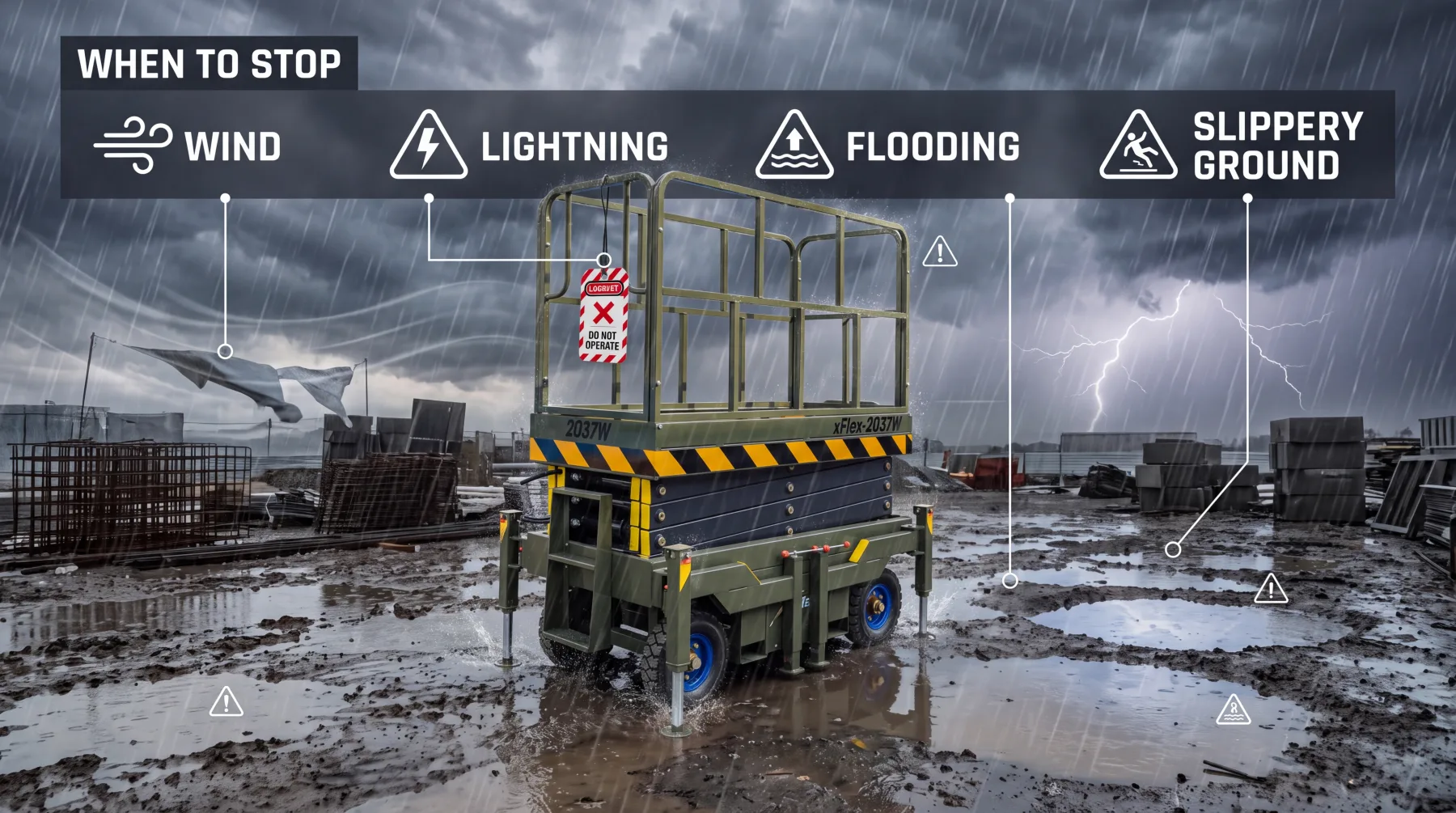
Knowing when to stop is one of the most important judgments an operator makes in wet weather. Not every rainstorm demands the same response, and light rain on a capable machine may allow work to continue safely with proper precautions. Other conditions, however, cross a clear line into unsafe territory, and recognizing them is essential. The goal isn't to treat every drizzle as an emergency, but to identify the specific situations that make continued operation genuinely dangerous and to shut down before they cause harm. Several conditions signal that it's time to stop working: Strong winds, which pose a serious tip-over risk to a raised scissor lift and often accompany storms. Lightning, which makes any elevated work extremely hazardous and calls for an immediate halt. Flooding, where rising or standing water threatens the machine's stability and electrical systems. Increasingly slippery conditions, where surfaces and ground grow too slick to work on safely. Any one of these should prompt a serious reassessment, and more than one together removes any doubt. Wind and lightning deserve the most decisive response, because both create immediate, life-threatening danger to anyone on an elevated platform. A scissor lift raised into gusting wind is vulnerable to tipping, and lightning turns an elevated position into a severe electrical hazard. Flooding and worsening slippery conditions may develop more gradually, but they compromise stability and footing to the point where continuing simply isn't worth the risk. Throughout all of this, the machine's operating manual and your site's safety procedures are the authorities to follow. They define the specific limits for your equipment, including wind speed thresholds and approved operating conditions, and they exist precisely to guide decisions like these. Before continuing work in rain, and before deciding to stop, checking those sources ensures your judgment aligns with the machine's design and your site's standards. When conditions turn unsafe, the right choice is always to stop, secure the equipment, and wait until it's safe to resume. Conclusion Rain affects a scissor lift on every level, from the footing on the platform to the ground at its base, from its electrical systems to the operator's ability to see clearly. Wet surfaces raise the risk of slips and falls, saturated ground threatens stability, water exposure can compromise electrical components and controls, and heavy rain obscures the hazards an operator needs to see. Above all, certain conditions, strong winds, lightning, flooding, and worsening slickness, demand that work stop entirely. The safest approach is to plan for these risks, keep surfaces and footing as secure as possible, assess the ground before positioning the machine, respect the manufacturer's guidance, and follow your site's safety procedures without exception. When you understand how rain changes the equation and act accordingly, you protect your crew and your equipment through whatever the weather brings.