September 3, 2026
Wheel loader hydraulic flow
Wheel loader bucket width, hydraulic cycle time, loader bucket sizing, hydraulic pump displacement, wheel loader productivity
How Bucket Width Affects Required Hydraulic Flow in Wheel Loaders
An aggregate yard manager watches a new wheel loader struggle through its first morning on the job, and the problem is not the operator. The crew fitted a wider bucket than the machine came with, hoping to move more material per pass and finish the truck-loading faster. Instead, the arms crawl through each lift, the bucket curls sluggishly, and every cycle drags a beat longer than it should. The operator loads fewer trucks by lunch than the old, narrower setup managed on a normal day. The manager frowns at the spec sheet, certain the bigger bucket should have meant more output, not less. That gap between expectation and reality traces back to something rarely printed in bold on any brochure, which is how a bucket's width reshapes the hydraulic flow the machine must supply. Understanding that link is what separates a smart bucket choice from a costly mismatch. Bucket width influences hydraulic flow far more directly than most buyers expect, because a wider bucket changes how much fluid the machine must move to work at a useful pace. Knowing how flow is measured, how bucket size drives the demand, and how that demand reaches the engine helps you match the attachment to the machine with confidence.
How Bucket Width Affects Hydraulic Demand
Width sets the size of the job the hydraulics must perform on every motion, because a broader bucket is a larger tool that the cylinders have to fill, curl, and empty. The lift and tilt cylinders move that bucket through its arc, and a wider, higher-capacity bucket asks those cylinders to displace more fluid to complete the same movement. The attachment on the front of the loader quietly rewrites the hydraulic demand behind it. Balance between the bucket and the machine is what decides whether that demand stays reasonable. A bucket sized to suit the loader's hydraulic output moves smoothly at a productive pace, while one too wide for the system forces the same fluid supply to fill a larger volume, slowing every action. The machine does not gain capacity for free; it trades speed for the extra size unless the hydraulics can keep up. Performance across the whole cycle rests on this relationship, since the bucket touches every part of the loading motion from dig to dump. A width matched to the flow the machine can deliver keeps the arms responsive and the cycle brisk, while a mismatch drags on productivity from the first pass of the day. Key takeaway: a wider bucket enlarges the volume the cylinders must fill, so the width directly sets the hydraulic flow the machine needs to work at a useful pace.
Reading How Hydraulic Flow Is Calculated and Rated
Flow describes how much fluid the hydraulic system moves in a given span of time, and the concept anchors every other point that follows. Engineers usually express flow in gallons per minute or liters per minute, measuring the volume the pump delivers to the cylinders as the machine works. That figure tells you how quickly the system can fill a cylinder and, by extension, how fast the bucket can move.
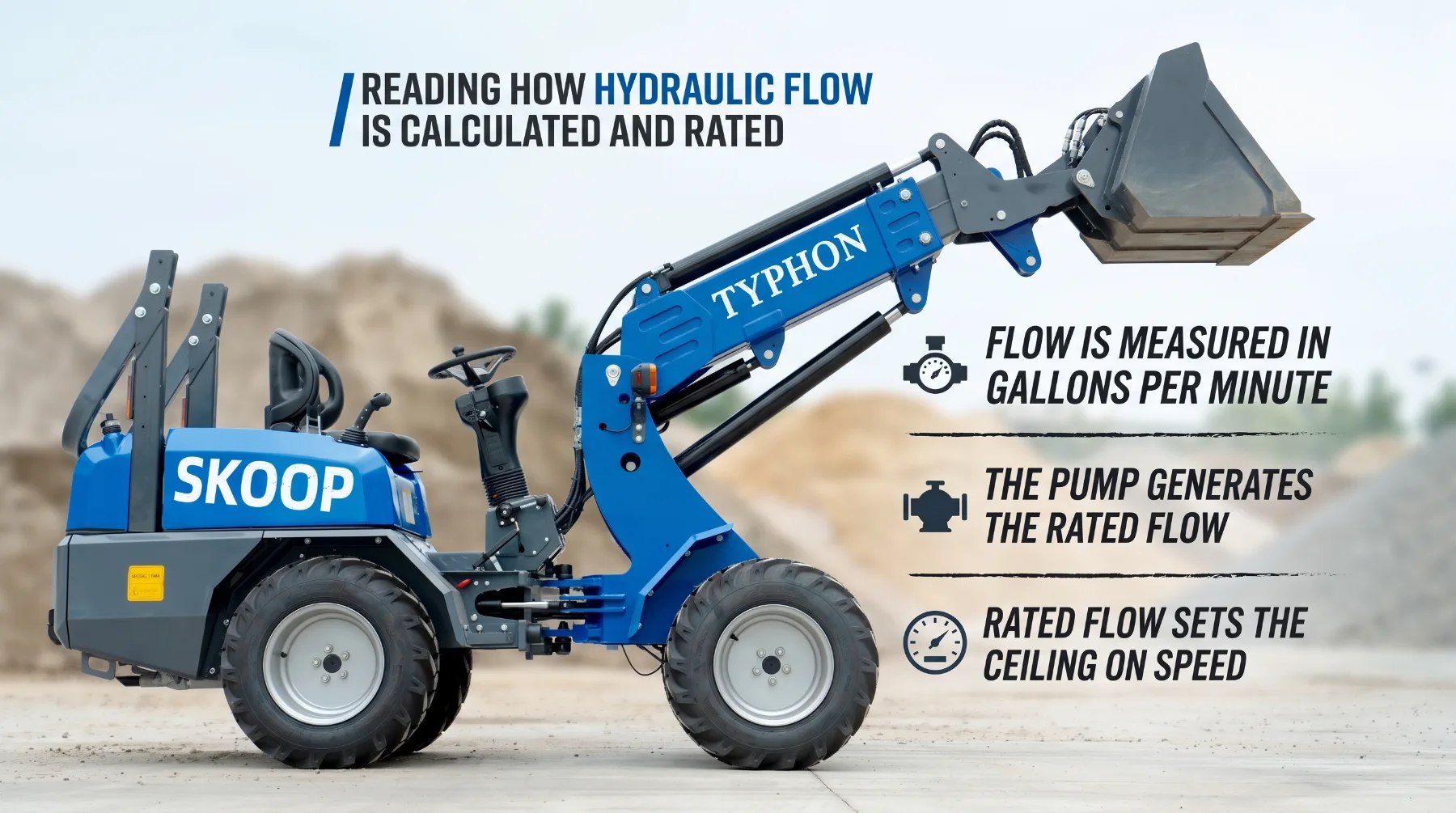
Pump output stands behind the rated flow a manufacturer publishes, because the pump is the component that generates the flow in the first place. The engine turns the pump, the pump moves a set volume of fluid with each rotation, and the rated flow reflects what that arrangement delivers at the engine's working speed. Reading this figure tells you the ceiling on how much fluid the loader can supply to its lift and tilt functions. Cylinder demand sits on the other side of the equation, since the flow a task requires depends on how much fluid the cylinders must receive to complete a motion. A movement that fills a large cylinder volume needs more gallons per minute to finish in the same time as one filling a smaller volume, so flow and cylinder size read together tell the real story. Key takeaway: hydraulic flow measures the fluid volume the pump delivers over time, so comparing the machine's rated flow against the volume a task demands reveals how quickly the bucket can move.
Seeing How Wider Buckets Raise Cylinder Volume and Flow Demand
Volume is where a wider bucket makes its presence felt most directly, because a larger bucket generally rides on a machine built with larger or longer-stroke cylinders to move it. Filling those bigger cylinders through their full range takes more fluid than filling smaller ones, so the same lifting or tilting motion now calls for a greater volume of oil to complete. The bucket grew, and the fluid demand grew with it. Curl and lift both feel this increase, since a wider bucket adds work at every stage of the loading cycle. Rolling a broad bucket back to hold its load asks the tilt cylinders to move more fluid, and raising that heavier, fuller bucket to dump height asks the same of the lift cylinders, so the demand climbs on both fronts at once. Each motion that once finished quickly now needs more oil to reach the same endpoint. Time enters the moment the supply cannot keep pace with the larger demand, which is exactly what the struggling loader revealed. If the pump delivers a fixed flow and the cylinders suddenly need more fluid per motion, each motion simply takes longer to complete, stretching the cycle. Key takeaway: a wider bucket rides on larger cylinders that need more fluid to fill, raising the flow demand on both lift and tilt, so a fixed supply moves that bucket more slowly.
Understanding How Flow Demand Draws on the Engine and Pump
Demand on the hydraulics traces straight back to the engine, because the engine drives the pump that generates every gallon of flow. When a wider bucket raises the volume the cylinders need, the pump must work harder to supply it, and the engine must supply the power that drives the pump. The bucket on the front of the machine reaches all the way back to the engine's workload. Pressure and flow together set how hard the system labors, since the pump must deliver both enough fluid and enough force to move a heavier, fuller bucket. Raising a wide bucket loaded with dense material demands high pressure to lift the weight and ample flow to lift it at a useful speed, and generating both at once pulls real power from the engine. A machine already near its limit has little left to give when the bucket grows. Reserve is what separates a loader that absorbs the added demand from one that strains under it. A machine whose engine and pump carry capacity beyond the standard bucket handles a modestly wider one without faltering, while a loader sized tightly to its original bucket bogs down the moment the demand climbs. Key takeaway: a wider bucket's flow demand reaches back through the pump to the engine, so the machine needs power and pump capacity in reserve to move that bucket without straining.
Weighing Cycle Time and Productivity Implications
Productivity is where the whole question finally settles, because the point of a wider bucket is to move more material, and cycle time decides whether it actually does. A loading cycle runs from digging into the pile through raising, dumping, and returning, and a wider bucket carries more per cycle only if the machine still completes that cycle at a reasonable pace. More material per pass means nothing if each pass takes noticeably longer. Trade-off sits at the heart of this calculation, since a wider bucket adds capacity but can add cycle time when it outpaces the hydraulic supply. A bucket that holds ten percent more material yet slows each cycle by twenty percent moves less over an hour, not more, exactly as the aggregate yard discovered. The math only favors the wider bucket when the added capacity outweighs any added time per cycle. Sweet spot is the goal every operation should chase, because the most productive setup balances bucket size against the speed the hydraulics can sustain. A bucket matched to the machine's flow fills more per pass while holding the cycle brisk, so output climbs across the shift rather than sliding backward. Key takeaway: a wider bucket raises productivity only when the hydraulics keep the cycle brisk, so the gain in capacity per pass must outweigh any added cycle time to move more material overall.
Matching Bucket Width to the Loader's Hydraulic System
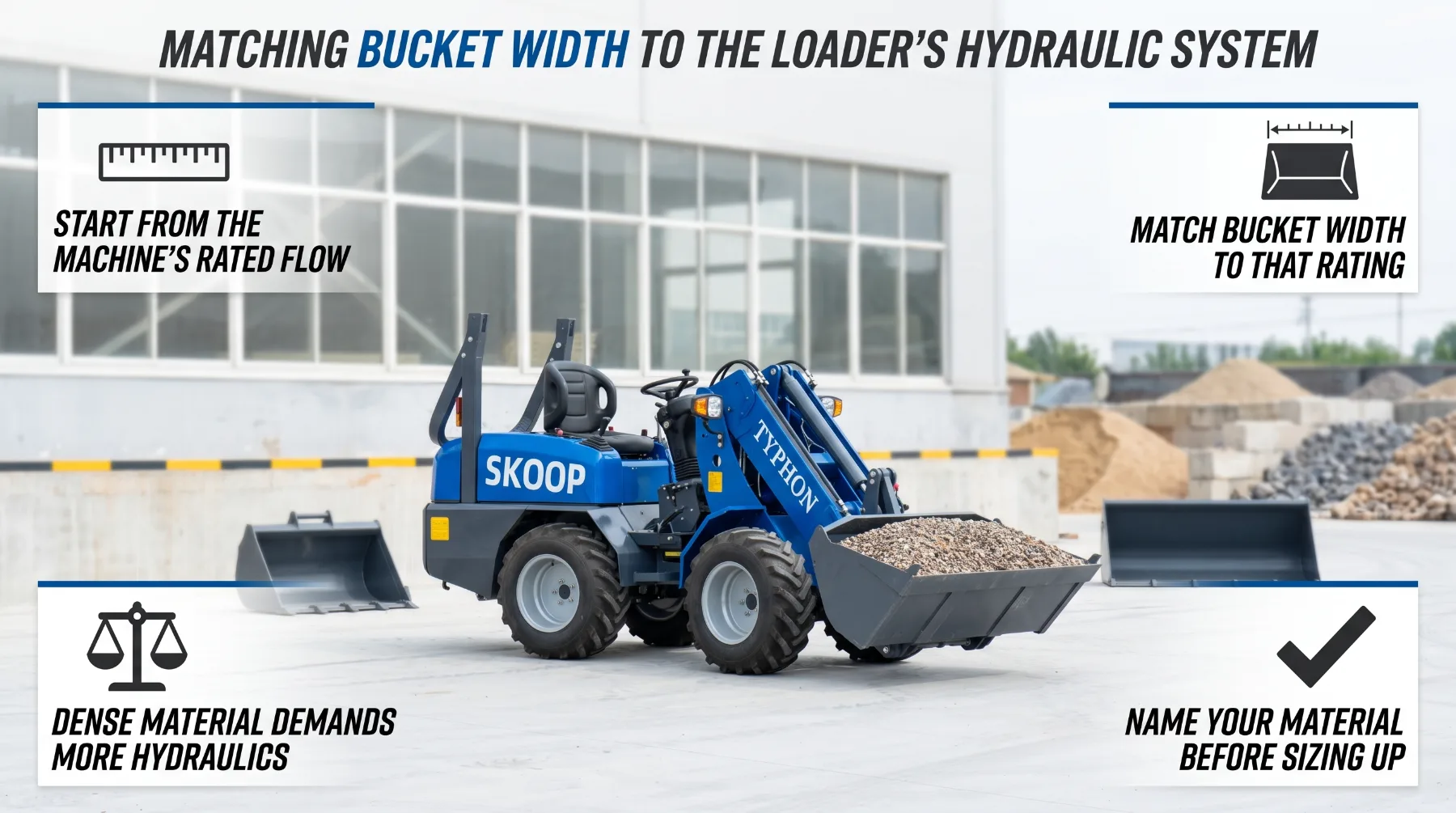
Selection begins with the machine's rated flow and pressure, because those figures define what the hydraulic system can actually deliver to a bucket of any width. Read the loader's hydraulic specifications first, then weigh a candidate bucket against them, since a width the system can serve at full speed will always outperform one that starves the cylinders. Starting from the machine rather than the bucket keeps the choice grounded in what the hydraulics support. Material weighs into the decision alongside width, because a wide bucket filled with dense material asks far more of the hydraulics than the same bucket handling light, loose fill. An operation moving mulch or wood chips may run a wider bucket comfortably, while one loading wet aggregate or gravel should stay closer to the size the machine was built around, so the material and the width must be judged together. Regular maintenance also matters, because clean hydraulic filters, proper fluid levels, and well-maintained components help the system handle its intended load efficiently and reduce unnecessary strain. Naming what the loader lifts most often guides the width the hydraulics can sustain while helping determine the maintenance attention the machine will need.
Guidance from a knowledgeable equipment source turns these figures into a confident match, because pairing a bucket to a loader's hydraulic capacity rewards real experience. Describing your machine, your material, and your productivity goals to a trusted specialist lets them recommend a bucket that fills more per pass without starving the cylinders or straining the engine. Key takeaway: match bucket width to the loader's rated flow, pressure, and the material you handle, and lean on a trusted specialist so the bucket boosts output rather than dragging the cycle. Conclusion Bucket width and hydraulic flow work as a linked system in a wheel loader, and the full picture holds once you follow each piece in turn. Start by recognizing why the bucket's width shapes the flow it demands, since a wider bucket enlarges the volume the cylinders must fill. Understand how hydraulic flow is measured against the machine's rated pump output, then see how wider buckets ride on larger cylinders that raise the flow demand on both lift and tilt. Weigh how that demand reaches back through the pump to the engine and calls for power in reserve, and recognize that a wider bucket lifts productivity only when the hydraulics keep the cycle brisk. Finish by matching the bucket width to the loader's rated flow, pressure, and the material you handle. Attend to all six, and you fit a bucket that moves more material per shift rather than one that slows the machine it rides on. Before your next bucket purchase, read your loader's hydraulic specifications, name the material you move most often, and weigh the added capacity against any added cycle time so the machine performs from the first pass. When you're ready to put a dependable wheel loader with the right bucket to work, or need help matching bucket width to your hydraulic system, reach out to a trusted equipment specialist who can match reliable equipment to the results your work depends on.
Frequently Asked Questions
Does a wider bucket always slow down a wheel loader? Not always. A wider bucket may slow cycles if it demands more hydraulic flow than the machine can provide. The effect depends on bucket size, hydraulic capacity, and material weight. How do I know if my loader has enough hydraulic flow for a wider bucket? Check the loader’s hydraulic flow and pressure ratings. If the machine already operates near its limits, a wider bucket may slow lifting and curling. Extra hydraulic capacity gives more flexibility. Will a wider bucket move more material per hour? Only if the extra capacity does not significantly increase cycle time. The best bucket balances capacity, hydraulic performance, material weight, and cycle speed.