August 10, 2026
Signs Your Forklift Needs Immediate Maintenance
Discover 5 critical forklift maintenance signs, including unusual noises, hydraulic leaks, warning lights, brake problems, and battery issues.
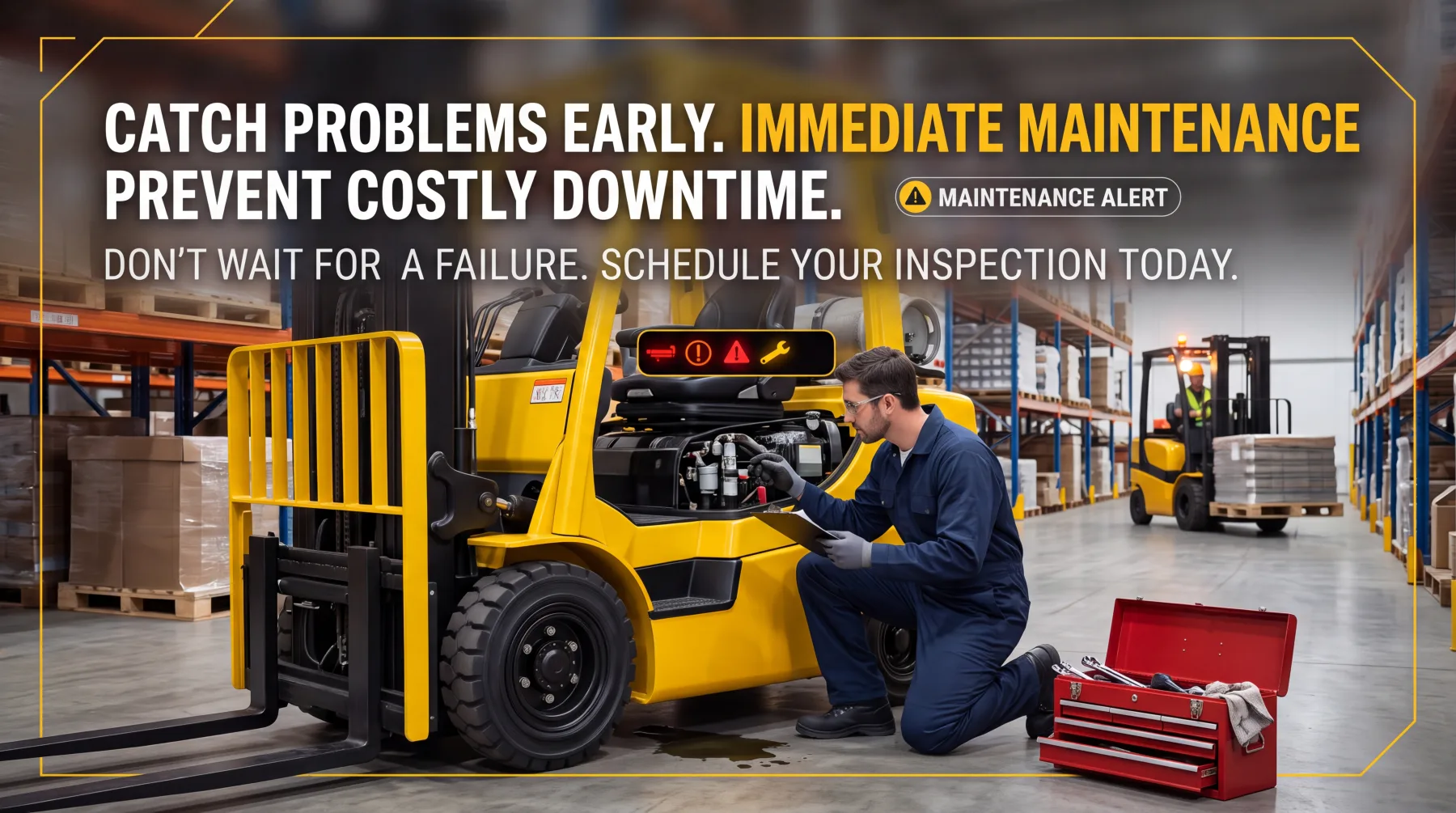
A forklift that runs reliably keeps your operation moving, but the moment something goes wrong, the risks multiply fast. Small warning signs often appear well before a serious breakdown, and catching them early can mean the difference between a quick fix and an expensive, dangerous failure. Operators and supervisors who know what to watch for can act promptly, protecting both their people and their equipment. This guide walks through the most important signs that a forklift needs immediate attention, from unusual noises and hydraulic trouble to warning lights, handling problems, and issues with exhaust or battery performance. Knowing these signals helps you keep every machine safe, dependable, and ready for work.
Unusual Noises During Operation
A forklift that suddenly sounds different is often trying to tell you something important. Machines develop a familiar working sound over time, so any new grinding, squealing, knocking, or rattling deserves immediate attention. These noises rarely appear without reason, and each type tends to point toward a specific kind of trouble. Learning to notice and interpret them is one of the simplest yet most valuable maintenance habits an operator can build, because sound often reveals a problem long before it becomes visible or brings the machine to a halt. Different noises tend to signal different underlying issues, and recognizing the pattern helps you respond correctly: Grinding often points to worn gears, bearings, or brake components that are wearing against each other. Squealing can indicate belt problems, brake wear, or components in need of lubrication. Knocking may reveal engine trouble, loose parts, or damage within the drivetrain. Rattling frequently signals loose hardware, worn mounts, or components that have begun to fail. Whatever the specific cause, the guiding principle stays the same: strange sounds signal worn or damaged parts that need inspection before they worsen. The real value of listening carefully lies in what early action prevents. A minor noise addressed today is often a straightforward, affordable repair, while the same problem left unchecked can escalate into extensive damage that sidelines the machine and drains your budget. Ignoring a grinding gear or a knocking engine allows small faults to cascade into larger failures, taking related components down with them. Treating unusual noises as an early call to action protects both the forklift and your operation, keeping repairs manageable and downtime short. When an operator reports a sound promptly and a technician investigates without delay, you preserve the reliability that keeps work flowing safely and efficiently.
Hydraulic Leaks or Reduced Lifting Performance
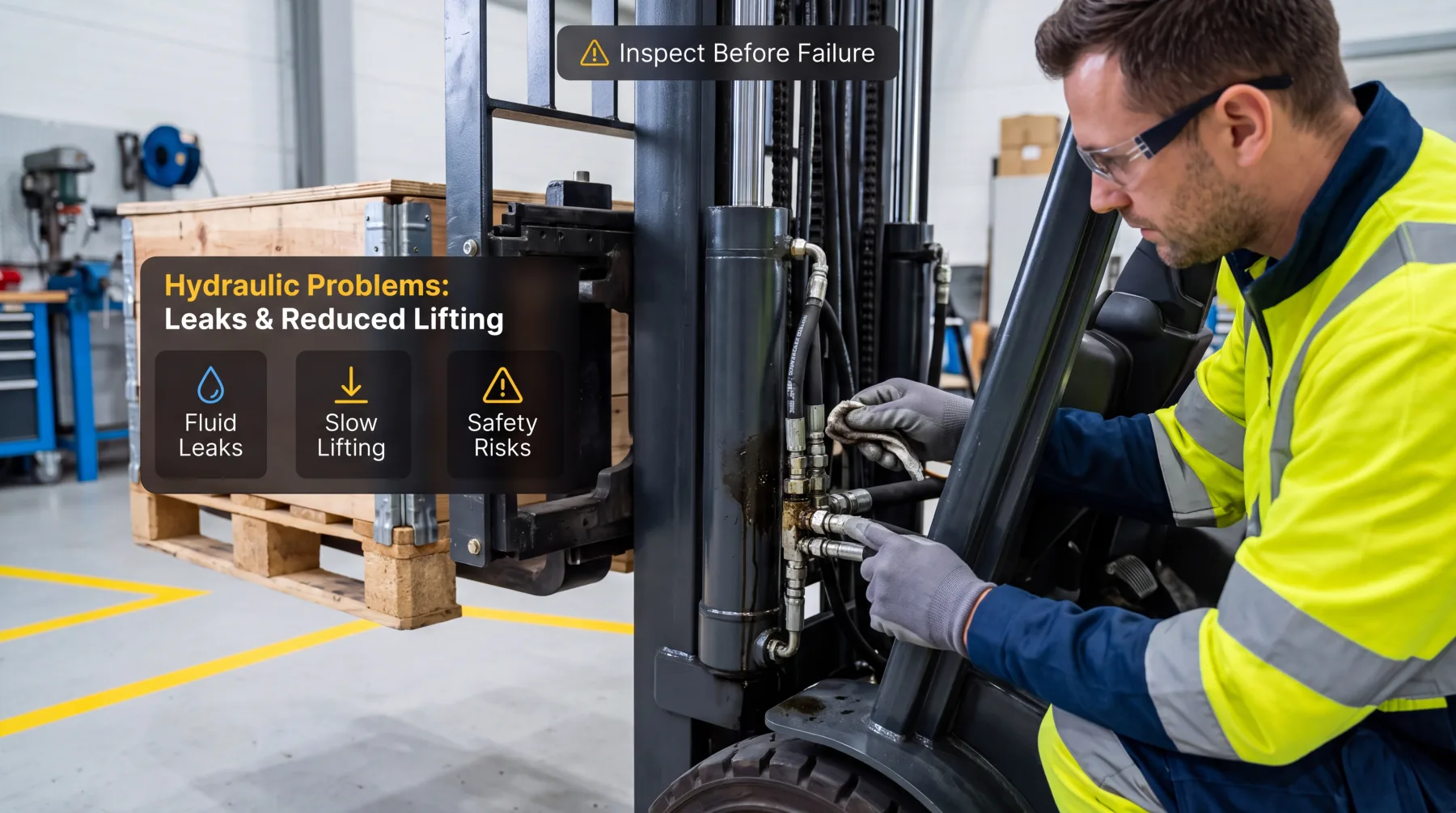
The hydraulic system is the heart of a forklift's lifting ability, so any sign of trouble there demands prompt attention. Two symptoms stand out above the rest: visible hydraulic fluid leaks and slower lifting speeds. Either one indicates that the hydraulic system may not be performing as it should, and both tend to worsen if left unaddressed. Because lifting is the very task a forklift exists to perform, problems in this system affect not only how much work the machine can do but also how safely it can do it. Hydraulic leaks are often the first clear warning, and they should never be dismissed as a minor mess. Puddles beneath the machine, damp hoses, or fluid residue around cylinders and fittings all point to a system losing the pressurized fluid it needs to function. As fluid escapes, the system struggles to generate the force required for smooth, reliable lifting, and continued operation on low fluid can damage expensive components over time. Slower lifting speeds tell a related story, revealing that the system can no longer move loads with its normal strength and responsiveness. Ignoring these problems carries consequences that reach across the operation: Reduced productivity, as slower or weaker lifting drags down the pace of every task. Safety risks, since a load that shifts, drops, or lifts unpredictably endangers the operator and those nearby. Escalating damage, because running a compromised hydraulic system accelerates wear and invites costly failures. Taken together, these risks make hydraulic trouble one of the clearest calls for immediate maintenance. When an operator notices a leak or a drop in lifting performance, the machine should be inspected before it returns to demanding work. A technician can locate the source of a leak, restore proper fluid levels, and repair worn seals or hoses before the problem threatens both output and safety. Acting quickly keeps the forklift lifting confidently and protects the people who rely on it.
Warning Lights and Dashboard Alerts
Modern forklifts are built with sophisticated monitoring systems designed to catch problems early, and those systems communicate through warning lights and dashboard alerts. When an indicator illuminates, the machine is signaling that something needs attention, whether a mechanical fault, an electrical issue, or a condition that could compromise safe operation. These alerts exist precisely to give operators advance notice, and treating them as reliable, meaningful warnings is essential to keeping the equipment running safely. The single most important rule is straightforward: operators should never ignore dashboard alerts. It can be tempting to keep working when the machine still seems to run fine, but warning lights often appear before a problem becomes obvious in performance. By the time a fault is felt in how the forklift handles or lifts, the underlying issue may already have grown serious. A warning light is an early opportunity to investigate while a repair is still simple, and dismissing it squanders exactly the advantage the system was designed to provide. Different alerts carry different levels of urgency, but all deserve a response. An indicator pointing to engine trouble, low fluid, overheating, brake faults, or an electrical problem tells you the machine needs inspection before it continues in service. The right response is to take the alert seriously, pause operation when the warning calls for it, and have a qualified technician diagnose the cause. Guessing at the meaning or hoping the light will clear on its own risks turning a minor fault into a breakdown or, worse, a safety incident. Building a culture where every alert prompts action protects both people and equipment. When operators know that a warning light means stop and check rather than keep going, small problems get caught early, downtime stays short, and the forklift remains dependable. That disciplined attention to the machine's own signals is one of the most effective maintenance habits any operation can adopt.
Steering, Braking, or Handling Problems
Few forklift issues are as immediately dangerous as problems with steering, braking, or overall handling. These systems govern how the operator controls the machine, so any weakness in them directly threatens safety. Difficulty steering, weak or unresponsive brakes, and unstable handling all make the forklift harder to control, and a machine that does not respond predictably has no place in active service. When any of these symptoms appear, the priority shifts immediately from productivity to safety, because the risk extends to the operator, nearby workers, and everything in the machine's path. Steering trouble often shows up as stiffness, excessive play in the wheel, or a machine that pulls or resists turning as it should. Braking problems can be even more alarming, ranging from brakes that feel soft or slow to respond to a machine that takes longer than normal to stop. Unstable handling, whether the forklift feels loose, wobbly, or unpredictable under load, signals that something in the machine's mechanical systems is no longer working as intended. Each of these conditions undermines the control an operator depends on to work safely, especially when moving heavy loads or maneuvering in tight spaces. The correct response leaves no room for compromise. A forklift showing steering, braking, or handling problems should be taken out of service and inspected before it returns to work. There is no safe way to keep operating a machine you cannot fully control, and pressing on invites collisions, tip-overs, and serious injury. A qualified technician can identify the cause, whether worn steering components, failing brake parts, or another mechanical fault, and restore the machine to safe, reliable operation. Treating any loss of control as an immediate stop-work condition protects everyone on the site and reflects the disciplined approach that keeps a forklift operation both productive and safe.
Excessive Exhaust Smoke or Battery Performance Issues
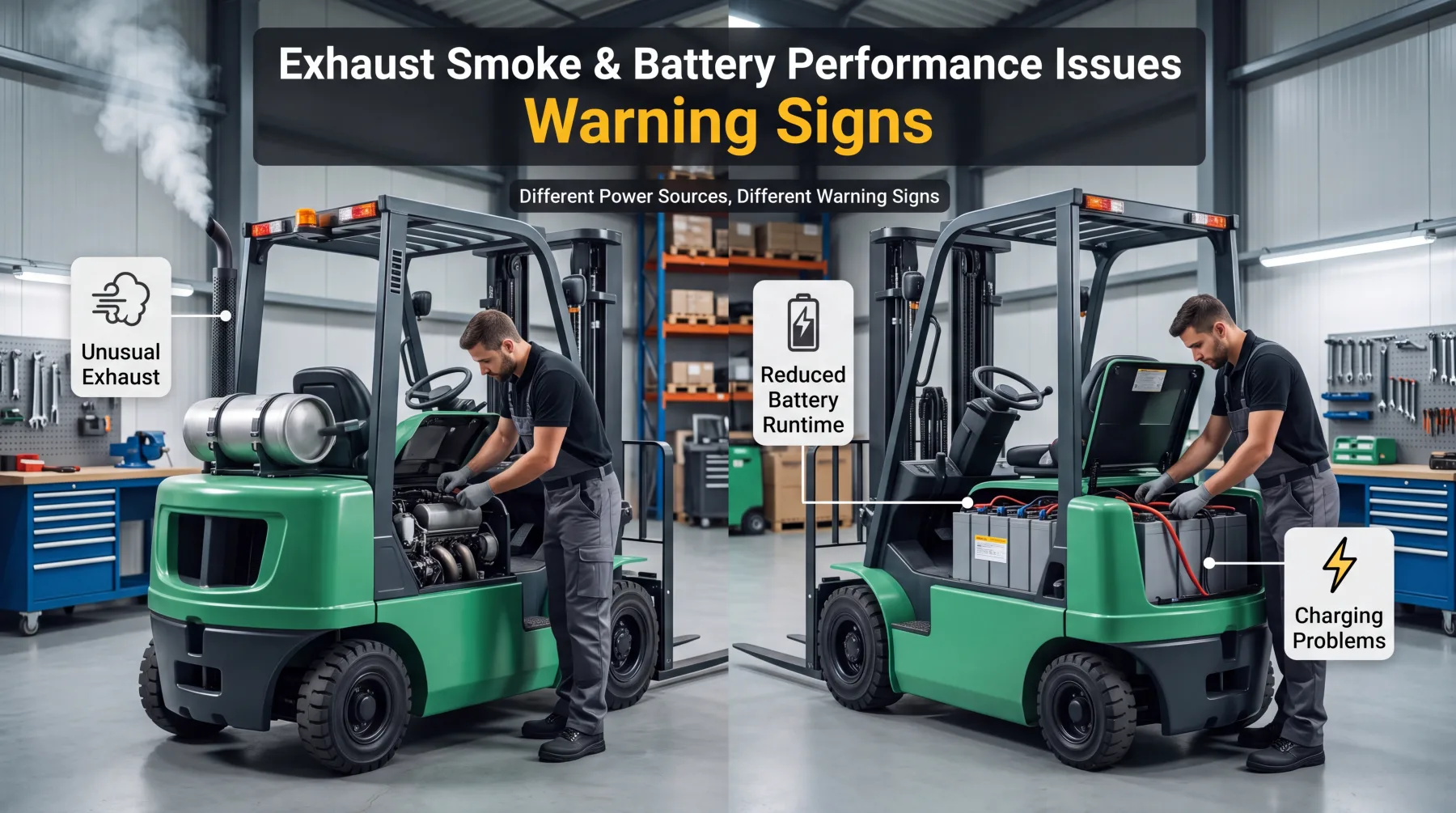
The final warning signs depend on how a forklift is powered, since internal combustion and electric machines each reveal trouble in their own way. Knowing what to watch for on your specific type of forklift helps you catch developing problems before they force an unexpected shutdown. Both power sources give clear signals when something is wrong, and responding promptly keeps the machine dependable while sparing you the disruption of a breakdown in the middle of a busy shift. For internal combustion forklifts, exhaust smoke is a telling indicator of engine health. A machine running well produces little visible smoke, so unusual exhaust often points to engine problems that need investigation. The color of the smoke can even hint at the underlying cause: excessive black, blue, or white smoke each suggests a different kind of trouble, from fuel or combustion issues to burning oil or coolant problems. Whatever the shade, heavy or unusual exhaust is a sign the engine is not operating cleanly and should be inspected before the fault grows more serious and more expensive to repair. Electric forklifts show their warnings through battery and charging performance rather than exhaust. Watch for these common signs that the battery or electrical system needs attention: Reduced runtime, where the battery no longer holds a charge through a full shift as it once did. Charging issues, such as a battery that fails to charge fully, charges slowly, or will not hold its charge. Weak or inconsistent performance, where the machine feels underpowered as the battery struggles. These symptoms indicate that the battery or the electrical system may require maintenance, and addressing them early protects both the machine's reliability and the significant investment a forklift battery represents. Whether you run internal combustion or electric equipment, prompt repairs at the first sign of trouble help you avoid unexpected downtime and keep every machine ready for the work ahead. Conclusion Forklifts are essential tools, and keeping them in safe, reliable condition is a responsibility that falls on every operator, supervisor, and fleet manager. The warning signs covered in this guide unusual noises, hydraulic leaks, dashboard alerts, steering or braking problems, and exhaust or battery issues all share one thing in common: they are easier and less expensive to address when caught early. Every day a problem goes unaddressed is another day the risk to people and equipment grows. Building a culture where operators are trained to notice these signals, report them promptly, and stop work when safety is at stake makes a measurable difference. Pair that awareness with routine inspections and timely repairs, and you create an operation where breakdowns are rare, downtime is controlled, and every forklift earns its keep safely. The machines that last longest and perform most reliably are the ones that receive the attention they deserve before problems escalate.