September 1, 2026
Excavator bucket digging force
Excavator breakout force vs engine power, hydraulic pressure and flow excavator, mini excavator digging power explained, bucket cylinder force multiplier
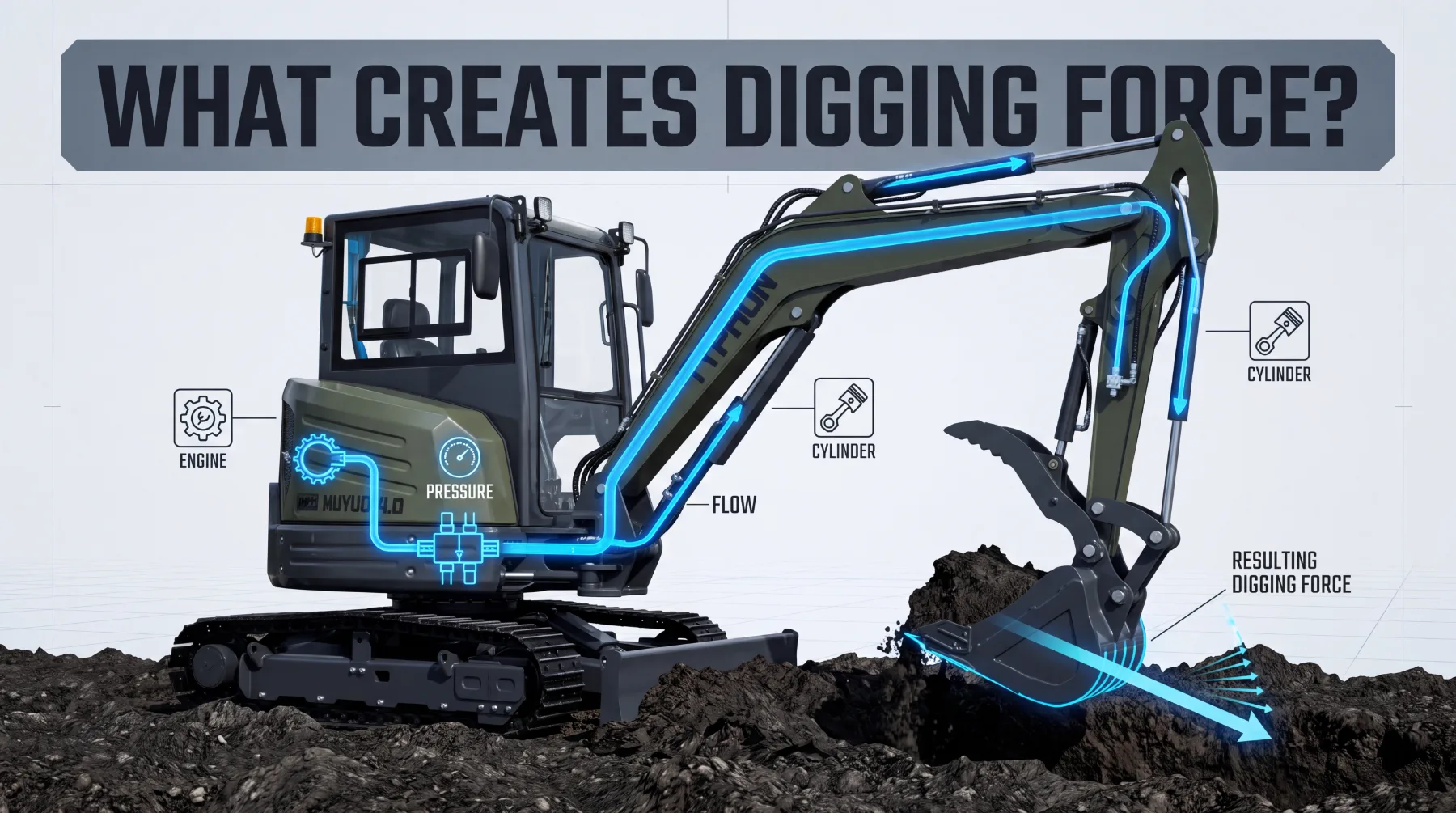
How Excavator's Bucket Digging Force Relates to Engine and Hydraulic Power
When operators compare excavators, they often look straight at engine horsepower and assume the biggest number wins. Yet two machines with nearly identical engines can dig with very different strength. The truth is that digging force comes from a chain of connected systems, each one shaping how much power actually reaches the bucket. Understanding how the engine, hydraulic pressure, flow, and cylinder work together helps you judge a machine's real capability instead of trusting a single spec. Let's break down what each part contributes and why balance matters more than raw power.
Engine Power Sets the Available Energy
The engine is the starting point for everything an excavator does. It burns fuel to produce mechanical energy, and that energy drives the hydraulic pump that powers the arm, boom, and bucket. Without a capable engine, the hydraulic system has nothing to work with. A stronger engine can support a larger pump and higher hydraulic demand, which is why bigger machines tend to carry bigger engines. Still, engine horsepower on its own does not tell you how hard the bucket will dig. Think of the engine as the energy source rather than the muscle. It sets the ceiling for how much work the machine can perform, but the actual digging force depends on how that energy gets converted and delivered. An engine can be powerful, yet if the pump, valves, and cylinders are undersized, much of that potential never reaches the bucket. The reverse is also true. A well-matched hydraulic system can pull impressive performance from a moderate engine. This is why comparing engines in isolation can mislead you. Horsepower confirms that a machine has enough energy on tap to feed its hydraulics under load, especially when digging and swinging at the same time. It also affects how well the excavator maintains performance during demanding, continuous work without bogging down. But the engine is only the first link in the chain. To understand digging force, you have to follow that energy through the hydraulic system and see how efficiently it turns into force at the bucket edge.
Hydraulic Pressure Creates Digging Force
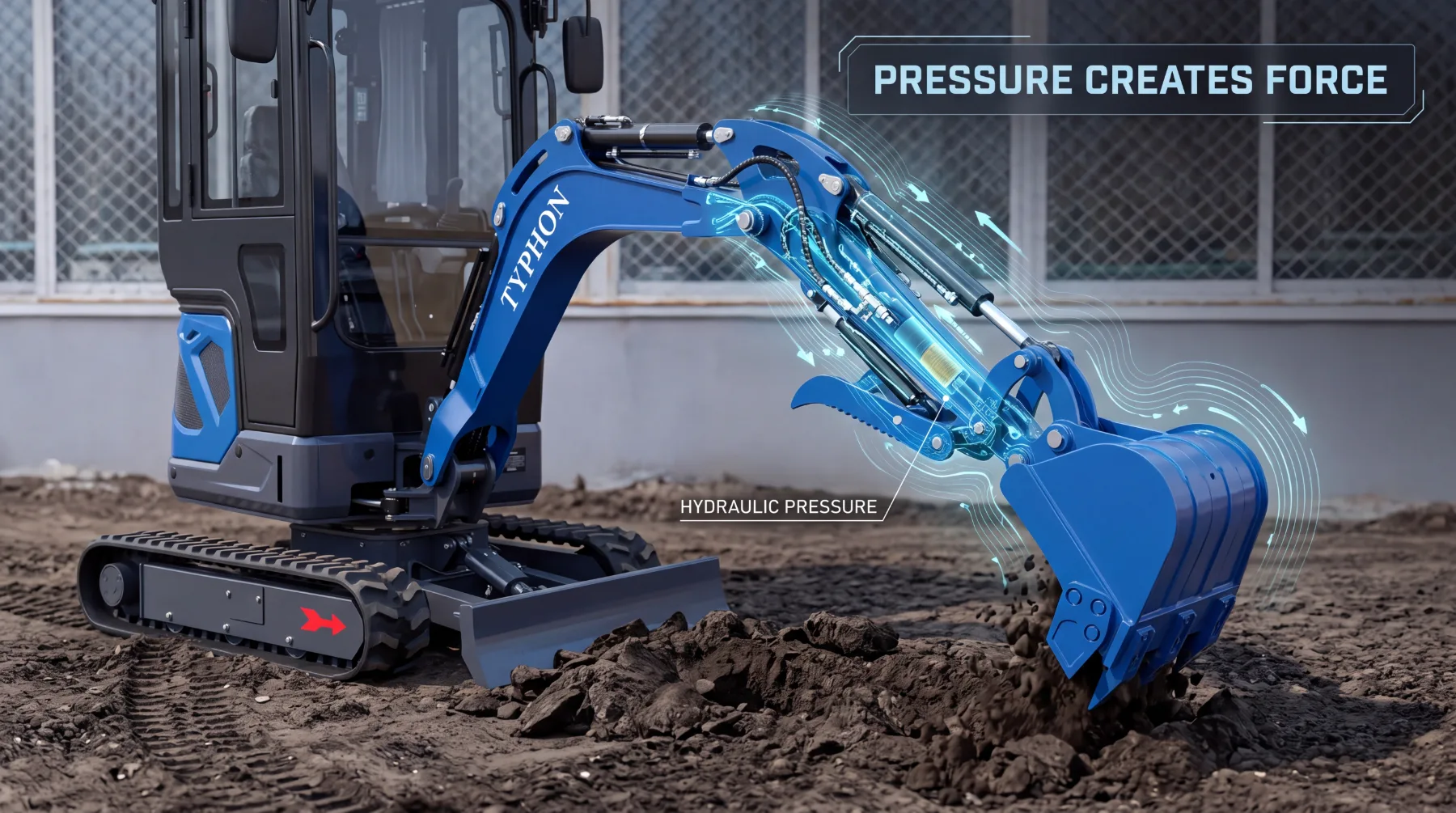
If the engine supplies energy, hydraulic pressure is what turns that energy into muscle. Pressure, usually measured in psi or bar, represents the force the hydraulic fluid applies inside the cylinders. When fluid under pressure pushes against the piston in the bucket cylinder, it creates the force that curls the bucket through soil, gravel, or clay. The higher the available pressure, the greater the potential force at the linkage, provided the rest of the system is built to handle it. This is the heart of breakout force, the term used to describe how hard the bucket can pry material loose. Breakout force depends directly on the pressure the system can generate and sustain during a dig. A machine that maintains strong pressure under load can bite into tough, compacted ground where a weaker system would stall. That is why pressure ratings matter so much when you expect heavy digging in demanding conditions. Pressure does not work alone, though. It must be paired with a cylinder sized to make use of it and a pump capable of delivering fluid at that pressure without dropping off. Consider how the pieces connect: Pump output: the pump must be able to build and hold the rated pressure while the engine drives it. Relief settings: pressure relief valves cap the maximum pressure to protect components, which also defines the working ceiling for force. Cylinder response: the cylinder converts pressure into physical push, so its size shapes how much of that pressure becomes usable force. When these elements are matched, higher pressure translates into stronger, more reliable digging. When they are mismatched, extra pressure ratings on paper may never show up in the bucket.
Hydraulic Flow Controls Working Speed
Flow is often confused with pressure, but the two do very different jobs. While pressure creates force, flow determines how quickly the cylinders move. Flow measures the volume of hydraulic fluid moving through the system over time, usually in gallons or liters per minute. When more fluid reaches the cylinder each second, the piston extends faster, and the bucket curls, the arm swings, and the boom raises more quickly. In short, flow governs speed, not maximum strength. This distinction matters for productivity. A machine with generous flow completes its dig-swing-dump cycle faster, moving more material per hour even if its raw breakout force is similar to another model. For operators paid by the job or racing a schedule, quicker cycle times can be just as valuable as brute strength. Flow keeps the machine feeling responsive and smooth, letting you feather movements precisely during fine grading or trenching. It helps to picture pressure and flow as strength and speed working side by side. Pressure decides how hard the bucket can pull; flow decides how fast it gets there. A machine can have strong pressure yet feel sluggish if its flow is limited, or it can move quickly while handling lighter resistance. The best excavators balance both, delivering enough pressure to break tough ground and enough flow to keep the work pace high. When you evaluate a machine, ask about both figures. Flow will tell you how briskly the bucket moves through each cycle, while pressure tells you how much force it can apply once it meets resistance. Neither number alone paints the full picture of digging performance.
Bucket Cylinder Size Multiplies Hydraulic Force
The bucket cylinder is where hydraulic pressure becomes physical force, and its dimensions have a direct effect on how much force the machine produces. The key measurement is the cylinder bore, the internal diameter of the barrel. Force equals pressure multiplied by the area the fluid pushes against, so a larger bore gives the fluid more surface to act on. At the same pressure, a wider cylinder generates noticeably more force than a narrow one. This is why cylinder size is often described as a multiplier for hydraulic pressure. That extra force comes with a trade-off worth understanding. A larger cylinder holds more fluid, so it needs more oil to extend the same distance. If the pump delivers a fixed flow rate, the bigger cylinder will move more slowly than a smaller one. Manufacturers weigh this balance carefully. A machine built for heavy digging may use larger cylinders to maximize breakout force, accepting a slightly slower motion, while a machine tuned for speed may use smaller cylinders fed by strong flow. Because of this relationship, two excavators with the same hydraulic pressure can still dig with different force simply because of cylinder sizing. A bigger bucket cylinder can pry loose material that a smaller one cannot, even when both run identical pressure. The bucket geometry and linkage also play a part, changing how the cylinder's force is applied at the cutting edge. When you assess digging strength, remember that pressure and cylinder size work together. Strong pressure feeding an appropriately sized cylinder is what produces the powerful, confident dig operators rely on in tough conditions. Neither one delivers its full potential without the other.
Engine and Hydraulic System Must Work Together
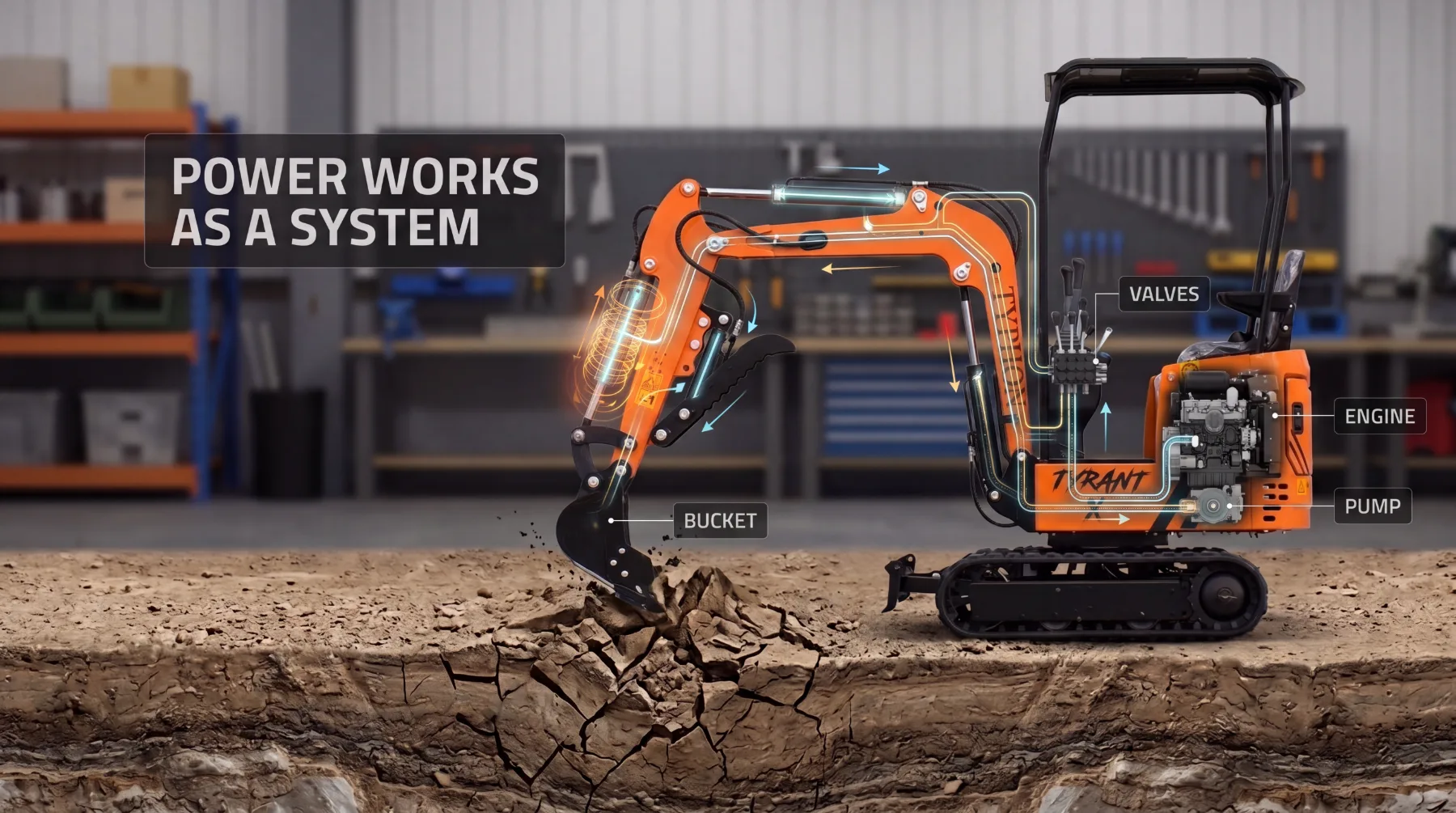
The single most important idea in understanding digging force is that no component works alone. Maximum performance comes from the complete powertrain, engine, pump, valves, cylinders, and bucket, all balanced to complement one another. A powerful engine paired with an undersized pump wastes potential. A high-pressure system feeding a tiny cylinder cannot show its strength. Real digging force emerges only when every link in the chain is matched to the others. Picture how energy travels through the machine. The engine produces power, the pump converts it into pressurized flow, the valves direct that fluid, the cylinders turn pressure into force, and the bucket geometry applies that force to the ground. If any stage is weak or mismatched, it becomes a bottleneck that limits the whole system. A well-engineered excavator avoids these choke points by sizing each part to work in harmony, so the energy from the engine arrives at the bucket with as little loss as possible. This balanced approach is what separates a genuinely capable machine from one that only looks strong on paper. Consider the elements that must align: Engine output: enough power to drive the pump under continuous, demanding loads. Pump capacity: sized to deliver both the pressure and flow the work requires. Hydraulic pressure: high enough to generate strong breakout force at the bucket. Cylinder size: matched to the pressure to multiply force effectively. Bucket geometry: shaped to apply that force efficiently at the cutting edge. When these factors are engineered together, the excavator digs with strength, speed, and efficiency. Buyers who evaluate the whole system rather than a single headline number end up with a machine that performs reliably in real conditions, day after day. Conclusion Digging force is never the product of one spec. It grows out of a balanced partnership between engine power, hydraulic pressure, flow, and cylinder size, all working as a coordinated system. The engine supplies energy, pressure creates force, flow sets the pace, and the cylinder multiplies that force at the bucket. When you compare machines, look past the horsepower headline and study how the whole hydraulic system is designed to work together. That balanced view is the surest way to choose an excavator that digs with the strength and efficiency your work demands.
Frequently Asked Questions
1. Does a bigger engine automatically mean more digging force? Not on its own. The engine supplies the energy that drives the hydraulic system, so it sets the ceiling for what the machine can do. But digging force actually comes from hydraulic pressure acting on the bucket cylinder. A large engine paired with an undersized pump or cylinder will not deliver strong digging force. Conversely, a well-matched hydraulic system can produce impressive force from a moderate engine. Look at the complete powertrain, not just horsepower, to judge real digging strength. 2. What is the difference between hydraulic pressure and hydraulic flow? Pressure and flow do two separate jobs. Pressure, measured in psi or bar, creates the force that lets the bucket pry material loose, so it drives breakout force. Flow, measured in gallons or liters per minute, controls how fast the cylinders move, which sets cycle speed. A machine can have high pressure yet dig slowly if flow is low, or move quickly while handling lighter resistance. Strong performance needs both: enough pressure for force and enough flow for speed. 3. How does bucket cylinder size affect digging force? The cylinder bore, or internal diameter, determines how much surface the pressurized fluid pushes against. Since force equals pressure times area, a larger bore produces more force at the same pressure. That makes cylinder size a multiplier for hydraulic force. The trade-off is that a bigger cylinder needs more fluid to extend, so it may move more slowly unless flow increases. Two machines with equal pressure can dig differently simply because of cylinder sizing. 4. Why do two excavators with similar engines dig with different strength? Because digging force depends on the entire hydraulic chain, not just the engine. Differences in pump capacity, maximum hydraulic pressure, cylinder bore, valve design, and bucket geometry all shape how much force reaches the cutting edge. One machine may pair its engine with a high-pressure system and large cylinders, while another may be tuned for speed with smaller cylinders. Matching engine power to the hydraulic components is what determines the strength you feel on the job. 5. What specs should I compare when evaluating an excavator's digging ability? Look at breakout force and arm force first, since these directly describe digging strength. Then check hydraulic system pressure, pump flow rate, and cylinder dimensions, because these reveal how that force is generated and how quickly the machine cycles. Consider engine power as the energy source that feeds the whole system under load. Reviewing these figures together, rather than focusing on horsepower alone, gives you an accurate picture of how the machine will perform in real digging conditions.