July 29, 2026
Wheel Loader vs. Skid Steer: Which Is Better for Construction Sites?
Workspace: Tight spaces suit skid steers; open areas suit wheel loaders. Operating costs: Skid steers cost less to run and adapt widely; loaders justify their cost at volume.
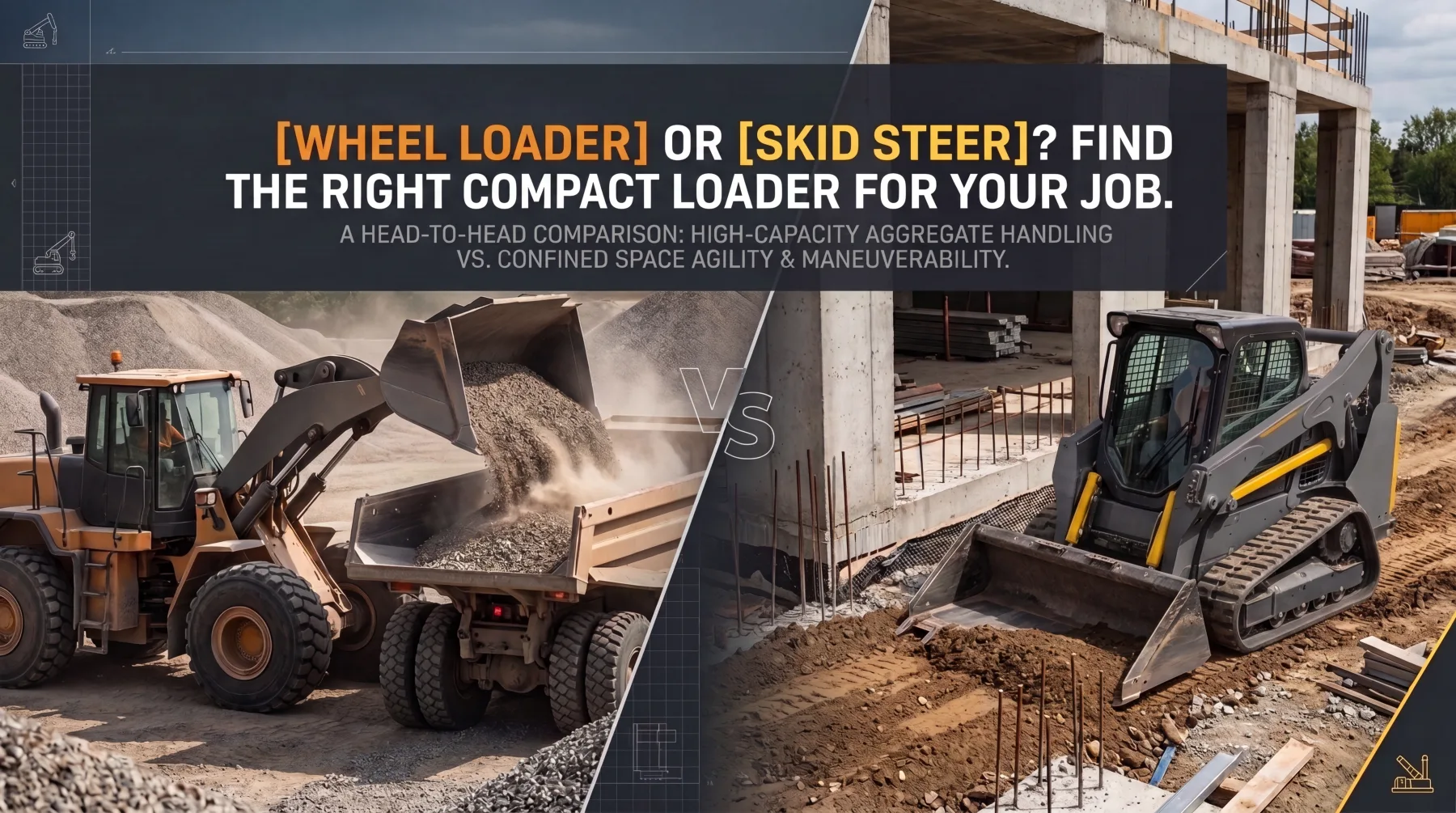
Both wheel loaders and skid steers earn their keep on construction sites, but they are far from interchangeable. One is built to move large volumes of material quickly across open ground, while the other is built to work nimbly in tight spaces and switch between tasks in minutes. Choosing the wrong one for your project means slower progress, higher costs, and a machine that fights your site instead of working with it. Choosing the right one keeps crews productive and budgets in check. This guide compares the two machines across design, lifting performance, maneuverability, attachment versatility, and how to select the model that truly fits your work.
Machine Design and Primary Applications
Wheel loaders and skid steers are built around very different design philosophies, and those differences shape what each machine does best. A wheel loader is a larger machine with a big front bucket, powerful hydraulics, and four wheels that carry substantial weight. Most models use articulated steering, bending at a center pivot to direct the machine. It is engineered first and foremost for high-volume material handling, scooping heavy loads and carrying them across a site with speed and stability. When a project calls for moving large quantities of soil, gravel, or aggregate efficiently, the wheel loader is purpose-built for exactly that. A skid steer takes the opposite approach, packing capability into a compact, lightweight frame. Its name comes from its steering method: the machine turns by driving the wheels or tracks on each side at different speeds, letting it pivot within its own footprint. This design makes the skid steer remarkably agile and well suited to precision work in confined spaces where a larger machine simply cannot fit. The intended purposes of each machine line up naturally with their design: Wheel loaders: Built for high-volume loading, hauling, and material handling on open sites. Skid steers: Built for versatility, precision, and work in tight, crowded spaces. Steering: Articulated pivot for loaders versus skid steering for compact machines. Understanding this basic split is the foundation of a smart choice. A wheel loader excels where volume and reach matter most, moving material fast and lifting heavy loads with confidence. A skid steer thrives where space is limited and tasks vary, adapting quickly to the mixed, close-quarters work that busy sites demand. Matching each machine's core design to your primary work sets you up for dependable, efficient performance from the start.
Lifting Capacity and Material Handling Performance
When it comes to lifting capacity and moving material, the two machines play in different leagues. A wheel loader carries a large bucket and strong hydraulics that let it scoop, lift, and dump heavy loads with ease. Its size and counterbalance allow it to handle dense material at volume, filling dump trucks in just a few passes and transporting big loads across a site quickly. For high-volume work, such as loading aggregate all day or clearing large stockpiles, the wheel loader delivers the capacity and cycle speed that keep a demanding project on schedule. A skid steer handles material too, but on a smaller, more versatile scale. Its lifting capacity suits lighter loads and moderate volumes rather than continuous heavy hauling. Where the skid steer shines is in the variety of material tasks it can tackle without the bulk of a larger machine. It moves soil, gravel, and debris around confined areas, loads smaller trucks and trailers, and handles the mixed material work that fills the gaps between bigger jobs. The performance strengths of each machine come down to the kind of work you do: Wheel loaders: Excel at high-volume loading, transporting, and dumping of heavy material. Skid steers: Suit lighter, more varied material handling in tighter spaces. Cycle speed: Loaders move large loads fast; skid steers offer flexible, close-in work. Choosing between them here depends on how much material you move and how often. If your project revolves around shifting large volumes efficiently, the wheel loader's lifting power and capacity make it the clear performer. If your material work is lighter, more varied, and mixed with other tasks in confined areas, the skid steer handles it capably while offering far more flexibility. Matching material demands to the right machine keeps your handling work both productive and cost-effective.
Maneuverability and Job Site Accessibility
Machine size and steering systems have a major effect on how each machine moves around a construction site, and this is where their differences become impossible to ignore. A skid steer is compact and turns within its own footprint thanks to its skid steering, which lets it pivot in place and work in spaces a larger machine could never enter. Narrow gates, tight interior areas, crowded sites cluttered with materials, and confined residential lots are all territory where the skid steer thrives. Its small size and sharp turning also make it easy to transport, so getting it to and around a job site rarely poses a challenge. A wheel loader, being larger and articulated, needs more room to operate. Its steering bends the machine at a center point, giving it a respectable turning radius for its size, but it still requires open space to maneuver efficiently. On large, open sites with plenty of room to travel and turn, that size is an asset rather than a limitation, since the machine covers ground quickly and moves big loads without difficulty. In tight or crowded conditions, however, a wheel loader can struggle to position itself and reach the work. The right choice for accessibility depends on how much room your site offers: Tight spaces: Skid steers excel, pivoting in place and fitting where loaders cannot. Open work areas: Wheel loaders move and turn efficiently with room to operate. Transport and access: Compact skid steers reach and move around confined sites easily. Reading your site conditions honestly points you toward the machine that will move freely rather than fight for space. A skid steer keeps confined and crowded projects moving where a larger machine would stall, while a wheel loader takes full advantage of open ground to work fast and haul heavy loads. Matching maneuverability to your workspace protects both productivity and the flow of the entire job site.
Attachment Versatility and Job Site Flexibility
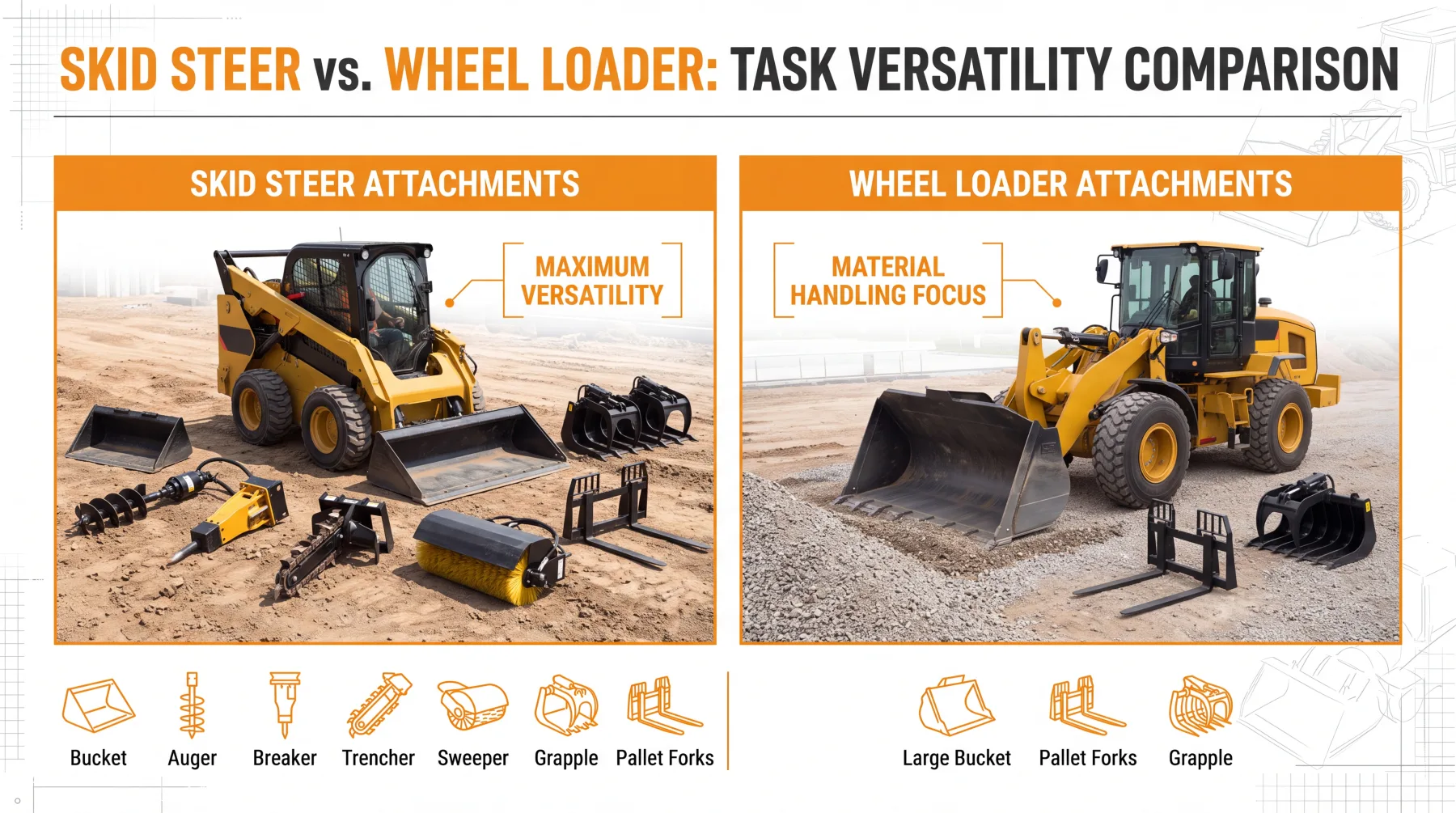
Both machines accept attachments, but the range and practicality of those tools differ in ways that shape how flexible each machine truly is. The skid steer is the clear leader in attachment versatility. Its universal quick-attach coupler works with an enormous catalog of tools, turning one compact machine into a whole fleet of specialized equipment. By swapping the tool on the front, an operator moves seamlessly from digging to grading to breaking to sweeping, all without leaving the seat for long. This adaptability is a core reason skid steers are so valued on sites where the work changes constantly. Wheel loaders also use attachments, though their selection centers more on material handling and their larger scale. Buckets of various sizes, pallet forks, and grapples let a loader take on more than plain loading, extending its usefulness across a project. The attachments tend to be heavier and built for volume rather than the fine, varied tasks a skid steer handles, which keeps the loader focused on the material-moving work it does best. Comparing the attachment range highlights where each machine's flexibility lies: Skid steers: Buckets, augers, breakers, trenchers, grapples, sweepers, forks, and far more. Wheel loaders: Buckets, forks, and grapples focused on material handling at volume. Overall versatility: Skid steers adapt to the widest variety of tasks beyond loading. For pure flexibility, the skid steer wins decisively. A single skid steer paired with a thoughtful set of attachments handles dozens of different jobs, reducing the need for extra equipment and keeping the site less crowded. The wheel loader offers real flexibility within material handling, but the skid steer's vast attachment ecosystem makes it the machine to choose when your work spans many tasks beyond simply loading and hauling material.
Choosing the Right Machine for Your Construction Project
Deciding between a wheel loader and a skid steer comes down to matching the machine to the genuine demands of your project rather than reaching for the biggest or most familiar option. Project size and material volume are the starting point. Large projects that involve moving high volumes of material across open ground favor the wheel loader's capacity and speed, while smaller or mixed-scope jobs that demand versatility and close-in work point clearly toward the skid steer. Being honest about the bulk of your daily work is what steers you toward the right fit. Workspace and operating costs deserve equal attention. Tight, crowded, or interior sites reward the skid steer's compact size and tight turning, whereas open sites let a wheel loader work to its full potential. On the cost side, skid steers generally carry lower purchase and operating expenses and adapt to many roles, while wheel loaders represent a larger investment that pays off when high-volume material handling is central to the work. Weigh these key factors before you commit: Project size and material volume: High volume favors loaders; smaller, varied work favors skid steers. Workspace: Tight spaces suit skid steers; open areas suit wheel loaders. Operating costs: Skid steers cost less to run and adapt widely; loaders justify their cost at volume. Job types: Consider the tasks the machine will perform most often. The best choice is the one that matches how and where you work most of the time. If your projects revolve around moving large amounts of material on open sites, the wheel loader delivers the volume and efficiency you need. If your work is varied, space is limited, and versatility matters more than raw capacity, the skid steer is the smarter, more flexible investment. Assess your project size, workspace, material volume, costs, and typical jobs together, and you will select the machine that serves your site dependably. Conclusion Neither the wheel loader nor the skid steer is universally better, because each is engineered for a different kind of construction work. Wheel loaders bring the size, lifting capacity, and cycle speed that make high-volume material handling efficient on large, open sites. Skid steers offer compact agility, unmatched attachment versatility, and the ability to work precisely in tight, crowded spaces where a larger machine cannot fit. The right choice depends on your project size, workspace, material volume, operating costs, and the tasks the machine will handle most often. Assess those factors honestly against how and where you actually work, and the decision becomes clear. Match the machine to your site and your workload, and you will invest in equipment that keeps your projects productive, efficient, and on schedule for years to come.